Introduction: Turning Creative Ideas Into Market-Ready Products
Developing products for internationally recognized brands requires more than manufacturing capacity. Buyers need a production partner who can translate creative concepts into practical products while maintaining design consistency, quality, packaging standards, and reliable project execution.
For character merchandise and branded gifts, even small details can influence the finished product. Materials, proportions, surface decoration, color matching, assembly, and packaging all contribute to the final customer experience.
HoeGifts is a China-based OEM and ODM gift manufacturer with years of experience working on international brand projects, including numerous Disney-related products. This experience has helped our team develop a deeper understanding of the practical challenges involved in branded product development, from initial concepts and sampling to manufacturing and final inspection.
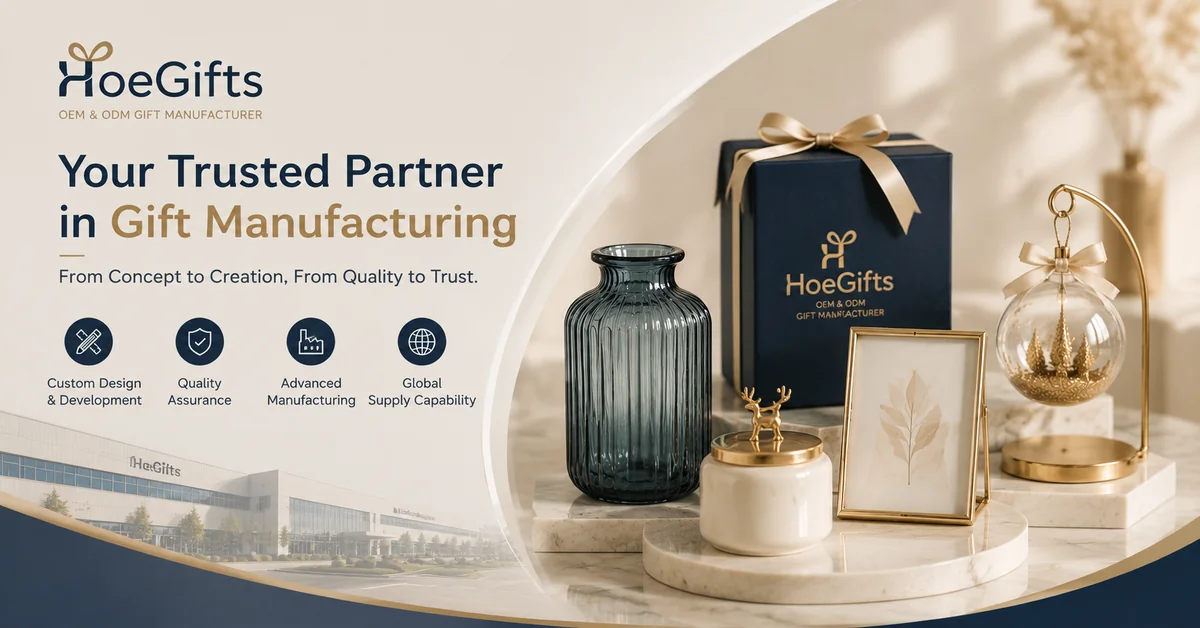
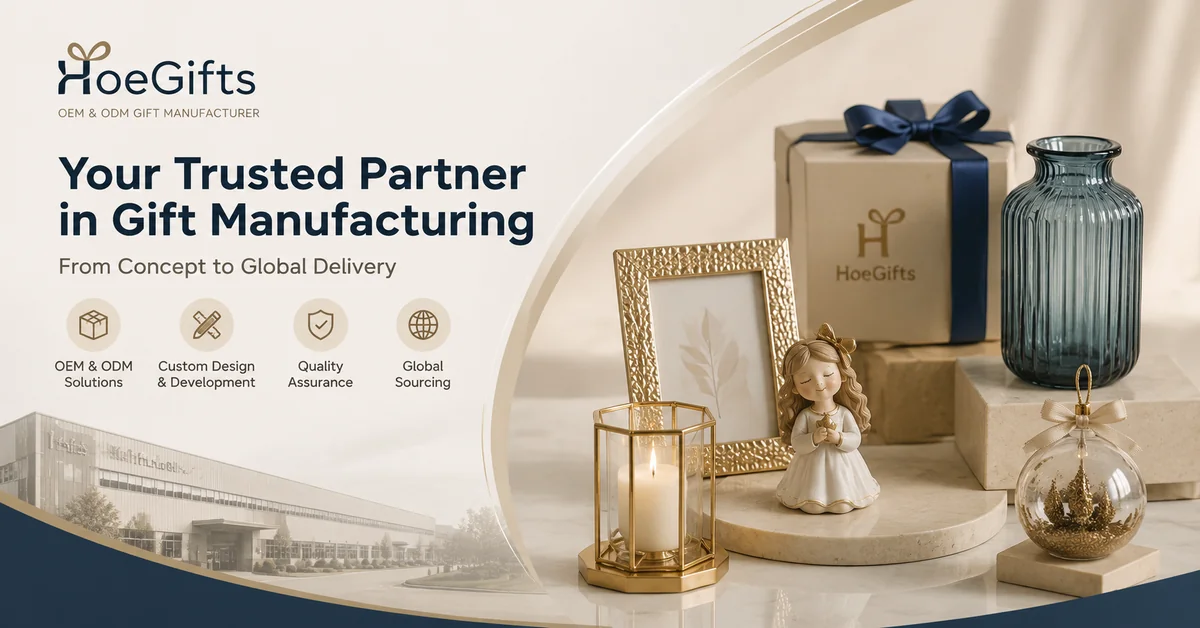
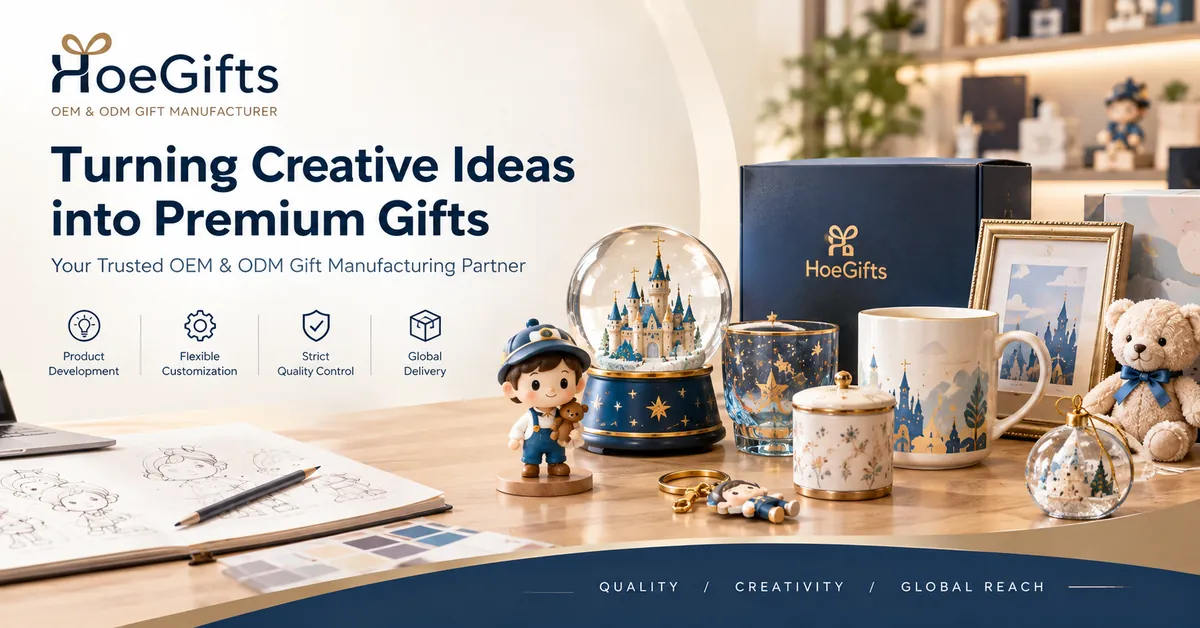
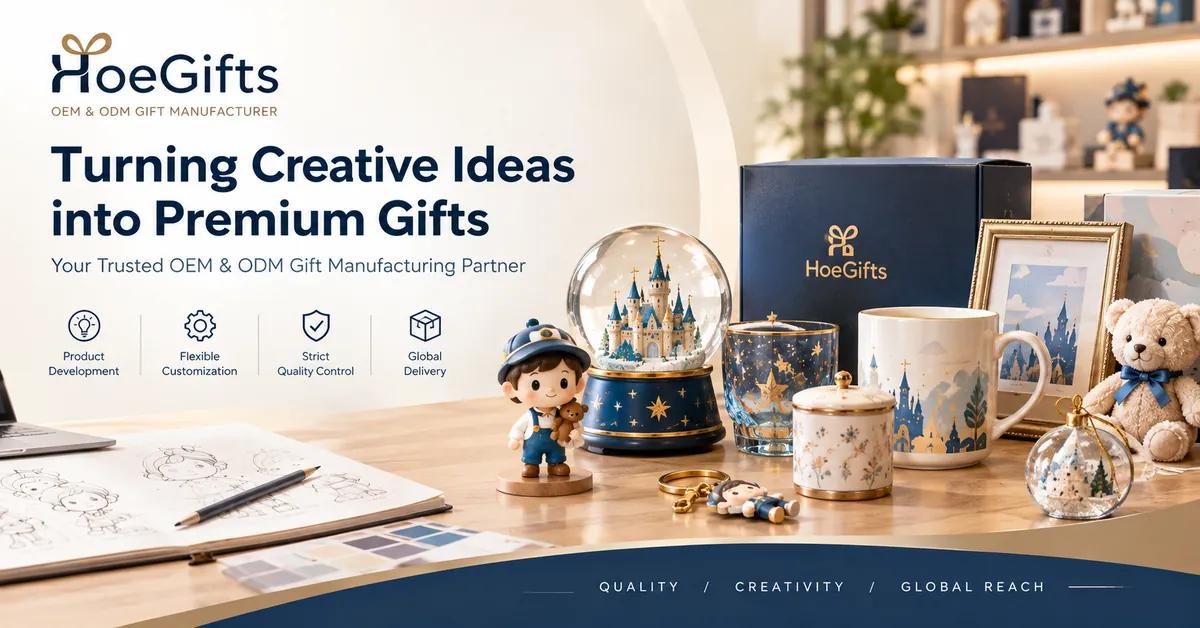
Our product capabilities span glassware, hanging ornaments, decorative gifts, photo frames, silicone figurines, metal products, home décor, and mixed-material merchandise.
For companies seeking a reliable OEM gift manufacturer China, an experienced partner can help bridge the gap between an attractive product concept and a manufacturable, retail-ready result.
This guide explains how HoeGifts approaches product development, what buyers should evaluate when choosing a manufacturing partner, and how our capabilities support customized gift and merchandise programs.
Buyer Snapshot: Choosing a Branded Merchandise Manufacturing Partner
| Buyer Priority | What to Evaluate | Why It Matters |
|---|---|---|
| Brand project experience | Previous international project experience | Helps reduce communication and development risks |
| Product development | Design review, sampling, and engineering support | Converts concepts into practical products |
| Material capabilities | Glass, resin, metal, silicone, and mixed materials | Expands customization possibilities |
| Production management | Clear production plans and process controls | Supports consistent manufacturing |
| Quality assurance | Inspection procedures and approved samples | Helps maintain product consistency |
| Packaging development | Custom boxes, inserts, and retail presentation | Protects products and supports brand positioning |
| Communication | Clear specifications and timely feedback | Keeps complex projects organized |
Key takeaway: A capable branded merchandise manufacturer should contribute to product development and manufacturing execution, not simply provide a quotation.
Why This Guide Helps B2B Buyers
For importers, retailers, wholesalers, and international brands, choosing the right manufacturing partner can influence product quality, launch schedules, and overall project costs.
A factory with relevant experience may identify design or production challenges before they become expensive problems. It can also help buyers evaluate alternative materials, simplify product structures, and choose appropriate decoration and packaging methods.
This is particularly valuable for products that combine detailed designs with several materials or manufacturing processes.
When evaluating a licensed gift manufacturer, buyers should consider three questions:
-
Can the manufacturer understand and follow the project's approved specifications?
-
Can it turn the concept into a repeatable manufacturing process?
-
Can it maintain the agreed quality and packaging requirements throughout production?
These questions are relevant whether a project involves character merchandise, decorative ornaments, collectible gifts, or a broader branded product collection.
What Is Branded Gift Product Development?
Branded gift product development is the process of transforming a company's creative concept, design, or product brief into a finished item suitable for its intended market.
Unlike standard, off-the-shelf products, customized merchandise may require product-specific designs, molds, materials, finishes, packaging, and inspection criteria.
A typical project can involve:
-
Concept and specification review
-
Material and manufacturing process selection
-
Product engineering and feasibility assessment
-
Prototype and sample development
-
Decoration and color approval
-
Production planning
-
Quality inspection
-
Customized packaging and shipment preparation
For character-based merchandise, these stages require particular attention to design details and consistency with customer-approved references.
HoeGifts' Disney product development experience, gained through years of work on Disney-related product projects, forms part of our broader experience supporting international brand manufacturing. This experience complements our work across different gift categories and materials.
Why Experience With International Brand Projects Matters
International brand projects often involve multiple stakeholders, detailed specifications, and several rounds of sample review. A product must not only look right in a drawing or prototype; it must also be manufacturable at the required quality level.
1. Attention to Design Details
Character and branded products may include distinctive shapes, colors, decorative elements, and surface treatments. Manufacturers need clear specifications and an organized process for reviewing samples against approved references.
2. Manufacturing Feasibility
Some designs look straightforward but involve complex molds, difficult assembly, or multiple finishing processes. Early feasibility reviews can help identify potential issues and suggest practical alternatives.
3. Repeatable Production
A prototype represents only one sample. Mass production requires consistent materials, repeatable processes, and defined inspection criteria.
4. Retail-Ready Presentation
Packaging is often an important part of the finished product. It must support the intended presentation while protecting the product during storage, handling, and transportation.
For buyers seeking a custom character merchandise manufacturer, these capabilities can be just as important as the initial design itself.
HoeGifts: Experience in International Brand Product Development
HoeGifts specializes in OEM and ODM gift manufacturing for international customers. Our product range includes glassware, ornaments, decorative gifts, photo frames, metal products, silicone products, and mixed-material home décor.
Over years of business, HoeGifts has worked on numerous Disney-related product projects. These projects are part of our broader experience supporting the development and production of customized products for international brands.
Our approach focuses on connecting creative requirements with manufacturing feasibility.
Product Development Support
We help evaluate product concepts, materials, construction, decoration methods, and potential production challenges.
Multi-Material Manufacturing
Different products require different processes. Our product capabilities cover several materials and categories, allowing buyers to explore varied designs and product collections.
Customized Production
OEM and ODM projects can be developed around customer requirements, including product dimensions, materials, finishes, decorative details, and packaging.
Production and Quality Coordination
Clear specifications, approved samples, and appropriate inspection checkpoints help establish a shared reference for manufacturing.
For buyers looking for an OEM gift manufacturer China, HoeGifts provides a manufacturing-focused approach to developing customized products for global markets.
Main Product Categories for Branded Merchandise
Different product categories offer different opportunities for customization. The most suitable option depends on the target customer, product concept, budget, and retail environment.
| Product Category | Potential Applications | Customization Opportunities |
|---|---|---|
| Glassware | Decorative glass gifts and lifestyle products | Shapes, colors, printing, surface finishes |
| Hanging ornaments | Seasonal decorations and collectible gifts | Custom forms, colors, graphics, hanging accessories |
| Resin figurines | Character-inspired and decorative products | Sculpted details, painting, surface finishing |
| Metal products | Accessories, frames, and decorative items | Shapes, plating, engraving, stamped details |
| Silicone products | Flexible accessories and character-inspired items | Shapes, colors, textures, molded details |
| Photo frames | Decorative and commemorative gifts | Materials, dimensions, finishes, branded details |
| Mixed-material gifts | Premium decorative products and gift sets | Combinations of materials, finishes, and components |
These categories illustrate the range of products that may be considered for branded merchandise programs. The actual manufacturing method depends on the final design and project requirements.
Materials and Manufacturing Processes
Material selection affects a product's appearance, durability, production cost, and packaging requirements. Buyers should consider both the desired visual result and the practical needs of manufacturing and distribution.
| Material | Common Processes | Important Considerations |
|---|---|---|
| Glass | Forming, coloring, printing, surface decoration | Fragility, finish consistency, protective packaging |
| Resin | Molding, casting, painting, assembly | Detail reproduction, surface quality, curing |
| Metal | Stamping, casting, engraving, plating | Structural strength, finish consistency, corrosion protection |
| Silicone | Molding, coloring, trimming | Flexibility, dimensions, material specifications |
| Wood and MDF | Cutting, engraving, printing, coating | Grain or surface consistency, moisture conditions |
| Mixed materials | Component fabrication, assembly, finishing | Fit, compatibility, process coordination |
A professional branded merchandise manufacturer should help buyers compare material options rather than choosing solely on appearance or unit price.
For example, a decorative ornament made from glass may deliver a different visual effect from a resin version. The choice can affect weight, breakage risk, production methods, and packaging costs.
The best material is the one that meets the product brief, target price, and market requirements.
How HoeGifts Approaches OEM Product Development
A structured workflow helps keep complex projects organized and makes it easier to identify issues before mass production.
Step 1: Project Brief and Requirement Review
The customer provides available design references, dimensions, target quantity, material preferences, packaging requirements, and intended market.
The project team clarifies the specifications and identifies any missing information.
Step 2: Manufacturing Feasibility Assessment
The team evaluates the product structure, potential manufacturing methods, material suitability, decoration options, and tooling requirements.
If necessary, alternative approaches can be considered to balance appearance, quality, and cost.
Step 3: Prototype and Sample Development
Samples allow the customer to review the product's dimensions, appearance, materials, colors, and finishing.
Feedback should be documented clearly so that revisions can be evaluated against the project brief.
Step 4: Sample Confirmation
Before mass production, the customer and manufacturer should establish the approved product reference and confirm the applicable specifications.
For projects involving brand or licensing requirements, all relevant approvals must be obtained through the appropriate authorization process.
Step 5: Production Preparation
Production preparation may include tooling, material sourcing, work instructions, packaging preparation, and inspection planning.
Step 6: Mass Production and Quality Checks
The manufacturer follows the agreed specifications and conducts appropriate inspections during production and before shipment.
Step 7: Packaging and Shipment Preparation
Finished products are packed according to the agreed packaging requirements and prepared for shipment.
This process helps an OEM gift manufacturer China coordinate product development and production with a clearer understanding of customer expectations.
OEM and ODM Customization Options
OEM and ODM services allow buyers to develop products that fit their brand identity, sales channels, and target markets.
| Customization Area | Available Project Options | Buyer Benefit |
|---|---|---|
| Product design | Custom shapes, dimensions, and structures | Differentiated product concepts |
| Material | Glass, resin, metal, silicone, and combinations | More choices for appearance and function |
| Color and finish | Color matching, printing, painting, and decorative finishes | Closer alignment with product specifications |
| Logo and graphics | Approved printing, engraving, labels, and other methods | Brand identification |
| Product components | Custom accessories and assembled parts | More distinctive designs |
| Packaging | Gift boxes, protective inserts, labels, and retail packaging | Improved presentation and product protection |
| Product collections | Coordinated designs across selected categories | Consistent collection planning |
The availability of each option depends on the product, production method, minimum order quantity, and technical requirements.
For projects involving licensed intellectual property, buyers must provide the necessary rights and approvals, and all designs and production details must follow the applicable requirements.
Packaging for Global Brand Products
Packaging has two important functions: presenting the product and protecting it throughout distribution.
A packaging solution should reflect the product's retail positioning while accounting for its material, dimensions, weight, and fragility.
| Packaging Type | Suitable Applications | Key Considerations |
|---|---|---|
| Folding cartons | Lightweight gifts and accessories | Printing quality and structural strength |
| Rigid gift boxes | Premium gifts and collectible items | Presentation, cost, and storage volume |
| Protective inserts | Glassware and fragile decorative products | Fit, cushioning, and movement prevention |
| Window boxes | Products intended for visual display | Visibility and product protection |
| Individual protective packaging | Products with delicate finishes | Scratch prevention and handling |
| Master cartons | Bulk export shipments | Carton strength, stacking, and shipping efficiency |
For fragile items such as glass ornaments, the packaging design should be evaluated alongside the product itself. Protective inserts, internal spacing, and carton configuration can all affect breakage risk.
HoeGifts can discuss packaging requirements with buyers during product development so that packaging is not treated as an afterthought.
Quality Control for Customized Merchandise
Quality requirements should be established before production begins. A clear inspection plan helps the buyer and manufacturer agree on what constitutes an acceptable finished product.
Quality Control Checklist
| Inspection Stage | Items to Check |
|---|---|
| Incoming materials | Material specifications, visible defects, and consistency |
| Sample approval | Dimensions, color, finish, decoration, and assembly |
| In-process inspection | Workmanship, process consistency, and recurring defects |
| Final inspection | Appearance, quantity, dimensions, and agreed specifications |
| Packaging inspection | Correct packaging, product protection, labels, and carton condition |
| Shipment preparation | Carton markings, quantities, and required documentation |
For applicable projects, buyers may specify an AQL-based inspection plan or other agreed sampling criteria. Acceptance limits and inspection methods should be confirmed in advance rather than assumed to be identical for every product.
For character merchandise, inspection may also include comparison against approved artwork, color references, product samples, and packaging specifications.
An experienced licensed gift manufacturer should be prepared to work within the customer's applicable quality and approval requirements. The precise requirements depend on the product, market, and project.
MOQ, Lead Time, and Cost Planning
Minimum order quantities, lead times, and pricing vary according to the product design and manufacturing process. Buyers should evaluate the total project rather than comparing unit prices alone.
| Factor | What Can Affect It | Recommended Buyer Action |
|---|---|---|
| Minimum order quantity | Material sourcing, tooling, and production setup | Confirm MOQ for the specific design |
| Sampling time | Design complexity, tooling, and revisions | Allow time for sample review |
| Production lead time | Order volume, process complexity, and material availability | Agree on a production schedule |
| Unit cost | Materials, labor, decoration, and order quantity | Request a specification-based quotation |
| Tooling cost | Custom molds and specialized fixtures | Clarify ownership and reuse terms |
| Packaging cost | Box structure, inserts, printing, and packing method | Evaluate packaging early |
| Freight cost | Product dimensions, weight, and destination | Consider carton efficiency and shipping method |
Seasonal and licensed product projects often involve additional approval stages. Buyers should build sufficient time into their schedules for sampling, revisions, packaging confirmation, and any required brand approvals.
The most effective way to obtain a meaningful quotation is to provide a detailed product brief, reference images or drawings, target quantity, packaging requirements, and destination market.
How to Choose the Right Branded Merchandise Manufacturer
Selecting a manufacturing partner should involve a practical review of capabilities, communication, and project requirements.
1. Review Relevant Experience
Look for evidence that the manufacturer understands the type of product and complexity involved. Relevant international project experience can help establish confidence, but buyers should also assess whether the factory can meet the requirements of the new project.
2. Evaluate Product Development Support
Ask how the manufacturer handles feasibility reviews, sampling, revisions, and sample approval. These processes are especially important when products have intricate shapes or multiple materials.
3. Confirm Manufacturing Capabilities
Check whether the company can manage the required processes directly or through qualified production partners. Clarify which activities are performed in-house and which are outsourced.
4. Discuss Quality Requirements
Provide clear specifications and ask how the manufacturer will inspect the product. Agree on defect criteria, sampling methods, packaging standards, and approval procedures.
5. Assess Communication and Project Management
A reliable partner should clarify questions, document changes, and communicate potential delays or production risks promptly.
6. Confirm Intellectual Property and Compliance Requirements
For licensed merchandise, confirm the relevant authorization, artwork approval, product requirements, and permitted production scope before proceeding. Experience with a particular brand project should not be interpreted as blanket authorization for other products or designs.
These steps help buyers assess whether a custom character merchandise manufacturer is suited to their specific product and business objectives.
Working With HoeGifts
HoeGifts provides OEM and ODM gift manufacturing solutions for international B2B customers. Our product range covers decorative gifts, glassware, hanging ornaments, home décor, photo frames, silicone products, metal products, and mixed-material merchandise.
Our years of experience working on international brand projects, including numerous Disney-related products, have contributed to our understanding of product development requirements and the importance of clear specifications, careful sampling, manufacturing coordination, and quality control.
For buyers developing a new product collection, HoeGifts can discuss:
-
Product concepts and manufacturing feasibility
-
Material and finish options
-
Prototype and sample development
-
Custom product specifications
-
Packaging and retail presentation
-
Production planning and quality checkpoints
Whether you are developing seasonal gifts, decorative products, collectible merchandise, or a custom-branded collection, our team can help evaluate the manufacturing requirements and identify a suitable development approach.
Contact HoeGifts to discuss your next OEM or ODM gift project and explore product development options for your target market.
Frequently Asked Questions
1. Does HoeGifts have experience working on Disney-related products?
Yes. HoeGifts has years of experience working on numerous Disney-related product projects. This experience forms part of our broader work supporting international brand product development. Specific project references and details should be shared only where permitted.
2. What does a branded merchandise manufacturer do?
A branded merchandise manufacturer helps transform product concepts into finished goods. Services may include design feasibility review, material selection, sampling, manufacturing, decoration, quality inspection, and packaging.
3. What products can HoeGifts manufacture?
HoeGifts' product categories include glassware, hanging ornaments, decorative gifts, photo frames, silicone products, metal products, home décor, and mixed-material products. Project suitability depends on the specific design and manufacturing requirements.
4. Can HoeGifts develop custom character merchandise?
HoeGifts supports customized gift and merchandise development. Character-based projects require the customer to have the necessary intellectual property rights and approvals, and production must follow the applicable brand requirements.
5. What is the difference between OEM and ODM?
OEM generally involves manufacturing products according to the customer's specifications or design. ODM typically involves a manufacturer's product development capabilities being used to develop a product that can be customized for the customer. The exact scope should be agreed upon for each project.
6. What information is needed for a manufacturing quotation?
Useful information includes product images or drawings, dimensions, materials, colors, order quantity, packaging requirements, destination market, and any applicable testing or compliance requirements.
7. How can buyers maintain consistent product quality?
Buyers should establish clear specifications, approve reference samples, define inspection criteria, and confirm packaging requirements before mass production. Appropriate in-process and final inspections help identify defects before shipment.
8. Does previous brand project experience mean a manufacturer can produce any licensed product?
No. Previous project experience does not automatically grant permission to manufacture new products using a brand's intellectual property. Each project must have the necessary authorization and follow the relevant approval procedures.
Conclusion: An Experienced Manufacturing Partner for Global Gift Projects
Developing successful branded merchandise requires creative thinking, technical knowledge, organized project management, and reliable manufacturing processes.
HoeGifts has years of experience supporting international brand projects, including numerous Disney-related products. This experience complements our broader OEM and ODM capabilities across glassware, ornaments, decorative gifts, figurines, photo frames, metal products, silicone products, and mixed-material merchandise.
From concept evaluation and material selection to sampling, mass production, quality control, and packaging, our team works to help customers turn product ideas into manufacturable solutions for their target markets.
For businesses looking for an OEM gift manufacturer China, a custom character merchandise manufacturer, or an experienced partner for branded product development, HoeGifts offers a range of manufacturing capabilities to explore.
Contact HoeGifts to discuss your next custom gift project and develop products that meet your design, quality, and market requirements.