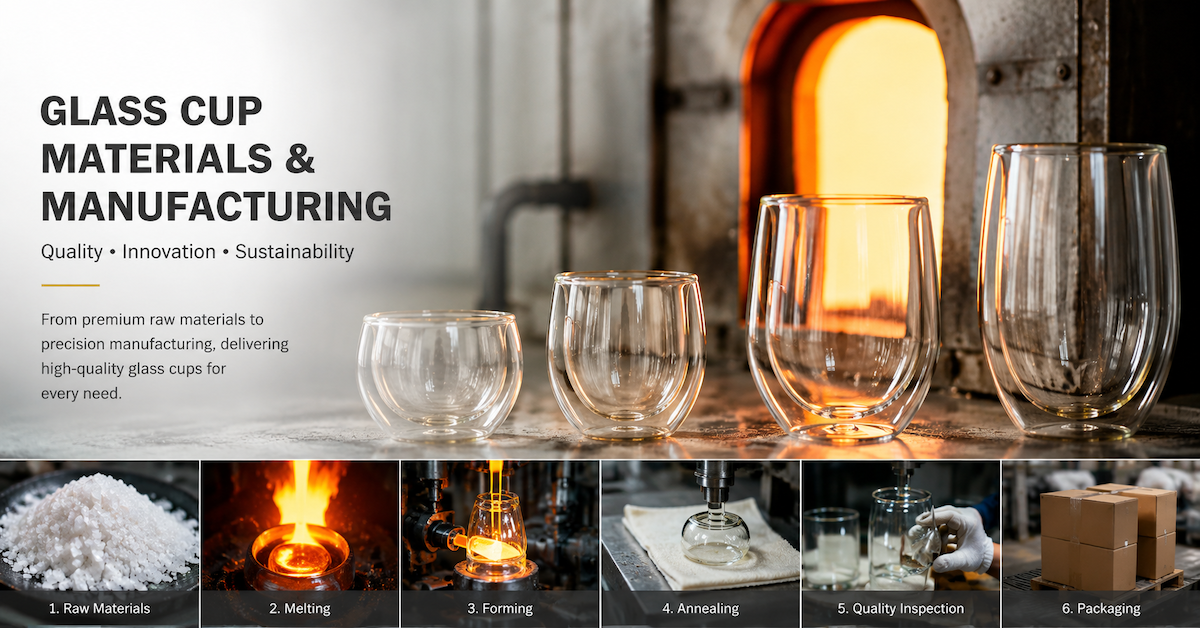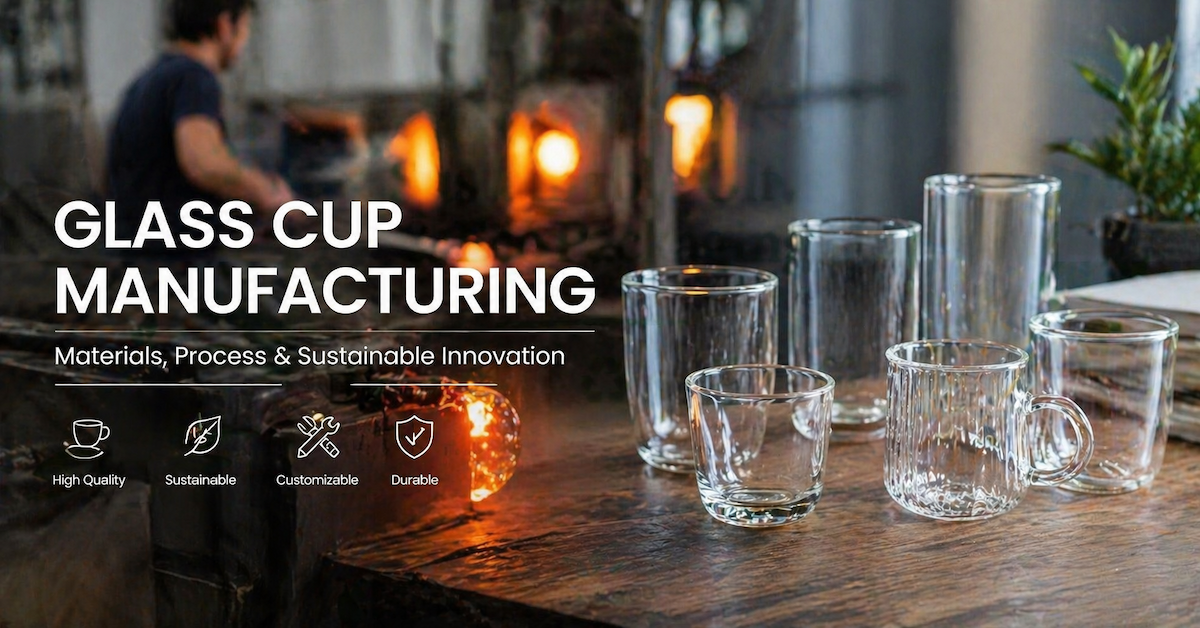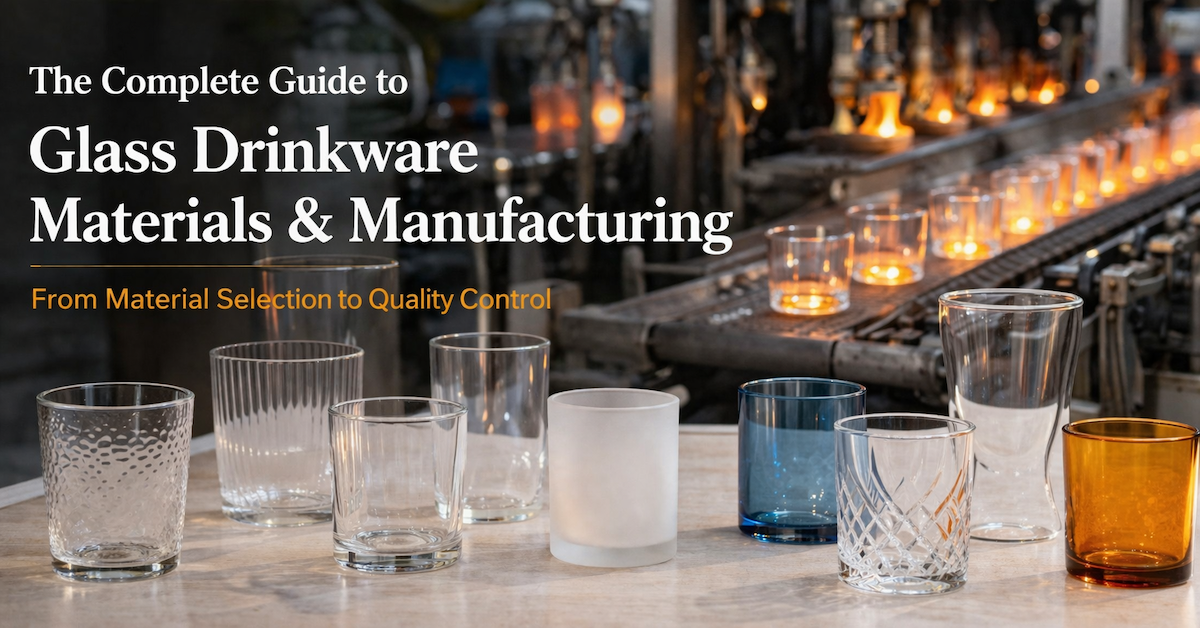


Glass cups are a core category in drinkware and lifestyle product development, widely used across home, hospitality, gifting, and premium retail markets. From everyday tumblers to high-end crystal cups, the success of a glass cup product depends heavily on material selection, manufacturing methods, and quality control.
For brands, wholesalers, and OEM buyers, understanding glass cup materials and manufacturing processes is essential for making informed sourcing decisions, controlling costs, and ensuring long-term product performance. This guide provides a comprehensive overview of common glass materials, production techniques, and key considerations in glass cup manufacturing.
Overview of Glass Cup Manufacturing in Global Markets
Glass cup manufacturing is a mature yet continuously evolving industry. According to industry data from global glass associations, the drinkware segment accounts for a significant share of decorative and functional glass products used in both consumer and commercial applications.
Modern glass cup manufacturing balances:
-
Aesthetic design and visual clarity
-
Functional performance and durability
-
Production efficiency and scalability
-
Compliance with food-contact and safety standards
OEM manufacturers play a critical role in transforming design concepts into market-ready glass cups through controlled processes and standardized production systems.
Common Glass Cup Materials Used in Manufacturing
Material selection is the foundation of glass cup manufacturing. Different glass compositions offer distinct advantages in terms of appearance, strength, thermal resistance, and cost.
Soda-Lime Glass: The Industry Standard
Soda-lime glass is the most widely used material in glass cup manufacturing. It is made primarily from silica sand, soda ash, and limestone.
Key characteristics:
-
Cost-effective and easy to process
-
Suitable for mass production
-
Good clarity and smooth surface finish
Soda-lime glass cups are commonly used for:
-
Everyday drinkware
-
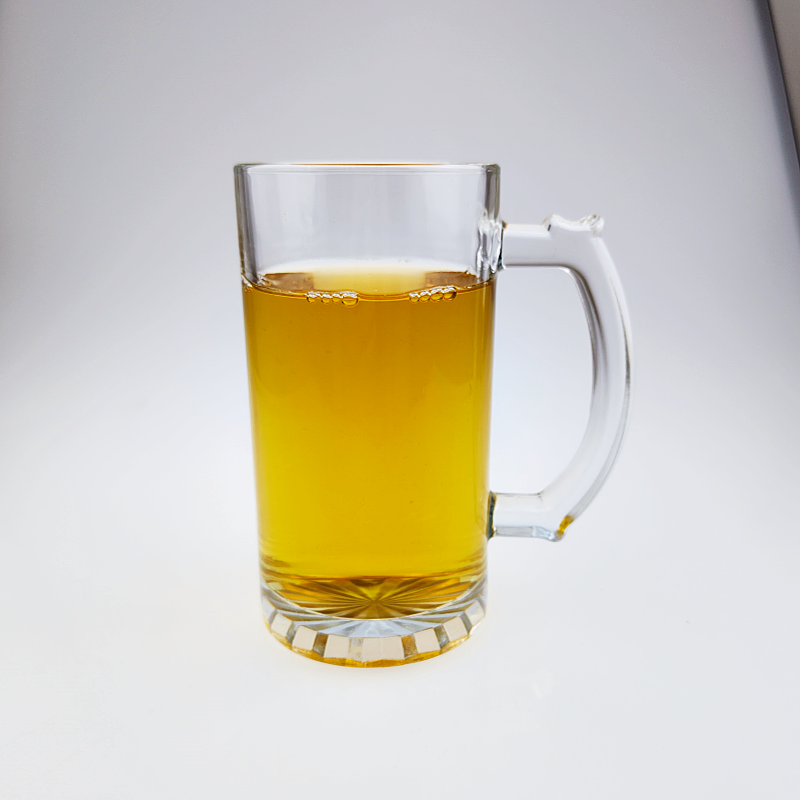
Restaurant and café glass cups
-
Retail-ready tumblers and mugs
However, soda-lime glass has limited thermal shock resistance, which must be considered when designing cups for hot beverages.
Borosilicate Glass: Functional and Heat-Resistant
Borosilicate glass is valued for its superior heat resistance and low thermal expansion. It is widely used in functional and modern glass cup designs.
Key characteristics:
-
Excellent resistance to temperature changes
-
Lightweight appearance with thin walls
-
High transparency and clean aesthetics
Borosilicate glass cups are often used for:
-
Hot beverage cups
-
Double-wall glass designs
-
Premium minimalist drinkware
From an OEM perspective, borosilicate glass supports higher product positioning but requires stricter production control and skilled processing.
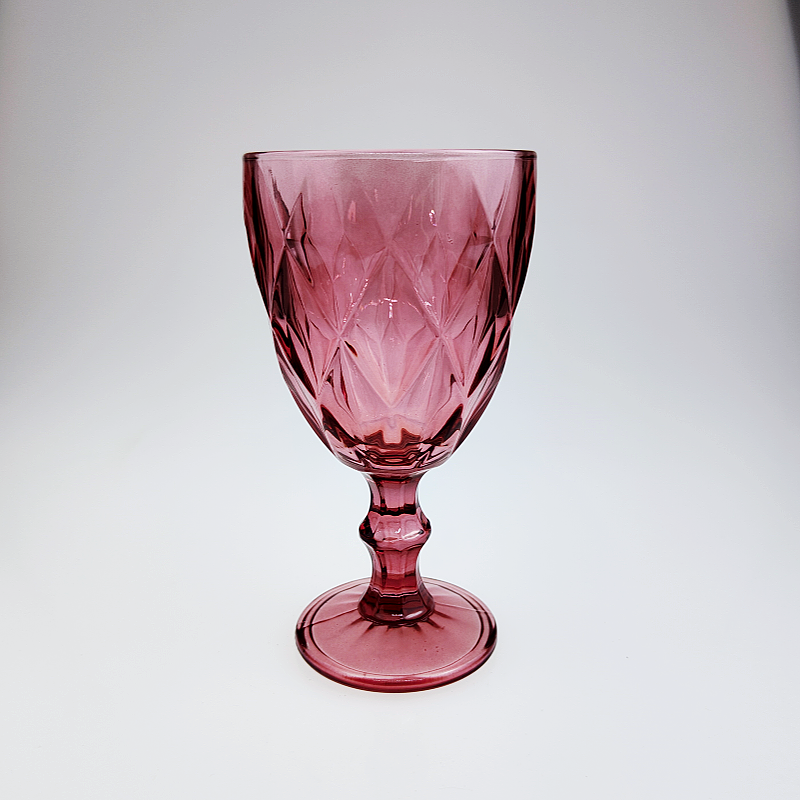
Lead-Free Crystal Glass: Premium Visual Appeal
Lead-free crystal glass is selected for high-end glass cup collections where brilliance, weight, and tactile quality are critical.
Key characteristics:
-
Enhanced light refraction
-
Smooth, refined hand feel
-
Luxury appearance without lead content
Crystal glass cups are commonly developed for:
-
Wine glasses and whiskey cups
-
Gift-oriented drinkware
-
Premium hospitality projects
While production costs are higher, crystal glass supports strong brand differentiation and perceived value.
Glass Cup Manufacturing Processes Explained
The manufacturing process determines consistency, scalability, and design flexibility in glass cup production. Different techniques are selected based on product positioning and order volume.
Machine-Blown Glass Manufacturing
Machine-blown glass is widely used in large-scale OEM production. Molten glass is shaped using automated blowing machines and molds.
Advantages:
-
High consistency across batches
-
Uniform wall thickness
-
Efficient for bulk orders
Machine-blown processes are ideal for standardized glass cup designs intended for wholesale distribution and retail chains.
Hand-Blown Glass Craftsmanship
Hand-blown glass involves skilled artisans shaping molten glass manually using blowing pipes and tools.
Advantages:
-
Greater design freedom
-
Unique shapes and proportions
-
Premium craftsmanship value
Hand-blown glass cups are typically used for limited editions, decorative collections, or concept designs rather than mass-market products.
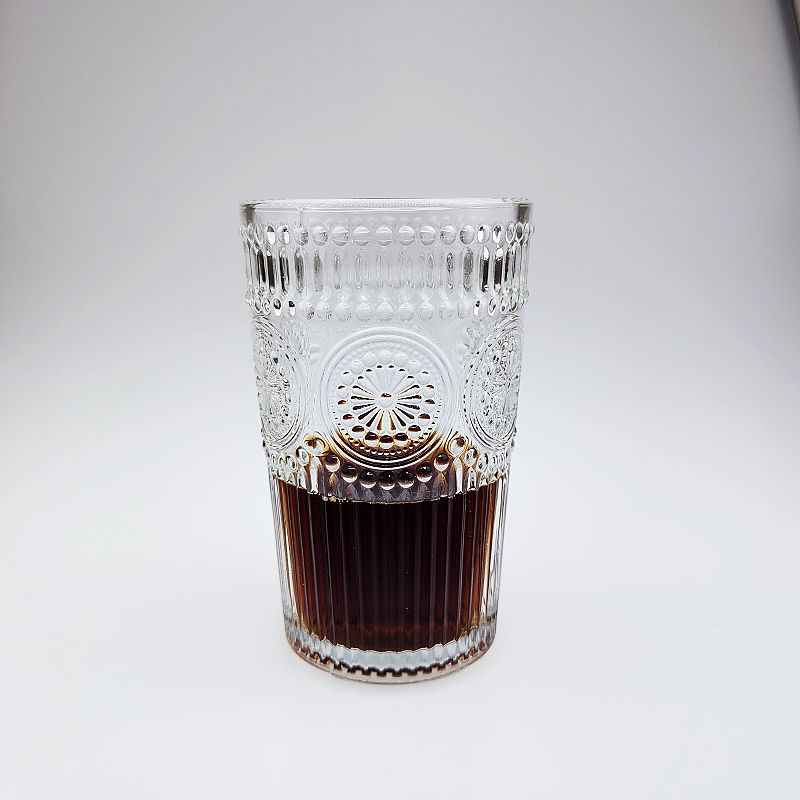
Pressed Glass Manufacturing
Pressed glass is produced by pressing molten glass into molds under pressure.
Advantages:
-
High structural strength
-
Suitable for textured or embossed designs
-
Excellent repeatability
Pressed glass cups are often chosen for:
-
Hospitality-grade drinkware
-
Vintage-style glass cups
-
Durable everyday use products
Surface Finishing and Decoration Techniques
Surface finishing is a key step in glass cup manufacturing, allowing manufacturers to create multiple SKUs from a single base structure.
Common techniques include:
-
Frosted or acid-etched finishes
-
Screen printing and decals
-
Electroplated rims or painted accents
-
Heat tempering for strength enhancement
These processes enhance both functionality and visual differentiation while maintaining production efficiency.
Quality Control in Glass Cup Manufacturing
Reliable OEM manufacturers implement strict quality control measures throughout production.
Key inspection points include:
-
Dimensional accuracy and wall thickness
-
Surface clarity and defect inspection
-
Thermal shock and durability testing
-
Food-contact safety compliance
Quality control ensures that glass cups meet international standards and perform consistently in real-world use.
Sustainability in Glass Cup Production
Sustainability is increasingly influencing glass cup manufacturing decisions. Glass is 100% recyclable and can be reused without loss of quality, making it a preferred material for eco-conscious brands.
Manufacturers are adopting:
-
Recycled glass content
-
Energy-efficient furnaces
-
Waste reduction and optimized packaging
From a product development standpoint, durable glass cups support long product life cycles and reduced environmental impact.
Key Considerations for OEM Buyers
When sourcing glass cups, OEM buyers should evaluate:
-
Material suitability for intended use
-
Production capacity and scalability
-
Quality control systems
-
Customization and decoration capabilities
-
Packaging and logistics support
Early collaboration between buyers and manufacturers helps align design intent with production feasibility.
Conclusion
Glass cup materials and manufacturing processes directly influence product quality, cost structure, and market success. By understanding the differences between soda-lime glass, borosilicate glass, and lead-free crystal glass, as well as the impact of various manufacturing techniques, buyers can make informed sourcing decisions.
Well-engineered glass cups combine functional performance, visual appeal, and sustainable value. With the right manufacturing partner, glass cups become more than drinkware—they become durable, scalable products that support long-term brand growth in global markets.