

Licensed merchandise can create strong demand in seasonal gifts, ornaments, home décor, drinkware, and collectible products. Familiar characters and entertainment properties give consumers an immediate emotional connection to a product.
That recognition also creates responsibilities that do not exist in ordinary private-label manufacturing.
A licensed gift project must control more than product quality. The buyer and manufacturer may need to confirm intellectual-property authorization, approved factory locations, product categories, sales territories, artwork versions, legal wording, testing requirements, production quantities, and the handling of excess or rejected goods.
A factory can have modern equipment and years of gift-manufacturing experience, yet still be unsuitable for a licensed program if it is not approved for the relevant project.
This case study examines a licensed gift program involving Hallmark merchandise developed around Disney and Universal entertainment properties. It explains how an authorized manufacturing facility in China supported product development, multi-material production, compliance control, packaging, and seasonal delivery.
The article is based on the project information supplied for this case. Factory authorization numbers, license validity, product scope, territories, and customer names should be reconfirmed before public publication.
What Is Licensed Gift Manufacturing and Why Does Authorization Matter?
Licensed gift manufacturing is the controlled production of merchandise using protected characters, trademarks, artwork, logos, or entertainment properties under an approved licensing arrangement.
The approval process may involve several parties:
- Intellectual-property owner
- Master licensee
- Product licensee
- Retail buyer
- Authorized manufacturer
- Testing laboratory
- Packaging and logistics partners
Each party has a different responsibility.
The intellectual-property owner controls how the character or brand may be used. The licensee manages the approved product categories and sales rights. The manufacturer converts approved designs into physical products. The buyer ensures that the final products are sold within the permitted territories and channels.
Factory authorization is important because an ordinary purchase order does not automatically give a factory permission to manufacture protected merchandise.
Before development begins, buyers should confirm:
- The legal name of the production facility
- The exact factory address
- The relevant authorization or facility identification number
- The approved product categories
- The authorized manufacturing country
- The permitted retail territories
- The validity period
- Any factory audit or corrective-action requirements
Authorization should be reviewed before artwork is shared widely or expensive molds are opened.
Key Requirements for a Compliant Licensed Gift Program
A successful licensed program normally depends on four control systems working together.
Intellectual-Property Control
The factory must receive only the artwork and brand assets required for the approved project. Access to those files should be restricted.
The project team should control:
- Character artwork
- Logos and trademarks
- Packaging graphics
- Copyright lines
- Product names
- Style guides
- Color references
- Approval records
Manufacturing Control
The product must be engineered so that it can be manufactured consistently without damaging the licensed design.
This includes:
- Material selection
- Mold construction
- Wall thickness
- Character proportions
- Surface decoration
- Assembly
- Packaging protection
- Quality inspection
Compliance Control
The testing plan must match the finished product, destination market, intended user, and retail requirements.
A raw-material report alone may not cover the final item if the product also contains coatings, metal hardware, magnets, printing, adhesives, or packaging inks.
Commercial Control
The product must arrive within the approved retail window.
For seasonal licensed gifts, a late shipment may lose most of its commercial value even if the product itself is technically correct.
Hallmark Licensed Gift Program Background
Hallmark is widely known for greeting cards, ornaments, seasonal gifts, keepsakes, and home décor. Licensed entertainment properties form an important part of many global gift programs because they allow retailers to combine recognizable stories with seasonal purchasing occasions.
According to the project information supplied for this case, the merchandise program included properties associated with Disney, Marvel, Lucasfilm, and Universal.
The planned assortment covered several product categories:
- Glass ornaments
- Metal ornaments
- Mixed-material decorations
- Drinkware
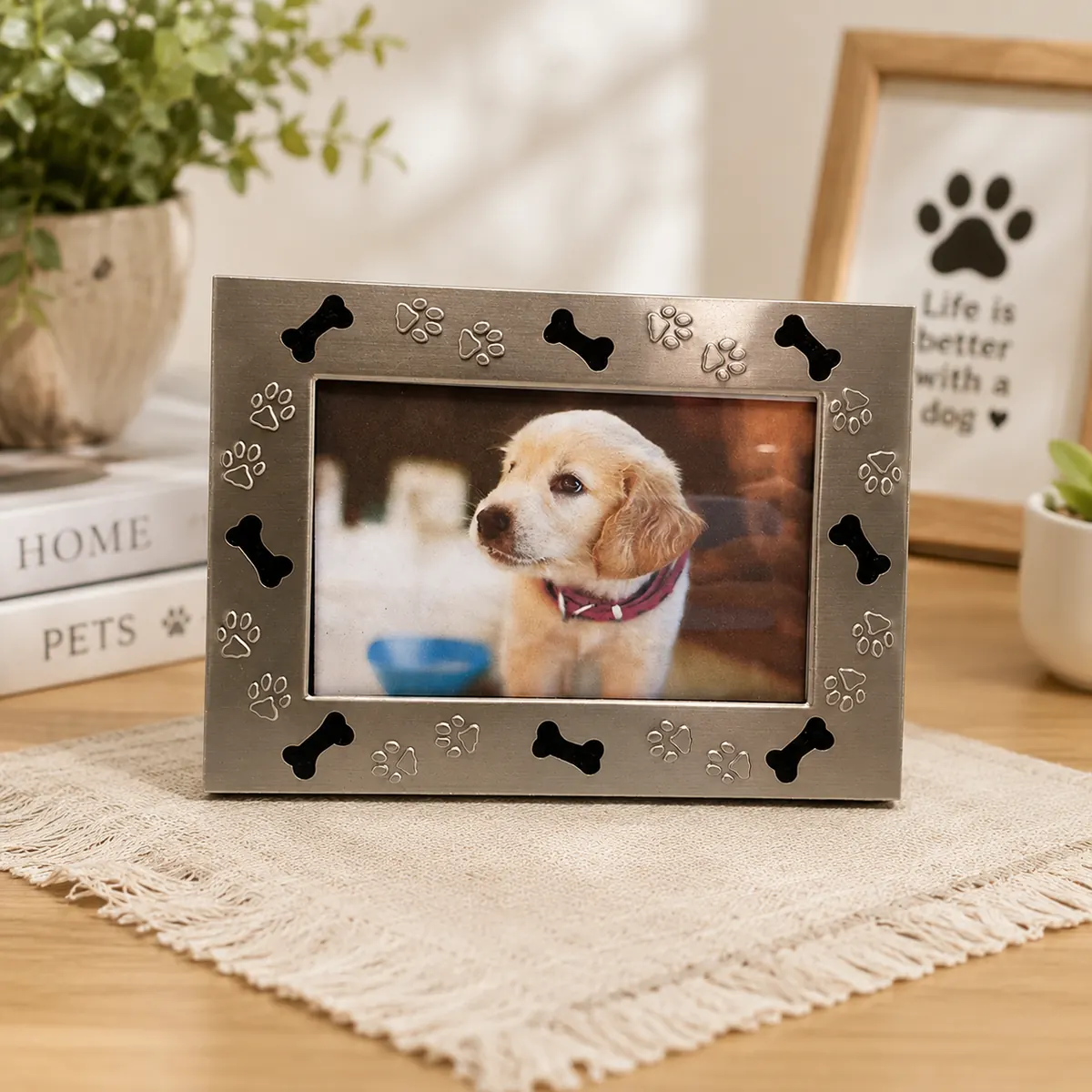
- Photo frames
- Tabletop gifts
- Silicone novelty accessories
- Seasonal home décor
- Gift-ready product sets
This assortment created both commercial opportunities and manufacturing complexity.
A single approved character might appear in several materials. For example, the same design could be adapted into a glass ornament, silicone keychain, zinc alloy magnet, photo frame, or tabletop display.
Each adaptation needed separate engineering and quality review.
Key Challenges in Licensed Gift Manufacturing
Verifying Factory Authorization
The first challenge was confirming that the factory was approved for the intended work.
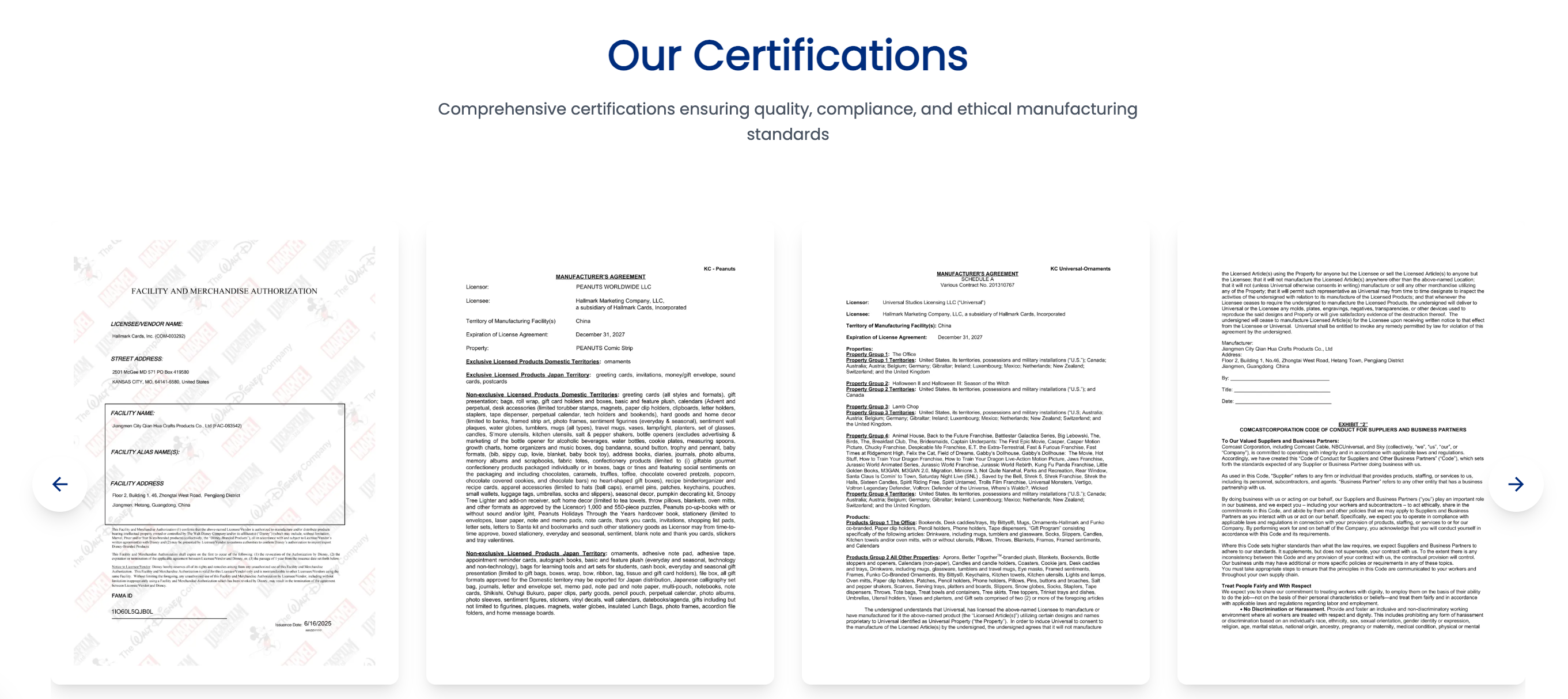
According to the supplied project records, the manufacturing facility was:
Jiangmen City Qian Hua Crafts Products Co., Ltd.
The records also identified a Disney FAMA number and referenced authorization relating to Disney and Universal projects. These details should be independently checked with the licensee or authorization holder before publication or production.
The project team needed to verify that authorization covered:
- The actual manufacturing facility
- The correct legal entity
- The required product categories
- Production in China
- The relevant validity period
- The destination territories
Authorization for one program does not automatically cover every brand, product, or market.
Coordinating Multiple Product Categories
The project involved several materials and production methods.
| Product category | Typical materials | Main control points |
|---|---|---|
| Hanging ornaments | Glass, metal, ribbon, paint | Breakage, hanging strength, color |
| Photo frames | Aluminum, zinc alloy, glass, backing | Stand stability, edges, assembly |
| Drinkware | Glass, decals, coatings, lids | Food contact, thermal use, decoration |
| Silicone accessories | Silicone, printing, metal rings | Tear strength, color, attachment |
| Tabletop décor | MDF, acrylic, resin, sand | Alignment, adhesive, packaging |
| Metal souvenirs | Zinc alloy, enamel, magnets | Casting, plating, magnet security |
| Gift packaging | Paperboard, plastic, textile | Artwork, barcode, protection |
A factory may be strong in one material and weak in another. Multi-category projects require a coordinated supply chain, not only one production workshop.
Maintaining Character and Artwork Accuracy
Licensed character designs are sensitive to small differences.
A product may be rejected because of:
- Incorrect eye shape
- Wrong facial expression
- Inaccurate color
- Distorted body proportions
- Missing costume details
- Incorrect logo placement
- Outdated copyright wording
- Unapproved packaging composition
Two-dimensional artwork often needs to be converted into a molded, blown, printed, or assembled object.
This conversion creates practical engineering questions.
A character’s thin arm may look correct in an illustration but tear when produced in silicone. A narrow glass hanging loop may break during shipping. Fine metal lines may not fill clearly during die casting.
The manufacturer therefore had to preserve character identity while making small structural changes for production safety.
Meeting Seasonal Retail Deadlines
Licensed gift collections are frequently linked to Christmas, Halloween, Valentine’s Day, anniversaries, entertainment releases, or retailer campaigns.
The timeline must include:
- Artwork approval
- Technical drawings
- Mold development
- Product sampling
- Brand revisions
- Compliance testing
- Packaging approval
- Production
- Final inspection
- International shipping
- Warehouse distribution
A delay during brand approval can affect every later stage.
The supplier therefore needed to manage approvals as part of the production schedule rather than treating them as separate administrative tasks.
How Authorized Manufacturing Reduces Licensing Risk
The selected manufacturing facility was expected to support both product manufacturing and licensing controls.
The project required capability in:
- Licensed artwork confidentiality
- Multi-material product development
- Mold and tooling management
- Sample version control
- Brand-side approvals
- Material traceability
- Compliance testing coordination
- Seasonal production planning
- Mixed-SKU packing
- Export packaging
- Excess-production control
The commercial value of an authorized factory comes from its ability to work inside a controlled system.
Authorization alone does not guarantee perfect products. It creates the required foundation on which quality, compliance, and brand protection can be managed.
Licensed Gift Manufacturing Workflow: From Authorization to Shipment
Confirm Authorization and Project Scope
The project began with a formal review of the licensing scope.
The team confirmed:
- Intellectual properties involved
- Approved factory
- Product categories
- Production location
- Sales territories
- Sales channels
- Authorization dates
- Packaging requirements
- Required copyright notices
This review reduced the risk of developing products that could not legally move into production or retail.
Translate Licensed Artwork into Production Files
Approved brand artwork was converted into technical documents.
These included:
- 2D drawings
- 3D models
- Mold files
- Decoration layouts
- Decal artwork
- Color callouts
- Packaging dielines
- Logo-placement guides
- Legal-line layouts
Every file needed a clear version number.
When a character’s shape required modification for manufacturing, the revised structure was submitted for approval rather than changed informally on the production floor.
Select Materials and Manufacturing Processes
The factory reviewed which material and process best matched each licensed concept.
A glass ornament might use mouth-blown or molded glass with hand painting. A metal magnet could use zinc alloy die casting with enamel. A silicone accessory might require compression molding with several colors.
Material selection considered:
- Character appearance
- Product durability
- Target retail price
- Intended market
- Order quantity
- Compliance requirements
- Packaging
- Seasonal deadline
The lowest-cost material was not always the most suitable.
Manage Sampling and Brand Approval
Licensed samples passed through controlled review stages.
The buyer and brand team evaluated:
- Character accuracy
- Dimensions
- Material
- Weight
- Surface finish
- Color
- Logo
- Function
- Legal wording
- Packaging
Every revision was documented.
Once approved, the final physical sample became the golden sample for bulk production.
Both buyer and supplier should retain a matching approved sample to avoid later disagreements.
Complete Compliance Testing on Finished Products
The test plan varied by product and destination market.
Potential requirements included:
- Material composition
- Paints and coatings
- Heavy-metal migration
- Food-contact safety
- Small parts
- Sharp edges
- Pull strength
- Magnet security
- Corrosion resistance
- Decoration adhesion
- Packaging labels
Standards such as ASTM F963, CPSIA, EN 71, REACH-related restrictions, and California Proposition 65 may be relevant depending on the product, age grading, market, and retailer.
They should not be listed automatically for every item.
Testing must match the finished product. For example, a glass-body test report may not cover a newly applied decal or metallic coating.
Protect Licensed Tooling, Artwork, and Samples
Licensed project materials required controlled access.
The factory implemented or was expected to implement procedures covering:
- Digital artwork access
- Mold identification
- Sample registration
- Production-quantity control
- Licensed component storage
- Rejected-goods handling
- Excess-production prevention
- Subcontractor confidentiality
- Photography restrictions
- Mold ownership
These controls protect both the intellectual-property owner and the buyer.
Unauthorized overruns can create serious legal and commercial problems even when the goods meet the product specification.
Control Bulk Production and SKU Traceability
Bulk production began only after approval of the golden sample, materials, packaging, and relevant tests.
The control plan included:
- Incoming-material inspection
- First-piece approval
- In-process inspection
- Color comparison
- Artwork verification
- Assembly checks
- Packaging checks
- Barcode verification
- Carton-quantity control
- Final inspection
High-mix seasonal programs require especially strong SKU identification.
Similar characters, colors, and boxes can easily be mixed if production areas and packing records are not controlled.
Apply a Licensed Product Quality Control Checklist
| Inspection area | Required check |
| Character artwork | Matches approved version |
| Color | Matches approved reference |
| Product material | Matches specification |
| Dimensions | Within confirmed tolerance |
| Logo | Correct size and placement |
| Legal wording | Correct copyright and trademark line |
| Surface finish | No major scratches, chips, or coating defects |
| Function | Product performs as intended |
| Safety | Required tests completed |
| Packaging | Correct artwork, barcode, and language |
| Quantity | Matches approved order |
| Traceability | Production and material records retained |
Prepare Packaging for Retail and Export
Licensed packaging carries both protective and legal responsibilities.
It may need to include:
- Brand logo
- Character name
- Copyright notice
- Licensee information
- Country of origin
- Barcode
- Age grading
- Safety warnings
- Care instructions
- Recycling information
- Retailer labels
The package also needed to protect the product’s surface and structure.
Glass ornaments required breakage protection. Metal products required non-abrasive wrapping. Mixed-material displays needed inserts that supported more than one point.
Packaging approval therefore covered both artwork and physical performance.
Global Territory and Licensing Controls for Retail Distribution
Licensed products cannot automatically be sold in every market.
The project team needed to confirm whether each product was approved for locations such as:
- United States
- Canada
- United Kingdom
- European Union
- Australia
- New Zealand
- Other designated markets
Territory differences may affect:
- Product rights
- Character availability
- Packaging language
- Legal wording
- Safety standards
- Retail channels
- Sales dates
- Distribution partners
A territory-control table helps reduce mistakes.
| Control item | Verification question |
| Factory | Is this exact site authorized? |
| Product category | Is the item covered by the license? |
| Character | Is the property approved for this program? |
| Territory | Where may the product be sold? |
| Channel | Retail, online, promotional, or hospitality? |
| Validity | Is production inside the approved period? |
| Quantity | Is there an authorized volume? |
| Packaging | Which wording and language are required? |
Commercial Benefits of Working with an Authorized Manufacturer
A controlled licensed-manufacturing program can improve:
- Approval efficiency
- Artwork accuracy
- Material consistency
- Compliance documentation
- Retailer confidence
- Production traceability
- Brand protection
- Repeat-order management
- Seasonal delivery planning
These benefits are more meaningful than claiming that risk has been reduced to zero.
No manufacturing project is risk-free. The objective is to identify, document, and control risk before it becomes a shipment-level problem.
Common Licensed Manufacturing Risks and How to Prevent Them
| Risk | Typical cause | Prevention |
| Unauthorized production | Factory not verified | Confirm authorization before tooling |
| Territory violation | Sales scope misunderstood | Maintain territory records |
| Character error | Weak artwork translation | Use staged sample approvals |
| Color mismatch | No physical standard | Approve master color sample |
| Wrong copyright line | Old packaging artwork | Lock final file version |
| Test failure | Finished components not reviewed | Test actual finished product |
| Artwork leak | Uncontrolled file access | Restrict and document access |
| Excess production | Weak quantity controls | Track approved production volume |
| Late shipment | Approval time omitted | Include approvals in project schedule |
| Mixed SKU packing | Poor identification | Use SKU, barcode, and carton checks |
How to Evaluate an Authorized Licensed Gift Manufacturer
Before selecting a supplier, buyers should ask:
- Is the exact production site authorized?
- Which product categories are covered?
- Which licensors or major retailers has the factory served?
- How are licensed artwork files protected?
- How are physical samples registered?
- Are approved golden samples retained?
- How are excess goods controlled?
- Which processes are performed in-house?
- How are subcontractors managed?
- Can the factory handle several materials?
- How are legal lines and packaging versions checked?
- How are rejected licensed products disposed of?
Relevant documents should be reviewed through secure and appropriate channels.
A logo on a factory presentation is not proof of active authorization.
Factory Authorization vs Social Compliance Audits
Licensing authorization, product compliance, and social audits are separate requirements.
A factory may hold or participate in systems such as:
- Disney FAMA
- Sedex
- BSCI
- Quality-management audits
- Retailer social audits
- Environmental assessments
A social audit may review labor and workplace conditions. It does not grant permission to produce protected characters.
Licensing authorization confirms a relationship within the IP manufacturing system. It does not replace product testing or quality control.
A complete licensed program may require all of these systems at the same time.
OEM and ODM Opportunities for Licensed Gift Collections
Licensed manufacturing is not limited to reproducing designs supplied by the brand.
An experienced manufacturer may also propose product concepts using approved character directions.
Potential extensions include:
- Glass ornaments
- Zinc alloy magnets
- Silicone keychains
- Photo frames
- Drinkware
- Tabletop displays
- Seasonal gift sets
- Mixed-material home décor
Each new concept must still pass brand approval.
The manufacturer’s ODM value lies in converting market ideas into technically practical products while respecting licensing rules.
MOQ, Lead Time, and Seasonal Planning for Licensed Gifts
Licensed-product MOQ depends on:
- Mold requirements
- Number of characters
- Number of colors
- Materials
- Decoration
- Packaging
- Testing
- Number of territories
- Retail order quantity
- Production process
The timeline may include:
- Concept approval
- Artwork approval
- Technical development
- Tooling
- Sampling
- Brand revisions
- Product testing
- Packaging approval
- Bulk production
- Inspection
- Shipping
Buyers should plan backward from the required retail date.
Production lead time should not be confused with total program lead time.
Frequently Asked Questions About Licensed Gift Manufacturing
What Is an Authorized Licensed-Product Factory?
It is a production facility approved within the relevant licensing arrangement to manufacture specified products under defined conditions.
Does a Disney-Audited Factory Automatically Have Permission to Produce Every Disney Product?
No. Approval may depend on the exact licensee, facility, product category, territory, and validity period.
Can an Unauthorized Factory Make Samples?
Rules vary by licensor and program. Authorization should be confirmed before protected artwork is shared or samples are produced.
What Is FAMA?
FAMA generally refers to Disney’s Facility and Merchandise Authorization process. Project-specific requirements should be confirmed through the licensee or official authorization channel.
What Documents Should Buyers Review?
Review the legal factory name, address, authorization identification, product scope, effective dates, territories, audit status, and relevant product-compliance documents.
Why Are Licensed Samples Rejected?
Common reasons include inaccurate character details, incorrect colors, unapproved materials, wrong logo placement, packaging errors, or incorrect copyright wording.
Can Licensed Products Be Sold in Every Country?
No. Rights are commonly restricted by territory, product category, channel, and license period.
How Are Licensed Molds Controlled?
Molds should be identified, secured, used only for approved production, and handled according to the agreement after the program ends.
Can Rejected Licensed Products Be Sold as Clearance Stock?
Usually not without authorization. Rejected, cancelled, excess, and overrun products must be managed according to the licensing agreement.
What Affects the MOQ?
Tooling, material, decoration, character count, packaging, testing, and production method all affect MOQ.
How Can Buyers Prevent Artwork Leaks?
Use confidentiality agreements, restricted access, version control, watermarked files, controlled samples, and subcontractor procedures.
What Should Be Approved Before Bulk Production?
Confirm authorization, artwork, drawings, materials, colors, function, compliance, packaging, legal wording, quantity, and the physical golden sample.
Conclusion: Build Licensed Gift Programs on Compliance and Control
Licensed merchandise is not ordinary OEM production with a familiar character added to the product.
It is a controlled system that connects intellectual-property rights, factory authorization, product engineering, testing, packaging, territory restrictions, production quantities, and retail timing.
The most capable manufacturing partners understand that documentation is part of production.
They confirm authorization before tooling. They protect artwork and molds. They convert character designs into manufacturable structures. They track colors and packaging versions. They control excess production and maintain traceability across multiple SKUs.
For brand owners, licensees, importers, and retailers, the correct factory can reduce preventable risk and improve the predictability of a licensed product launch.
Before starting a project, prepare:
- Intellectual property and character list
- Licensee details
- Approved product categories
- Sales territories
- Retail channels
- Target quantity
- Product references
- Compliance requirements
- Packaging guidelines
- Required delivery date
Then request a confidential authorization review, feasibility assessment, testing plan, project schedule, and detailed quotation.
Licensed products succeed because consumers already care about the stories behind them. Authorized manufacturing helps protect those stories while turning them into compliant, consistent, and commercially practical products.