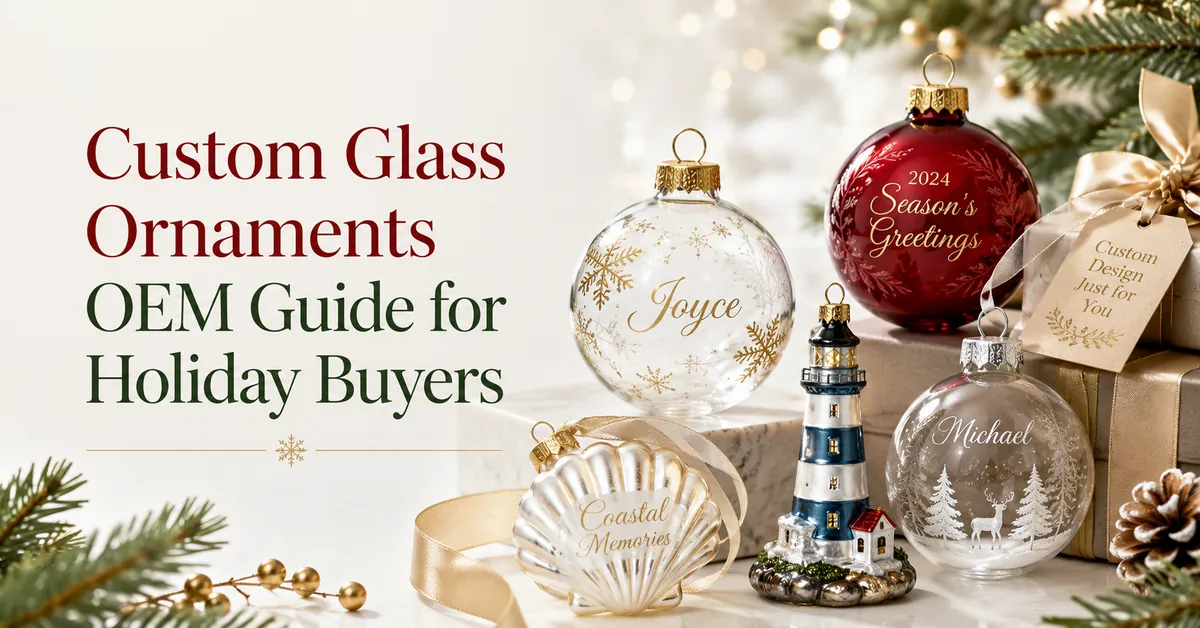


A successful glass ornament rarely begins with a factory mold.
It begins with an idea: a winter memory, a traditional holiday symbol, a character, a family celebration, or a decorative style that a consumer can recognize within seconds.
Turning that idea into a retail-ready product is more complicated than simply choosing a shape and adding glitter. The development team must balance appearance, glass structure, weight, decoration, hanging safety, production consistency, packaging, cost, and delivery timing.
For gift brands, seasonal retailers, importers, and OEM/ODM buyers, glass ornament product development is therefore both a creative and technical process.
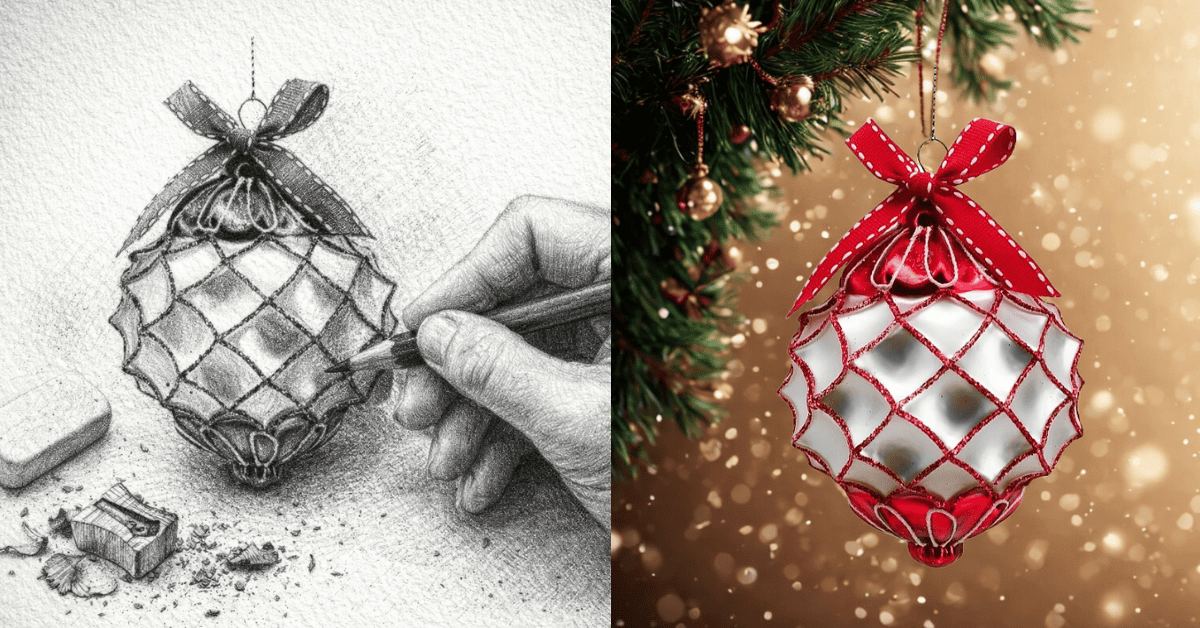
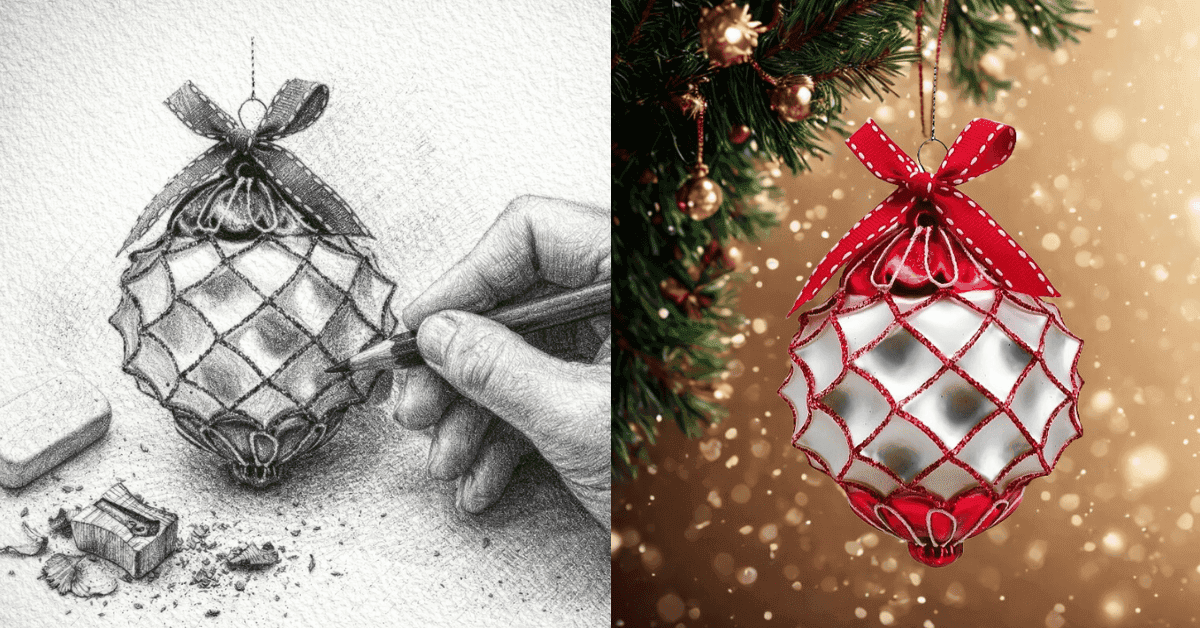
This article uses a handcrafted holiday ornament project as a practical example to explain how a design moves from concept and hand sketch to prototype, production approval, quality control, and global distribution.
How Does a Glass Ornament Move from Sketch to Mass Production?
A glass ornament normally moves through several connected stages:
- Market and product positioning
- Concept and story development
- Hand sketching or digital design
- Structural and material review
- Prototype production
- Decoration testing
- Packaging development
- Golden sample approval
- Bulk production
- Final inspection and shipping
The most important lesson is that design decisions cannot be separated from manufacturing decisions.
A beautiful concept may fail if the glass wall is too thin, the hanging point is weak, the decoration takes too long to apply, or the packaging cannot protect the product during international shipping.
Successful development requires designers, engineers, sample makers, production teams, and buyers to work from the same approved product brief.
Key Product Development Decisions for Glass Ornaments
Before creating a mold or producing a sample, buyers should confirm:
- Target holiday or gifting occasion
- Destination market
- Retail channel
- Target consumer
- Target retail price
- Ornament dimensions
- Preferred glass type
- Hanging method
- Decoration technique
- Packaging format
- Order quantity
- Required delivery date
These decisions determine whether the product should be positioned as a mass-market ornament, a handcrafted collectible, a licensed character item, or a premium seasonal gift.
Design Begins with a Commercial Story
Consumers usually do not purchase a glass ornament because of the glass alone.
They purchase what the ornament represents.
For Christmas products, that meaning may come from:
- Family traditions
- Winter landscapes
- Religious symbols
- Animals and woodland themes
- Childhood memories
- Travel destinations
- Licensed characters
- Personal milestones
A strong design brief should define both the emotional message and the commercial purpose.
For example, a premium ornament designed for a department-store gift collection may use subtle colors, refined metallic details, and a presentation box.
A mass-retail ornament may need brighter colors, simpler decoration, stronger packaging efficiency, and a lower production cost.
The concept must therefore answer two questions:
- What should the consumer feel when seeing the product?
- How must the product perform in the intended retail channel?
Creating a Practical Product Brief
A useful glass ornament product brief should include:
| Product element | Information to confirm |
|---|---|
| Occasion | Christmas, winter, wedding, anniversary, or general gifting |
| Design direction | Traditional, vintage, minimalist, playful, or luxury |
| Product size | Height, width, depth, and approximate weight |
| Glass structure | Hollow, solid, molded, or blown |
| Decoration | Painting, glitter, frosting, decal, ribbon, or metal accents |
| Hanging method | Cap, hook, ring, ribbon, or string |
| Retail channel | Supermarket, gift shop, department store, or e-commerce |
| Packaging | Inner box, window box, gift box, or display packaging |
| Order volume | Trial order, seasonal batch, or long-term program |
| Delivery date | Required warehouse or retail arrival date |
A clear brief prevents the sample team from making assumptions that later require costly revisions.
Hand Sketching and Early Design Exploration
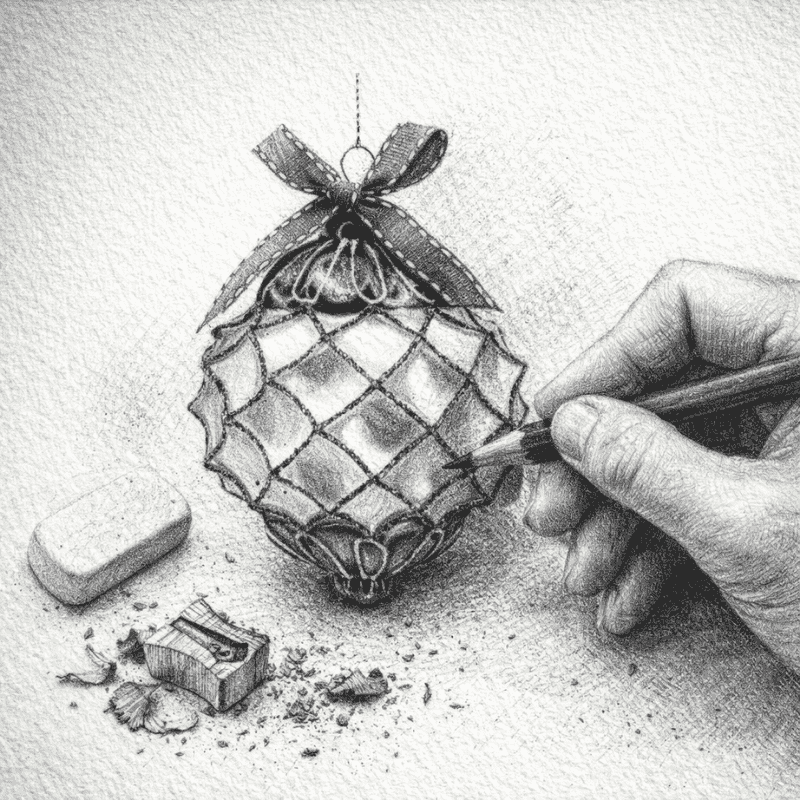
Hand sketching remains useful even when the project will eventually use CAD or 3D modeling.
At the early design stage, sketches allow the designer to explore:
- Shape and proportion
- Symmetry
- Decorative line placement
- Character expression
- Ornament silhouette
- Hanging position
- Light reflection
- Relationship between glass and added decorations
Sketches are fast to change and make it easier to compare several concepts before engineering begins.
For handcrafted ornaments, sketches can also show where painted lines, glitter, beads, ribbons, or metallic details should appear.
However, the approved sketch should not be treated as the final production instruction. It must be translated into measurable technical information.
Translating Artwork into a Manufacturable Structure
A two-dimensional drawing may hide several production risks.
For example:
- A narrow neck may be difficult to blow consistently.
- A thin hanging loop may break during packing.
- Deep decorative relief may create uneven glass thickness.
- A large lower section may make the ornament unbalanced.
- Sharp corners may create stress during cooling.
- A heavy ribbon or accessory may pull the product sideways.
The engineering team should review:
- Wall thickness
- Curvature
- Center of gravity
- Draft and mold release
- Glass distribution
- Hanging-point strength
- Decoration area
- Packaging contact points
Small engineering changes can improve durability without changing the overall design language.
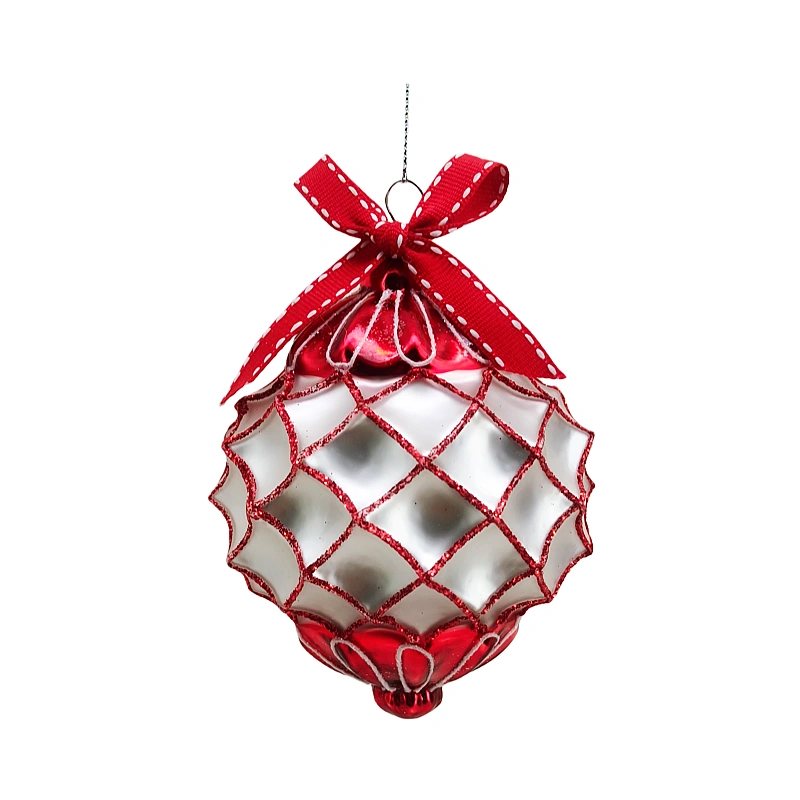
Selecting the Right Glass Material
Material selection influences clarity, weight, shape, thermal behavior, cost, and decoration compatibility.
Soda-Lime Glass
Soda-lime glass is widely used for decorative ornaments because it offers:
- Competitive material cost
- Established production methods
- Good clarity
- Broad color and decoration compatibility
- Suitability for medium- and high-volume production
It works well for many traditional blown and molded holiday ornaments.
The main limitations relate to thermal-shock performance and impact resistance. Proper annealing and export packaging are therefore important.
Borosilicate Glass
Borosilicate glass may be selected when the design requires:
- Thin walls
- Lightweight construction
- Refined transparency
- Complex handmade shapes
- Better resistance to temperature changes during processing
Its clean appearance suits contemporary and minimalist collections.
However, borosilicate glass is not automatically the best material for every ornament. Its cost, forming method, wall structure, and impact behavior must be considered.
Colored and Decorative Glass
Some designs use colored glass rather than adding all color through paint.
Colored glass can create:
- Greater visual depth
- Consistent internal color
- Light-transmission effects
- Reduced dependence on full-surface coating
Color consistency can be challenging across batches, especially for handcrafted production. A physical master sample should be retained.
Comparing Glass Options for Ornament Development
| Glass option | Main benefit | Main limitation | Suitable product |
| Soda-lime glass | Cost-effective and widely available | Moderate thermal and impact performance | Mass and mid-market ornaments |
| Borosilicate glass | Lightweight and refined appearance | Higher production cost | Modern premium ornaments |
| Colored glass | Strong depth and light effects | Batch color variation | Decorative and collectible lines |
| Thick molded glass | Stable structure and substantial feel | Heavier shipping weight | Tabletop and premium pieces |
| Thin blown glass | Delicate handcrafted appearance | Higher breakage risk | Traditional hanging ornaments |
The manufacturer should recommend the material according to the complete design, not only according to the target price.
Prototype Development: Testing the Design in Real Life
The prototype stage is where attractive drawings meet production reality.
A physical sample reveals issues that are difficult to identify on screen.
Buyers should evaluate:
- Overall proportion
- Glass clarity
- Wall distribution
- Product weight
- Hanging balance
- Surface detail
- Decoration placement
- Ribbon or hook strength
- Packaging fit
- Appearance under normal lighting
The first sample often requires adjustment.
Possible revisions include:
- Increasing the thickness around the neck
- Reducing the depth of a molded detail
- Changing the cap size
- Moving the hanging point
- Simplifying glitter lines
- Adjusting paint color
- Reducing ornament weight
- Improving the packaging insert
Prototype revision is not a sign of failure. It is a normal part of responsible product development.
Establishing a Golden Sample
After all design, material, color, decoration, and packaging changes are approved, the final sample becomes the golden sample.
The golden sample should represent:
- Approved dimensions
- Approved weight
- Correct glass color
- Correct decoration
- Approved hanging accessory
- Final logo or artwork
- Final packaging
- Acceptable workmanship
Both buyer and supplier should retain matching samples.
Bulk production should be compared against this reference rather than relying only on photographs.
Decorative Finishing as Part of Product Engineering
Decoration gives a glass ornament its visual identity, but each decorative step introduces new production variables.
Hand Painting
Hand painting supports detailed, artistic, and character-driven designs.
Buyers should define:
- Acceptable brush variation
- Color references
- Paint coverage
- Line thickness
- Drying and curing requirements
- Inspection distance
Hand-painted products naturally vary, but the variation must remain within an approved range.
Glitter Application
Glitter creates strong holiday impact but can cause quality complaints if it sheds excessively.
Important controls include:
- Adhesive type
- Glitter particle size
- Application thickness
- Drying time
- Edge cleanliness
- Final sealing
- Packaging contact
The finished ornament should be shaken and handled during sample review.
Metallic and Frosted Finishes
Metallic paints, frosted coatings, and translucent colors can increase perceived value.
They also require testing for:
- Adhesion
- Scratching
- Fingerprint visibility
- Color consistency
- Packaging friction
- Long-term appearance
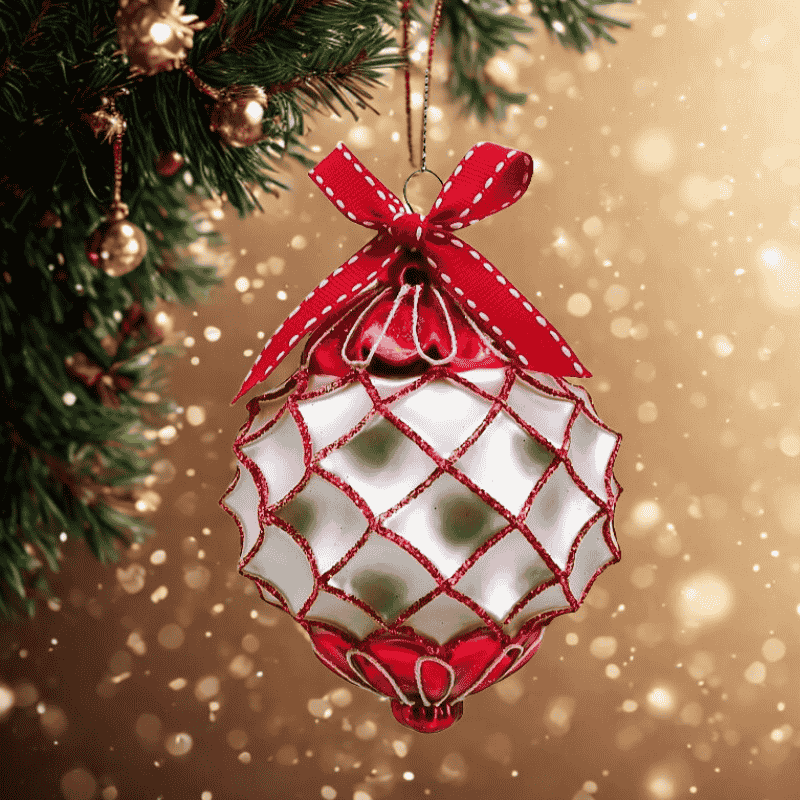
Ribbons and Fabric Accessories
Ribbon adds softness and gift appeal, but it must be treated as a functional component.
Check:
- Ribbon width
- Color
- Cutting quality
- Knot consistency
- Attachment strength
- Fraying
- Length
- Position
A premium glass ornament can appear low quality if the ribbon is uneven or poorly finished.
Decoration Method Comparison
| Decoration method | Visual advantage | Main production risk |
| Hand painting | Artistic and detailed | Variation and labor consistency |
| Glitter | Strong seasonal impact | Shedding and adhesive failure |
| Frosting | Soft premium appearance | Uneven finish and marks |
| Metallic coating | Luxury presentation | Scratching and color variation |
| Decal | Repeatable detailed artwork | Edge, firing, and adhesion defects |
| Ribbon | Warm handcrafted appearance | Fraying and attachment weakness |
Designing for Scalable Production
A handcrafted appearance does not mean that the product cannot be produced at scale.
It means that the manual processes must be clearly defined.
To scale a decorative ornament, the factory should establish:
- Standard operation instructions
- Decoration sequence
- Color samples
- Positioning guides
- Acceptable tolerance
- Drying time
- Inspection checkpoints
- Packaging procedure
A complicated decoration process may look impressive on one sample but produce high variation across thousands of units.
The development team should simplify steps that do not add visible consumer value.
For example, a hidden painted area may be removed if it increases labor without improving the displayed product.
Glass Ornament Quality Control
Quality control should cover the glass body, decoration, accessories, function, and packaging.
| Inspection area | What to check |
| Glass body | Cracks, chips, bubbles, distortion, and stress |
| Dimensions | Height, width, neck size, and weight |
| Surface | Scratches, dirt, uneven coating, and fingerprints |
| Decoration | Color, position, line quality, and completeness |
| Glitter | Adhesion, coverage, and shedding |
| Hanging part | Cap, hook, ribbon, and pull strength |
| Balance | Ornament hangs in the intended direction |
| Artwork | Matches approved design |
| Packaging | Insert fit, surface protection, and carton strength |
The quality standard should distinguish between acceptable handcrafted variation and unacceptable defects.
Hanging Strength and Product Balance
A hanging ornament must remain secure when displayed.
The supplier should evaluate:
- Glass neck strength
- Cap fit
- Hook construction
- Ribbon knot
- Adhesive
- Product weight
- Center of gravity
A visually correct ornament may still hang at the wrong angle if the attachment point is not aligned with the center of gravity.
Hanging tests should use the complete finished product, including ribbons and decorative accessories.
Annealing and Internal Stress
After forming, glass must cool gradually through a controlled annealing process.
Improper annealing can leave internal stress that increases the risk of cracking during:
- Decoration
- Packaging
- Shipping
- Temperature changes
- Consumer use
For thick or irregularly shaped ornaments, annealing control becomes especially important.
A supplier should have procedures for monitoring the cooling process and checking samples where necessary.
Packaging Development for Fragile Ornaments
Packaging affects breakage rate, retail presentation, freight cost, and consumer experience.
Common formats include:
- Individual white box
- Printed color box
- Window box
- Gift box
- Molded pulp insert
- Foam insert
- Corrugated partition
- Tissue wrapping
- Protective sleeve
The correct packaging depends on the product shape and channel.
An e-commerce ornament may require stronger individual protection than a product shipped in palletized retail cartons.
A premium gift ornament may require both a decorative presentation box and an export master carton.
Packaging Test Points
Buyers should confirm:
- Ornament movement inside the box
- Contact between decoration and insert
- Neck and hanging-point protection
- Box compression
- Carton quantity
- Gross weight
- Drop protection
- Barcode placement
- Warning labels
- Product photography
Packaging should be approved with the final decorated sample.
A blank glass sample may not reveal where glitter, paint, or ribbon will rub against the insert.
OEM and ODM Development Workflow
A practical glass ornament project usually follows this sequence:
Define the Market and Product Brief
Confirm the holiday, country, retail channel, target consumer, price, dimensions, order quantity, and delivery date.
Develop the Concept and Artwork
Create hand sketches, color directions, material ideas, and decoration proposals.
Complete the Manufacturing Review
The supplier reviews glass type, wall thickness, mold feasibility, hanging structure, decoration, and packaging.
Produce a Prototype
The factory creates the first physical sample for design and structural review.
Revise the Product
Adjust thickness, shape, color, decoration, attachment, and packaging as required.
Approve the Golden Sample
Lock the final product and packaging standard.
Begin Bulk Production
Control glass forming, annealing, decoration, assembly, and packing.
Complete Final Inspection
Compare finished products with the golden sample and agreed defect criteria.
Ship Before the Seasonal Deadline
Allow enough time for freight, customs, warehouse receiving, and retail distribution.
MOQ, Tooling, and Lead Time
MOQ depends on:
- Existing or custom mold
- Ornament size
- Glass material
- Number of colors
- Hand decoration
- Packaging
- Accessories
- Order quantity
- Number of SKUs
A stock glass shape with custom painting may support a lower MOQ.
A new mold, custom glass color, or complicated handmade decoration generally requires a higher commitment.
The full timeline may include:
- Concept confirmation
- Drawing
- Mold making
- Glass sample
- Decoration sample
- Revisions
- Packaging proof
- Testing
- Production
- Inspection
- Shipping
Buyers should request a stage-by-stage timeline rather than only asking for bulk production time.
Cost Factors in Custom Glass Ornament Development
The unit price is influenced by:
- Glass type
- Product weight
- Shape complexity
- Mold cost
- Decoration labor
- Number of colors
- Glitter or metallic finishes
- Accessories
- Packaging
- Inspection
- Order volume
- Breakage allowance
A small ornament can be expensive if it contains several manually applied colors and detailed decoration.
A larger ornament may be cost-efficient if it uses a simple mold and limited finishing.
Quotations should therefore be compared using the same complete specification.
Common Product Development Risks
| Risk | Common cause | Prevention |
| Glass breaks during production | Weak shape or poor annealing | Review structure and cooling process |
| Ornament hangs incorrectly | Attachment point is unbalanced | Test the complete product |
| Decoration varies | No physical standard | Approve a golden sample |
| Glitter sheds | Weak adhesive or curing | Perform handling tests |
| Paint scratches | Insufficient coating durability | Test final product and packaging |
| Ribbon becomes loose | Poor knot or attachment | Add pull and handling checks |
| Packaging damage | Insert does not support the product | Approve packed samples |
| Production delay | Too many late revisions | Lock design before bulk production |
| Cost exceeds target | Design ignores manual labor | Review process during concept stage |
| Repeat orders differ | Samples and records are not retained | Keep drawings, colors, and master samples |
How to Evaluate a Glass Ornament Manufacturer
Buyers should ask:
- Which glass-forming methods are available?
- Does the supplier produce glass in-house?
- Which decoration processes are controlled internally?
- Can the supplier explain the structural risks?
- How is annealing monitored?
- How are hand-painted colors standardized?
- Can the factory produce custom molds?
- How are hanging parts tested?
- Can the supplier develop export packaging?
- Are golden samples retained?
- How are repeat-order colors controlled?
- Can the supplier manage mixed-SKU seasonal orders?
A strong manufacturer should be willing to recommend design changes before tooling.
The factory’s role is not only to reproduce artwork. It should help ensure that the finished design can be manufactured consistently.
Frequently Asked Questions About Glass Ornament Development
Why Is Hand Sketching Still Used?
Hand sketching allows designers to explore shapes, proportions, decoration, and visual storytelling quickly before detailed engineering begins.
Which Glass Is Best for Christmas Ornaments?
Soda-lime glass is commonly used for cost-effective decorative ornaments, while borosilicate glass may suit lighter or more refined handmade designs.
Can Handcrafted Glass Ornaments Be Mass-Produced?
Yes. Manual processes can be scaled when decoration steps, colors, tolerances, and quality checkpoints are standardized.
What Causes Glass Ornaments to Break?
Common causes include weak glass distribution, sharp geometry, internal stress, thin hanging points, impact, and poor packaging.
How Is Ornament Color Controlled?
Factories use approved physical color samples, paint formulas, process instructions, and batch inspections.
Can Buyers Customize the Shape?
Yes. Custom molds, blown shapes, colors, decorations, ribbons, caps, logos, and packaging can be developed.
What Determines the MOQ?
MOQ depends on mold requirements, glass type, decoration, packaging, labor, colors, and production efficiency.
How Should Glitter Be Tested?
The ornament should be handled, rubbed, shaken, and packed to evaluate excessive shedding and adhesive performance.
What Should Be Included in the Golden Sample?
It should include the final glass body, decoration, color, hanging accessory, logo, ribbon, and packaging.
How Can Shipping Breakage Be Reduced?
Use product-specific inserts, controlled carton quantities, strong master cartons, and packing tests with the finished product.
How Early Should Christmas Products Be Developed?
Development should begin early enough for concept work, tooling, sampling, revisions, testing, production, freight, and retail distribution.
What Information Should a Buyer Send for a Quotation?
Provide dimensions, reference images, material preference, decoration, quantity, packaging, target market, price level, and required delivery date.
Conclusion: Better Design Creates Better Manufacturing
A handcrafted glass ornament succeeds when creative storytelling and production engineering develop together.
The initial concept gives the product emotional meaning. Hand sketches define the visual direction. Engineering protects the glass structure. Prototyping reveals practical weaknesses. Decoration adds character and perceived value. Packaging protects the result during global distribution.
For brands and retailers, design capability is not limited to making products look attractive.
Good product development also:
- Reduces production defects
- Improves cost predictability
- Shortens revision cycles
- Protects seasonal delivery schedules
- Supports repeat orders
- Creates stronger retail differentiation
Before launching a custom glass ornament, prepare the concept, size, material, decoration, quantity, packaging, target market, and delivery date.
Then request a manufacturability review, physical prototype, golden sample, quality standard, packaging proposal, and complete project schedule.
A well-designed ornament should do more than look beautiful in a studio photograph. It should hang correctly, survive transportation, remain visually consistent, and preserve the emotional story that inspired the product in the first place.