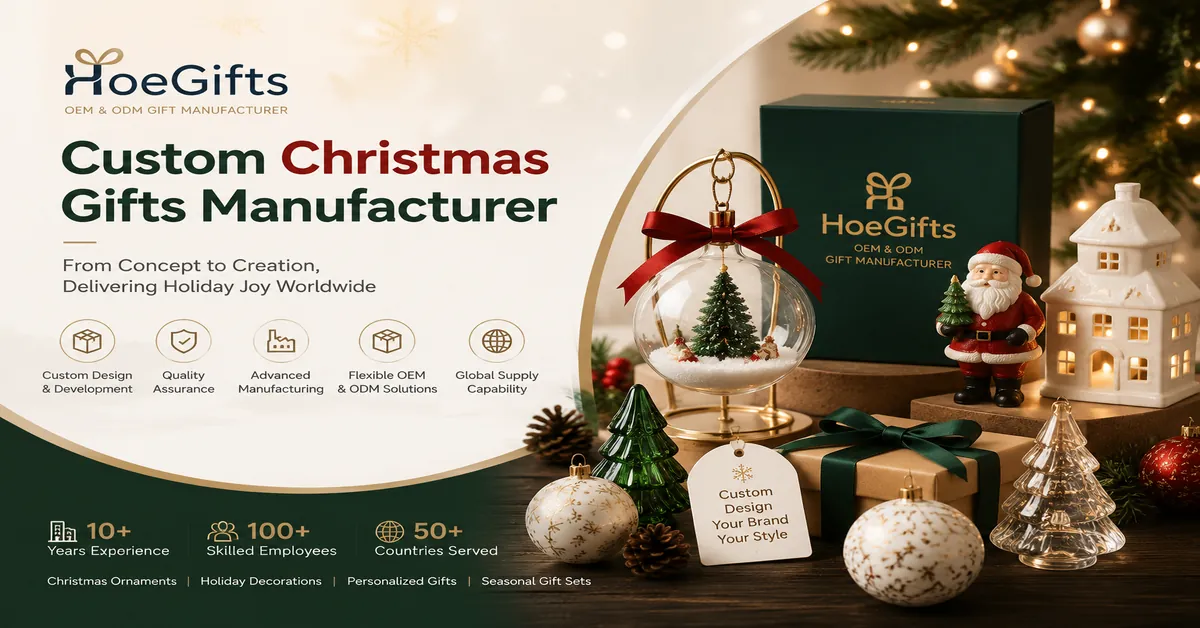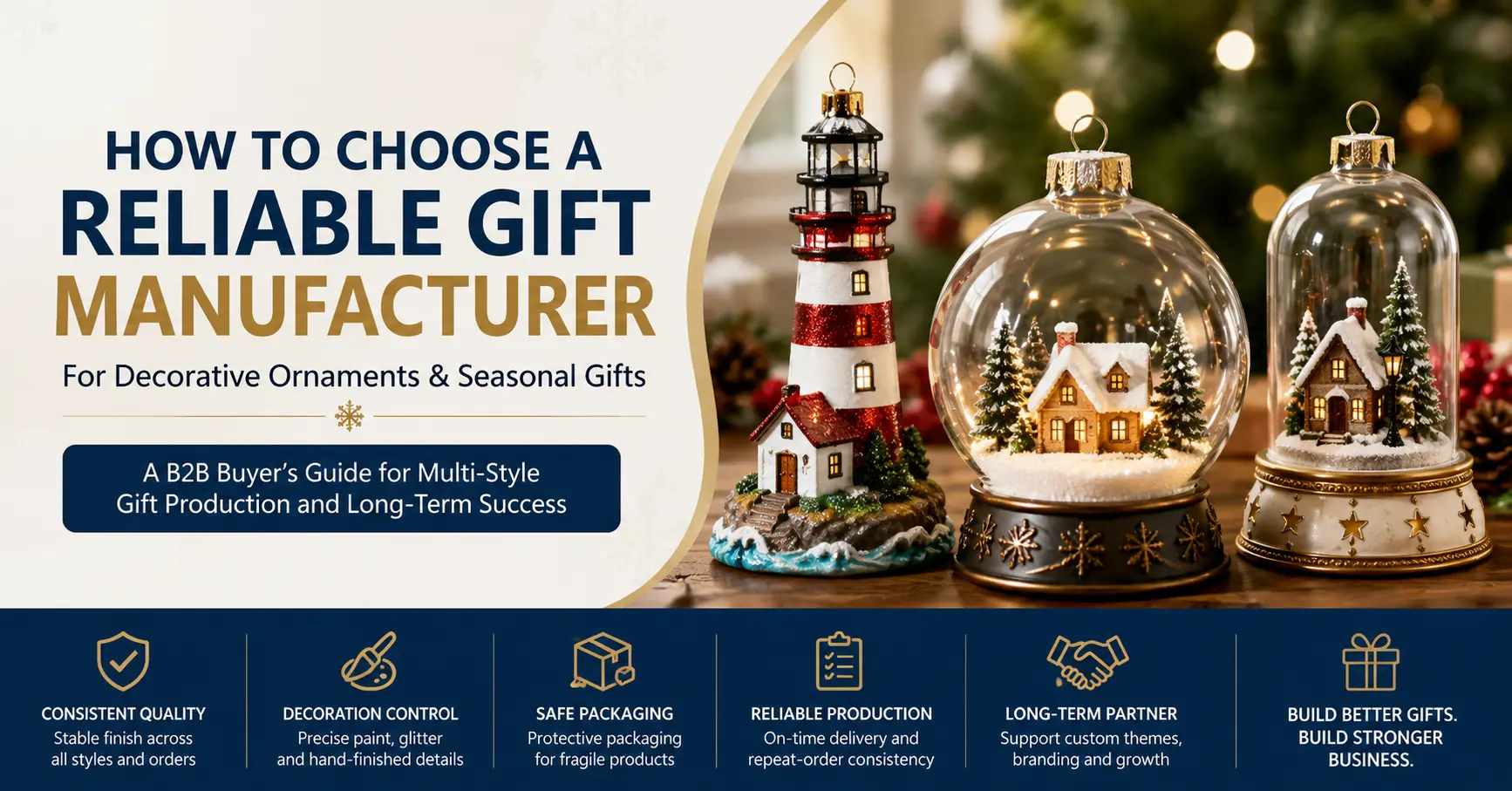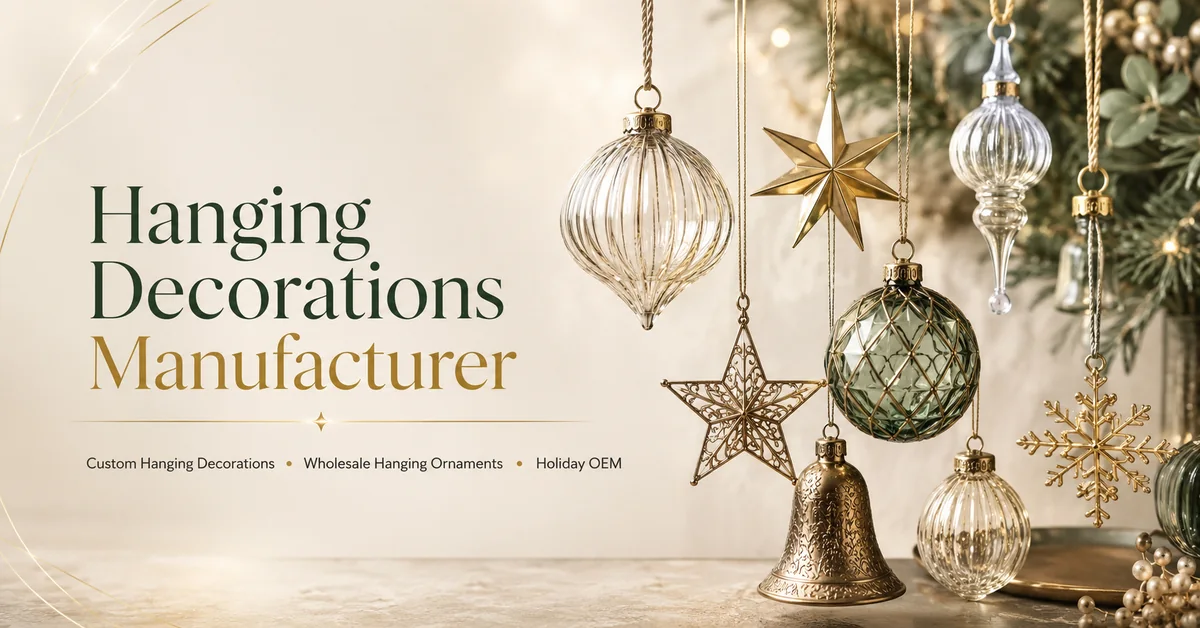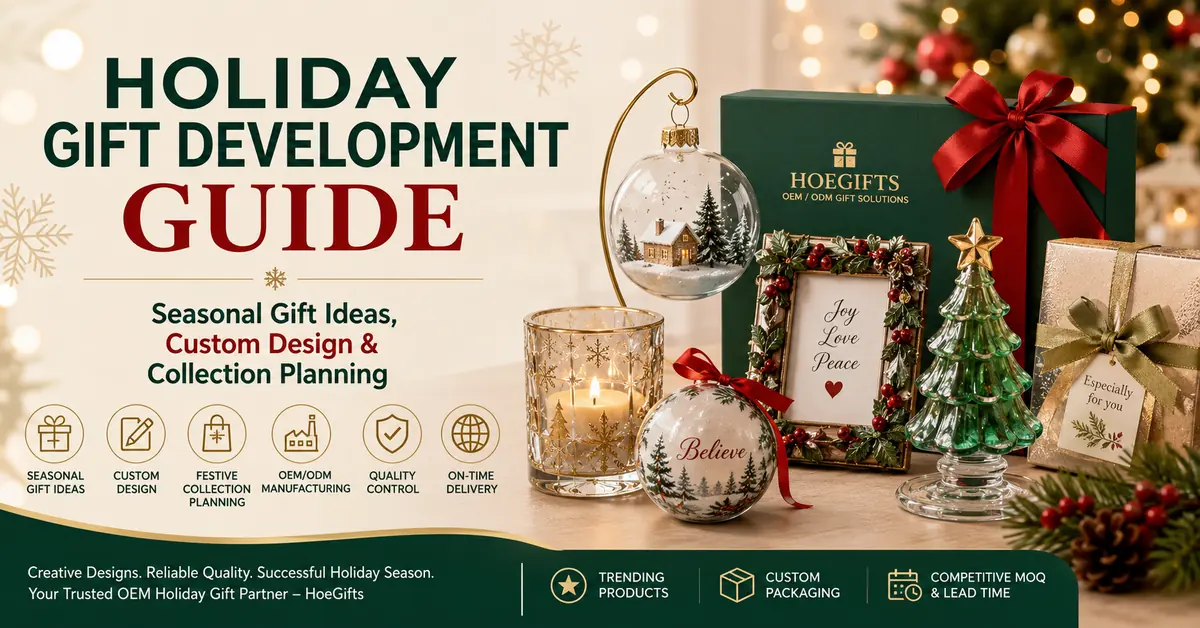



Handmade Christmas gifts have a value that standard promotional products often struggle to create. Small variations, hand-applied finishes, traditional craft techniques, textured materials, and carefully assembled details can make an ornament, tabletop decoration, candle holder, gift box, or seasonal accessory feel personal and memorable.
For B2B buyers, however, finding an attractive handmade product is only the beginning. The greater challenge is choosing a reliable Christmas gift manufacturer that can preserve the handcrafted appearance while meeting commercial requirements for consistency, safety, packaging, quantities, lead times, and international delivery.
Retailers, gift shops, importers, wholesalers, lifestyle brands, and private-label buyers need more than creative samples. They need a manufacturing partner that understands how handmade and hand-finished products behave in bulk production.
This guide explains how to evaluate manufacturers of handmade Christmas gifts, compare production capabilities, control natural variation, plan packaging, manage seasonal timelines, and build a reliable OEM or private-label Christmas collection.

What Should Buyers Confirm Before Choosing a Christmas Gift Manufacturer?
Before selecting a supplier, buyers should determine whether the manufacturer can balance three important requirements:
- Handcrafted character
- Repeatable production quality
- Commercial delivery capability
A product may use hand painting, hand assembly, glitter application, textile decoration, wood finishing, metal forming, or mixed-material construction. These processes create visual value, but they also introduce variables that must be controlled.
A reliable Christmas gift manufacturer should be able to explain:
- Which processes are completed by hand
- Which processes use molds, tools, or machinery
- What level of variation is normal
- What defects are unacceptable
- How approved samples are used during production
- How delicate finishes are protected
- How packaging is tested
- How seasonal delivery schedules are managed
- Whether repeat orders can match previous production
Buyers should not expect handmade products to look mechanically identical. However, they should expect the manufacturer to establish acceptable limits for color, size, finish, assembly, decoration, and packaging.
Buyer Cheat Sheet for Handmade Christmas Gift Sourcing
| Buyer Requirement | What to Confirm | Why It Matters |
|---|---|---|
| Handmade appearance | Hand painting, assembly, finishing, stitching or decoration | Determines the product’s visual and emotional value |
| Product consistency | Golden sample, inspection standards and variation limits | Prevents unacceptable differences in bulk production |
| Material quality | Material specifications, safety and durability | Affects performance, appearance and market compliance |
| Custom development | Shape, color, artwork, components and packaging | Supports private-label and exclusive collections |
| Seasonal capacity | Sampling, production and shipment schedule | Christmas products have fixed selling windows |
| Protective packaging | Inserts, boxes, surface protection and export cartons | Reduces damage to fragile or decorated items |
| MOQ flexibility | MOQ by material, mold, color and design | Helps buyers plan collections and test markets |
| Quality control | Incoming, in-process and final inspection | Maintains consistency across multiple SKUs |
| Export support | Labeling, cartons, documents and shipping preparation | Supports international wholesale programs |
| Repeat production | Sample records, color references and specifications | Important for annual and evergreen collections |
Why Handmade Christmas Gifts Matter in Retail Markets
Handmade and artisan-style Christmas gifts appeal to buyers because they feel less generic than standard mass-market products.
Their commercial value often comes from:
- Visible craftsmanship
- Emotional storytelling
- Seasonal relevance
- Decorative detail
- Collectability
- Gift-ready presentation
- Limited-edition potential
- Natural material textures
- Small variations between pieces
Consumers often respond positively to products that appear thoughtful and distinctive. A hand-painted ornament, carved wooden decoration, stitched textile figure, decorated glass bauble, or assembled miniature winter scene can feel more meaningful than a plain promotional product.
For retailers and private-label brands, handmade Christmas collections can also support stronger visual merchandising. Different textures, colors, shapes, and materials help create a more attractive seasonal display.
What Does “Handmade” Mean in Commercial Gift Manufacturing?
The term handmade can describe several different production models.
A product does not always need to be made entirely by hand to have authentic handmade value. Many commercially viable Christmas gifts use a combination of molds, tools, machinery, and hand-finishing processes.
Fully Handmade Products
These products are primarily formed, decorated, and assembled by hand.
Examples may include:
- Hand-sewn textile ornaments
- Hand-carved wooden decorations
- Hand-built ceramic ornaments
- Hand-forged metal accessories
- Hand-painted artwork
- Woven or knitted Christmas products
Fully handmade products usually have more natural variation and may require longer production times.
Hand-Finished Products
These products use a standardized base created with tools or molds, followed by manual decoration or assembly.
Examples include:
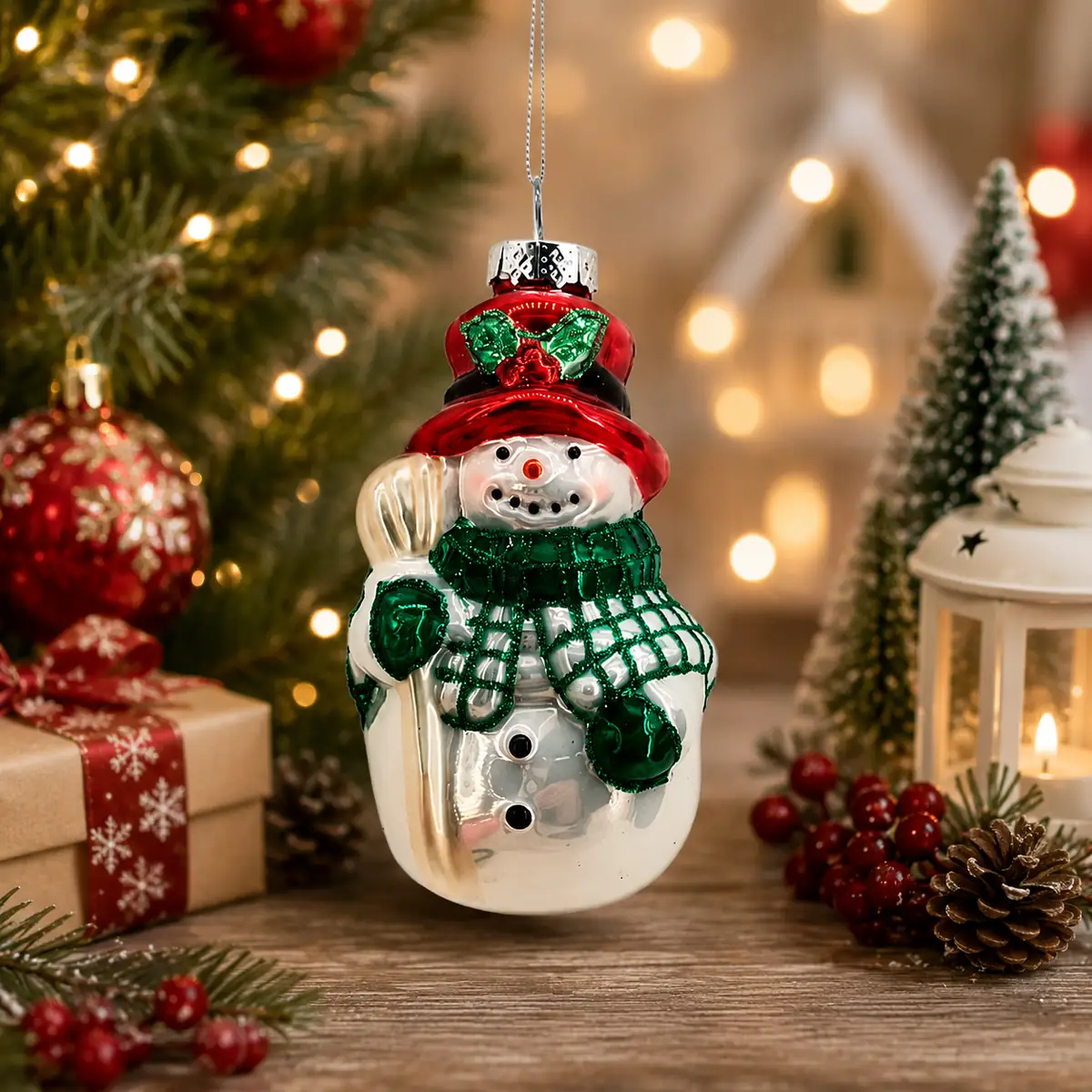
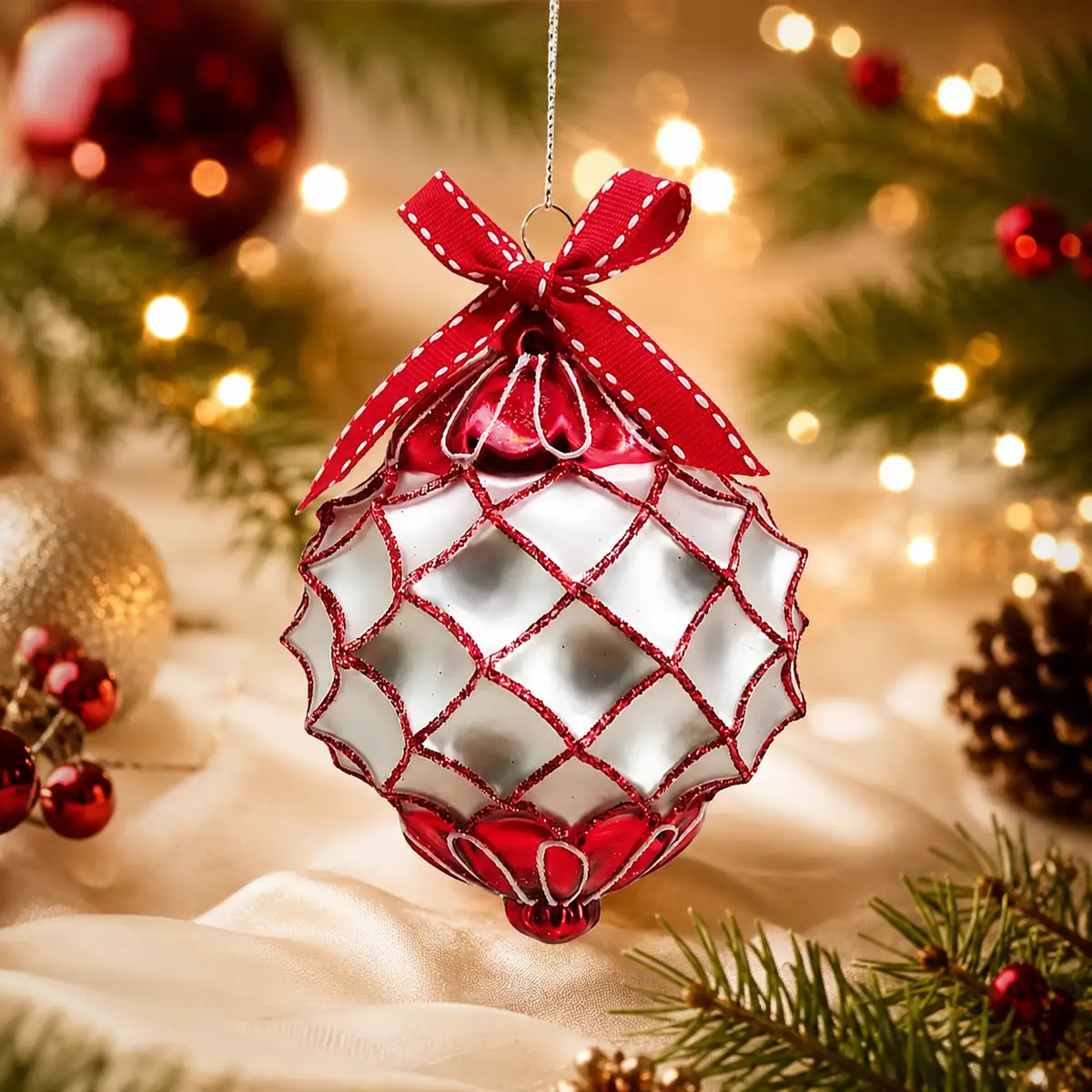
- Molded glass ornaments with hand painting
- Resin figures with hand-applied colors
- Metal decorations with assembled ribbons
- MDF ornaments with hand-added details
- Glass domes with miniature scenes assembled inside
- Silicone figures with printed or painted details
This production model is common in B2B Christmas gift manufacturing because it combines scalable production with handcrafted appearance.
Artisan-Style Mass Production
These products are designed to look handcrafted but rely more heavily on standardized production.
Examples include:
- Printed wood-look ornaments
- Machine-cut metal decorations
- Molded figurines with automated color application
- Printed textile products
- Standard glass shapes with decals
This model can support higher quantities and lower unit costs, but it may offer less natural variation and handmade character.
A professional Christmas gift manufacturer should explain which production model is being quoted so the buyer can compare price, appearance, MOQ, lead time, and quality expectations correctly.
Handmade Christmas Gift Manufacturer vs General Gift Supplier
A manufacturer and a general supplier may provide similar-looking products, but their capabilities can be very different.
| Capability | Handmade Christmas Gift Manufacturer | General Gift Supplier |
| Product development | Usually available | Often limited |
| Custom shape | Available depending on material | Usually sourced from existing catalogs |
| Material advice | Based on production experience | Depends on third-party factories |
| Hand-finishing control | Directly managed | May be outsourced |
| Custom packaging | Usually available | Basic options may be available |
| Quality inspection | Integrated into production | Often based on supplier checks |
| Repeat-order consistency | Supported through specifications and samples | Depends on factory continuity |
| Production troubleshooting | Direct communication with technical teams | Communication passes through intermediaries |
| OEM and private label | Strong | Varies |
| Seasonal capacity planning | Direct factory scheduling | Depends on sourcing network |
Buyers developing an exclusive product collection should generally work with a manufacturer that can control the product, decoration, assembly, packaging, and inspection process.
A supplier may still be suitable when the buyer only needs existing products with simple logo or packaging adjustments.
Main Categories of Handmade Christmas Gifts
A reliable Christmas gift manufacturer may support several product categories, depending on its materials, equipment, workshops, and subcontractor network.
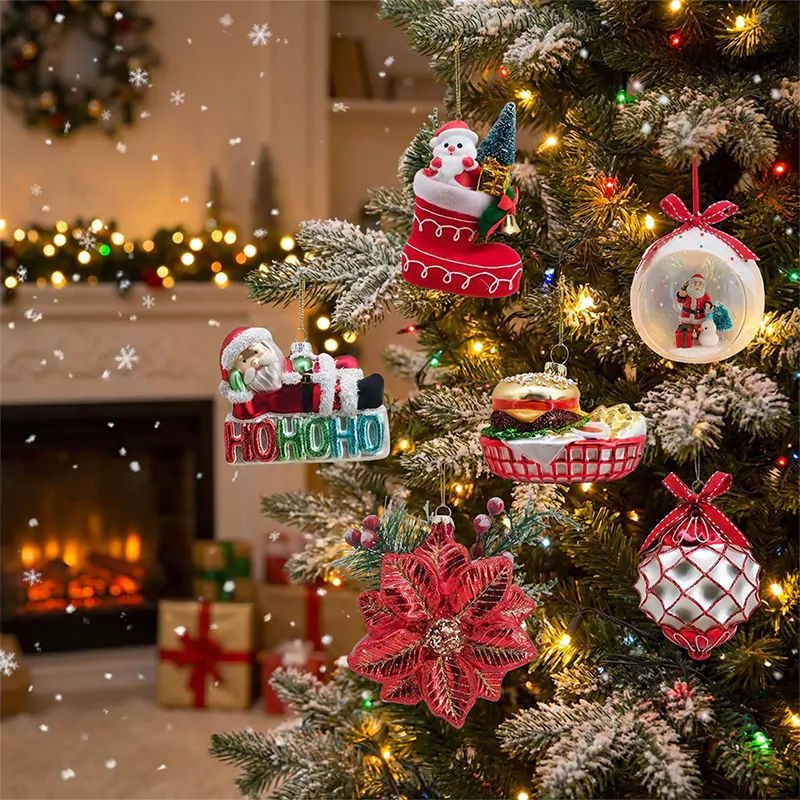
Handmade and Hand-Finished Ornaments
Christmas ornaments are one of the most common seasonal gift categories.
Options include:
- Glass baubles
- Shaped glass ornaments
- Wooden hanging decorations
- MDF ornaments
- Metal ornaments
- Resin figurine ornaments
- Textile ornaments
- Mixed-material ornaments
- Miniature scene ornaments
- Character ornaments
- Souvenir ornaments
Common customization options include:
- Shape
- Color
- Painting
- Glitter
- Decal
- Artwork
- Ribbon
- Hanging cord
- Logo tag
- Gift box
- Printed card
Decorative Glass Gifts
Glass creates a premium and festive visual effect.
Suitable products include:
- Glass ornaments
- Candle holders
- Decorative jars
- Glass domes
- Miniature scene decorations
- Glass trees
- Decorative bottles
- Tabletop glass accessories
- Giftable drinkware
Glass products may use hand painting, frosting, glitter, decals, electroplating, internal decoration, or hand assembly.
Wooden Christmas Gifts
Wood provides a natural, warm, and traditional appearance.
Possible products include:
- Wooden ornaments
- Serving trays
- Miniature houses
- Christmas trees
- Signs
- Photo frames
- Gift boxes
- Tabletop decorations
- Engraved keepsakes
Buyers should confirm the wood type, moisture control, surface finish, printing or engraving method, and packaging protection.
Metal Christmas Decorations
Metal products can create classic, rustic, industrial, or premium styles.
Examples include:
- Hanging ornaments
- Bells
- Candle holders
- Tabletop trees
- Decorative frames
- Lanterns
- Wire decorations
- Sculptural accessories
Common processes include cutting, stamping, bending, welding, polishing, plating, powder coating, painting, and hand assembly.
Textile and Fabric Gifts
Fabric products offer softness and character.
Examples include:
- Stuffed ornaments
- Fabric figurines
- Stockings
- Gift bags
- Hanging decorations
- Embroidered products
- Felt ornaments
- Decorative ribbons
- Table accessories
Buyers should review fabric composition, stitching quality, filling material, colorfastness, embroidery, printed details, and label requirements.
Resin and Mixed-Material Gifts
Resin is suitable for detailed shapes, characters, buildings, animals, and miniature scenes.
Mixed-material products may combine:
- Resin and glass
- Wood and metal
- Glass and fabric
- MDF and metal
- Silicone and metal
- Ceramic and textile
- Glass and natural materials
Mixed-material designs can create stronger visual differentiation but require more complex assembly and quality control.
Material and Craft Options
| Material or Process | Suitable Products | Buyer Considerations |
| Hand-painted glass | Ornaments, baubles, candle holders | Paint consistency, drying, scratches and breakage |
| Carved or cut wood | Ornaments, signs, trays, tabletop décor | Moisture, surface finish and edge quality |
| Resin molding | Figurines, characters, miniature scenes | Mold detail, painting and structural strength |
| Metal forming | Bells, frames, lanterns and ornaments | Welding, sharp edges, coating and corrosion |
| Textile stitching | Stockings, figures and hanging décor | Stitching, filling, labels and colorfastness |
| Glitter application | Ornaments and seasonal decorations | Adhesion, shedding and packaging protection |
| Decal printing | Glass, ceramic, metal and wood | Position, color accuracy and abrasion resistance |
| Hand assembly | Domes, ornaments and gift sets | Component security and alignment |
| Frosted finishing | Glass gifts and winter decorations | Surface consistency and rubbing resistance |
| Engraving | Wood, metal and glass gifts | Artwork clarity and positioning |
The chosen material should match the target retail price, use environment, packaging plan, market regulations, and expected order quantity.
How to Evaluate Craftsmanship
Handmade products naturally include small variations, but buyers still need a defined quality standard.
Shape and Proportion
Check whether the overall silhouette matches the approved design.
For ornaments and figurines, confirm:
- Height
- Width
- Thickness
- Hanging position
- Weight balance
- Base stability
- Component proportions
Color and Decoration
Hand-applied colors may vary slightly. The buyer and manufacturer should agree on acceptable tolerances.
Review:
- Main color
- Secondary colors
- Paint boundaries
- Glitter placement
- Decal position
- Surface coverage
- Brush marks
- Decorative accents
Assembly
Handmade Christmas gifts often contain several parts.
Check:
- Hanging cords
- Ribbon knots
- Metal loops
- Caps
- Glued components
- Internal scenes
- Bases
- Decorative accessories
Loose or misaligned components can reduce retail value and increase customer complaints.
Surface Finish
Inspect for:
- Scratches
- Glue marks
- Paint stains
- Rough edges
- Uneven coating
- Cracks
- Chips
- Excess glitter
- Fingerprints
- Contamination
The inspection standard should distinguish natural handcrafted variation from unacceptable defects.

How Custom Handmade Christmas Gifts Are Developed
OEM development usually follows a structured process.
Step 1: Buyer Brief
The buyer provides:
- Product idea
- Reference image
- Drawing or artwork
- Material preference
- Dimensions
- Color requirements
- Order quantity
- Target market
- Target price
- Packaging requirements
- Delivery schedule
The brief should also identify which details must remain fixed and which can be adjusted.
Step 2: Manufacturing Review
The manufacturer evaluates:
- Product structure
- Material suitability
- Craft method
- Hand-finishing requirements
- Mold or tooling needs
- Assembly sequence
- Safety concerns
- Packaging risks
- Estimated cost
- Sampling timeline
A good manufacturer should identify impractical details before sampling begins.
Step 3: Prototype or Sample Development
The sample confirms:
- Shape
- Material
- Size
- Color
- Decoration
- Assembly
- Product balance
- Packaging fit
- Overall retail appearance
For handmade or hand-finished products, one sample may not show the full range of possible variation. Buyers may request several samples when color or hand-painted detail is especially important.
Step 4: Golden Sample Approval
The final approved sample should become the production reference.
The golden sample should confirm:
- Product dimensions
- Material
- Color
- Finish
- Artwork
- Component placement
- Packaging
- Labels
- Carton requirements
Photos and written specifications should support the physical sample.
Step 5: Pilot Production
For complex products, a small pilot run may help identify problems before full production.
The pilot run can test:
- Production speed
- Decoration consistency
- Assembly sequence
- Breakage rate
- Packaging efficiency
- Labor requirements
- Quality inspection criteria
Step 6: Bulk Production
Bulk production may include:
- Material preparation
- Forming
- Molding
- Cutting
- Painting
- Finishing
- Assembly
- Inspection
- Labeling
- Packaging
Each production stage should have clear checkpoints.
Step 7: Final Inspection and Shipping Preparation
Before shipment, the manufacturer should verify:
- Quantity
- Assorted design ratio
- Product quality
- Packaging
- Barcode
- Carton marks
- Export carton strength
- Shipping documents
OEM and Private-Label Options
| Custom Option | Available Direction | Suitable Buyers |
| Product shape | Existing shape or custom design | Retailers and private-label brands |
| Color | Seasonal palette or brand color | Lifestyle and corporate gift buyers |
| Artwork | Printed, painted, engraved or applied | Souvenir and promotional programs |
| Material | Glass, wood, metal, resin, textile or mixed | Different price and market levels |
| Hand finishing | Painting, glitter, stitching, assembly | Premium and artisan-style collections |
| Branding | Logo, label, tag, card or sleeve | Corporate and private-label products |
| Packaging | White box, kraft box, color box or gift box | Wholesale and retail channels |
| Product assortment | Single style or coordinated collection | Seasonal retail programs |
| Barcode and labeling | SKU, barcode, warning and country labels | Importers and chain retailers |
| Export cartons | Carton size, quantity and shipping marks | International wholesale orders |
Pricing Handmade Christmas Gifts
Handmade and hand-finished products often cost more than fully automated products because they require more labor, inspection, and production time.
Pricing may be affected by:
- Material
- Product dimensions
- Number of components
- Hand-finishing time
- Decoration complexity
- Mold or tooling
- Order quantity
- Number of colors
- Packaging
- Inspection standard
- Product assortment
- Shipping protection
Buyers should compare quotations using the same specifications.
A lower quotation may exclude:
- Custom packaging
- Stronger inserts
- Logo labels
- Multiple color applications
- Inspection
- Export cartons
- Breakage allowance
- Testing
- Artwork setup
- Mold costs
The cheapest product is not always the lowest-cost project if damage, delays, inconsistent decoration, or packaging failures occur later.
MOQ Planning for Handmade Christmas Gifts
MOQ depends on the product and production method.
Factors include:
- Existing or custom molds
- Material purchasing requirements
- Hand-finishing setup
- Color quantities
- Number of designs
- Packaging quantity
- Label printing quantity
- Production efficiency
A collection with ten different ornaments may have a higher total MOQ than a single-design project.
Buyers can sometimes reduce risk by:
- Using existing molds
- Sharing one packaging format across several designs
- Limiting the number of colors
- Using standard ribbons or fittings
- Selecting existing materials
- Testing a smaller assortment first
MOQ should be evaluated together with unit cost, development cost, packaging, and repeat-order potential.
Lead Time and Seasonal Planning
Christmas products have a fixed retail window. A delayed order may miss the entire selling season.
A typical project may include:
- Product briefing
- Quotation
- Artwork confirmation
- Sample development
- Sample revision
- Packaging development
- Sample approval
- Material preparation
- Bulk production
- Inspection
- Packaging
- Shipping
Hand-painted, stitched, assembled, or multi-material products may require longer production time than simple printed products.
Buyers should also allow time for:
- Sample delivery
- Approval delays
- Packaging revisions
- Testing
- Peak-season capacity
- International shipping
- Customs clearance
- Distribution to stores
Starting early gives the buyer more design choices and reduces the risk of rushed approvals.
Packaging for Handmade Christmas Gifts
Packaging must protect the product without hiding its craftsmanship.
Common Packaging Options
| Packaging Type | Suitable Products | Main Benefit |
| OPP bag | Textile and simple ornaments | Economical protection |
| White box | Standard ornaments and gifts | Clean and practical |
| Kraft box | Natural and artisan-style products | Supports handcrafted presentation |
| Color box | Private-label retail products | Strong branding |
| Window box | Decorative gifts and ornaments | Displays the product |
| Gift box | Premium collections | Higher perceived value |
| Foam insert | Fragile glass and ceramic products | Strong protection |
| Molded pulp insert | Home décor and gift sets | Structured lower-plastic option |
| Tissue wrap | Painted and delicate surfaces | Reduces scratching |
| Display carton | Multi-design retail programs | Supports merchandising |
| Export carton | Wholesale shipments | Protects during transportation |
The manufacturer should test packaging with the final decorated product, not only with an undecorated sample.
Glitter, ribbons, paint, glass, delicate surfaces, and protruding components may require additional protection.
Quality Control Checklist
| Inspection Area | What to Check |
| Material | Correct material, thickness and finish |
| Dimensions | Within agreed tolerance |
| Shape | Matches approved design |
| Color | Consistent with approved sample |
| Hand painting | Acceptable detail and boundaries |
| Glitter | Correct coverage with controlled shedding |
| Assembly | Components are secure and aligned |
| Hanger | Strong, correctly positioned and balanced |
| Surface | Free from unacceptable scratches, glue and stains |
| Function | Product performs as intended |
| Packaging | Protects product and matches approved format |
| Labeling | Barcode, tag and carton information are correct |
| Assortment | Correct quantity of each design |
| Final reference | Matches golden sample and specifications |
For handcrafted products, the inspection standard should include approved examples of acceptable and unacceptable variation.
How to Verify a Christmas Gift Manufacturer
Before confirming an order, buyers should review the supplier from several angles.
Product Experience
Ask whether the manufacturer has experience with:
- Christmas ornaments
- Hand-painted products
- Mixed-material gifts
- Glass products
- Wood products
- Resin figurines
- Textile decorations
- Seasonal packaging
Sample Quality
Review actual samples for:
- Craftsmanship
- Decoration
- Assembly
- Surface finish
- Packaging
- Retail presentation
Communication
A reliable supplier should respond clearly to questions about materials, lead times, MOQ, quality standards, and packaging.
Vague answers can indicate that the supplier does not fully control production.
Production Capability
Confirm whether the manufacturer directly manages:
- Sampling
- Molding
- Decoration
- Assembly
- Inspection
- Packaging
Some processes may be subcontracted, which is normal in mixed-material manufacturing, but the supplier should still control specifications and quality.
Quality Management
Ask how the factory:
- Approves materials
- Creates golden samples
- Trains workers
- Conducts inspections
- Records defects
- Handles rework
- Manages repeat orders
Packaging and Export Experience
A manufacturer serving international buyers should understand:
- Protective packaging
- Barcode labels
- Carton marks
- Export cartons
- Product documentation
- Shipping preparation
Common Buyer Mistakes
Expecting Every Piece to Be Identical
Handmade products naturally include small differences. Buyers should define acceptable variation rather than expecting machine-level uniformity.
Approving Only One Product Photo
Photos cannot fully show texture, weight, paint quality, balance, assembly, and packaging.
Physical samples are important for high-value or customized projects.
Choosing by Price Alone
Low prices may result from simplified decoration, weaker packaging, lower-grade materials, or reduced inspection.
Starting Development Too Late
Christmas projects need time for sampling, revision, production, inspection, and shipping.
Ignoring Packaging Until Production
Packaging can affect product dimensions, decoration protection, carton size, cost, and breakage.
Using Too Many Designs in the First Order
A large assortment increases sampling, labeling, carton management, and production complexity.
Failing to Define Variation Standards
Without clear standards, buyers and factories may disagree about whether differences are acceptable.
How to Brief a Christmas Gift Manufacturer
A practical RFQ should include:
- Product name
- Reference images
- Dimensions
- Material
- Craft method
- Color
- Decoration
- Number of designs
- Quantity per design
- Logo requirements
- Packaging
- Barcode
- Target market
- Testing requirements
- Delivery date
- Destination
Buyers should also explain the sales channel:
- Gift shop
- Supermarket
- Department store
- E-commerce
- Home décor retailer
- Corporate gifting
- Souvenir store
- Hotel
- Private-label collection
The intended channel helps the manufacturer recommend suitable materials, finishes, packaging, and price levels.
Working with HoeGifts for Handmade Christmas Gift Development
HoeGifts supports B2B buyers with Christmas ornaments, decorative gifts, glassware, metal products, wooden accessories, silicone items, resin decorations, home décor products, and mixed-material gift collections.
Depending on the product, projects may combine standardized forming processes with hand painting, hand assembly, glitter application, decorative finishing, textile details, or gift packaging.
HoeGifts can support:
- Product concept review
- Material recommendations
- Existing-product customization
- Custom shape development
- Sampling
- Color and artwork adjustments
- Hand-finished decoration
- Product assembly
- Private-label packaging
- Barcode and hang tag requirements
- Quality inspection
- Export packaging
- Bulk production planning
Buyers can begin with an existing product, reference image, drawing, physical sample, collection theme, or packaging concept.
As a Christmas gift manufacturer serving wholesale and private-label programs, HoeGifts helps buyers balance decorative craftsmanship with scalable production and commercial delivery requirements.

Frequently Asked Questions
What Is a Handmade Christmas Gift Manufacturer?
A handmade Christmas gift manufacturer produces or coordinates products that use manual forming, painting, decorating, stitching, finishing, or assembly processes.
Many products combine machine-made components with hand-finishing.
Are Handmade Christmas Gifts Suitable for Bulk Orders?
Yes, provided the product is designed for scalable production and acceptable variation is clearly defined.
Complex products may require longer lead times and more detailed inspection.
Can Handmade Christmas Gifts Be Customized?
Yes. Buyers may customize:
- Shape
- Size
- Material
- Color
- Artwork
- Hand-painted details
- Glitter
- Ribbon
- Labels
- Packaging
- Product assortments
How Are Handmade Products Kept Consistent?
Manufacturers use approved samples, written specifications, color references, worker instructions, production checkpoints, and final inspections.
What Materials Can Be Used?
Common materials include glass, wood, metal, resin, ceramic, textile, silicone, MDF, paper, and mixed materials.
What Packaging Is Best for Handmade Christmas Gifts?
The best packaging depends on fragility, surface decoration, retail channel, and shipping method. Options include kraft boxes, color boxes, window boxes, gift boxes, protective inserts, tissue wrapping, and export cartons.
When Should Buyers Start Christmas Product Development?
Development should begin early enough to allow for sampling, revisions, packaging approval, production, inspection, shipping, and customs clearance.
Highly customized projects should begin earlier than standard products.
What Information Is Needed for a Quotation?
Provide product references, dimensions, material, decoration requirements, quantity, number of designs, packaging, destination, and required delivery date.
Conclusion: Choose Craftsmanship and Commercial Reliability
Choosing a reliable manufacturer of handmade Christmas gifts requires more than finding visually attractive products.
The right supplier should understand:
- Handmade and hand-finished production
- Material selection
- Natural product variation
- Product development
- Seasonal capacity
- Packaging protection
- Quality inspection
- OEM customization
- Export requirements
- Repeat production
Handmade Christmas gifts create value through craftsmanship, texture, individuality, and emotional appeal. For B2B buyers, that value must be supported by clear specifications, controlled production, practical packaging, and dependable delivery.
A reliable Christmas gift manufacturer should help transform creative ideas into products that preserve their handmade character while meeting the requirements of wholesale, retail, corporate gifting, and private-label programs.
HoeGifts supports buyers developing Christmas ornaments, decorative glass gifts, wooden accessories, metal decorations, resin figurines, textile items, and mixed-material seasonal collections.
Share your product idea, reference image, material preference, quantity, packaging requirements, destination, and delivery schedule with HoeGifts to receive a suitable development and quotation plan.