

For global retailers, importers, distributors, and private-label brands, choosing an OEM manufacturing partner involves far more than comparing product prices.
A reliable supplier must be able to translate a design into a manufacturable product, coordinate different materials, control quality across repeated production runs, develop protective packaging, and deliver within fixed retail schedules.
As an OEM/ODM gift manufacturer, HoeGifts supports international buyers sourcing decorative gifts, hanging ornaments, glassware, kitchenware, silicone products, metal products, photo frames, bathroom accessories, and mixed-material home décor.
Our manufacturing approach connects product development, material selection, sampling, bulk production, quality control, packaging, and export preparation within one structured workflow.
This article explains how HoeGifts develops scalable OEM solutions for global markets and what B2B buyers should evaluate when selecting a hanging ornaments manufacturer, glassware OEM supplier, kitchenware wholesale manufacturer, or mixed-material home décor factory.
How Does HoeGifts Scale Custom Gift Production?
HoeGifts scales custom gift production by standardizing the manufacturing steps that affect quality while maintaining flexibility in product design, materials, colors, finishes, accessories, and packaging.
A scalable OEM project normally requires:
- A clear product brief
- Manufacturing feasibility review
- Suitable material and process selection
- Physical sample approval
- Measurable quality standards
- Controlled bulk-production procedures
- Packaging validation
- Production and shipment planning
The goal is not simply to produce a large quantity.
The goal is to reproduce the approved product consistently while controlling cost, defects, delivery time, and retail risk.
Key Capabilities Global Buyers Should Evaluate
When comparing gift and home décor manufacturers, buyers should review the following areas:
| Buyer consideration | What the manufacturer should demonstrate |
|---|---|
| Product development | Ability to convert concepts into practical specifications |
| Material knowledge | Experience with glass, metal, silicone, MDF, acrylic, and mixed materials |
| Process control | Repeatable molding, forming, finishing, decoration, and assembly |
| Quality management | Incoming, in-process, and final inspection procedures |
| Scalability | Ability to manage both trial orders and larger retail programs |
| Packaging | Product-specific retail and export packaging development |
| Compliance support | Documentation appropriate to the product and destination market |
| Communication | Clear updates, approval records, and issue resolution |
| Delivery planning | Production schedules aligned with retail launch dates |
A competitive quotation is useful, but these capabilities determine whether the project remains stable after the order begins.
From Product Concept to Commercial Production
A product may begin as a sketch, reference image, existing sample, retail concept, or target price.
Before a quotation is finalized, HoeGifts reviews the information required to build a practical production plan.
Product Brief Review
A useful brief normally includes:
- Product category
- Dimensions
- Material preference
- Intended use
- Destination market
- Target retail channel
- Estimated order quantity
- Customization requirements
- Packaging format
- Target price
- Required delivery date
The more complete the brief, the more accurately the supplier can assess tooling, MOQ, unit cost, sampling time, and manufacturing risk.
Manufacturing Feasibility Review
The production team evaluates:
- Product structure
- Material compatibility
- Wall thickness
- Mold requirements
- Decoration areas
- Assembly steps
- Manual labor
- Packaging contact points
- Expected output
- Quality-control requirements
This stage often identifies problems that are not visible in a product rendering.
For example, a thin glass hanging point may be too fragile for export. A silicone loop may tear under repeated use. A mixed-material decoration may require a different adhesive. A heavy metal component may make a tabletop product unstable.
Solving these issues before tooling reduces later revisions and delays.
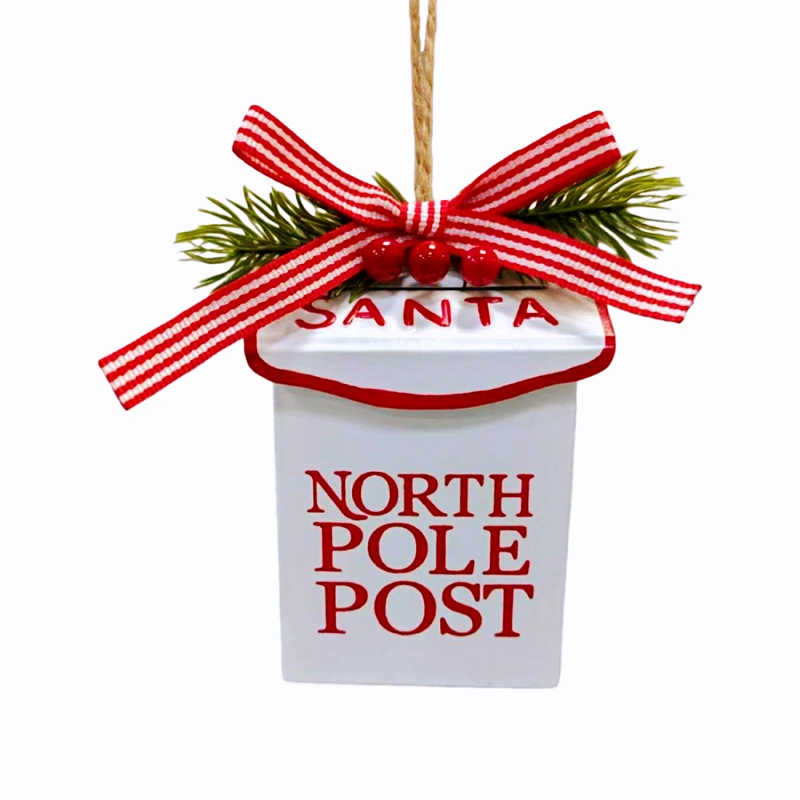
Hanging Ornaments Manufacturing: Balancing Detail and Consistency
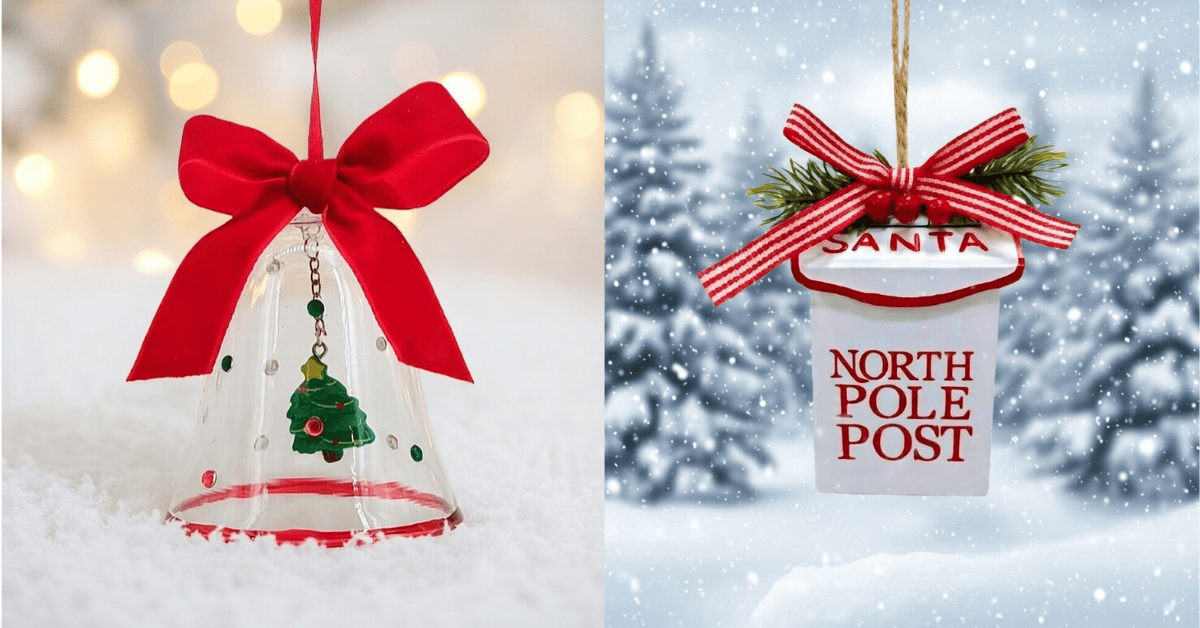
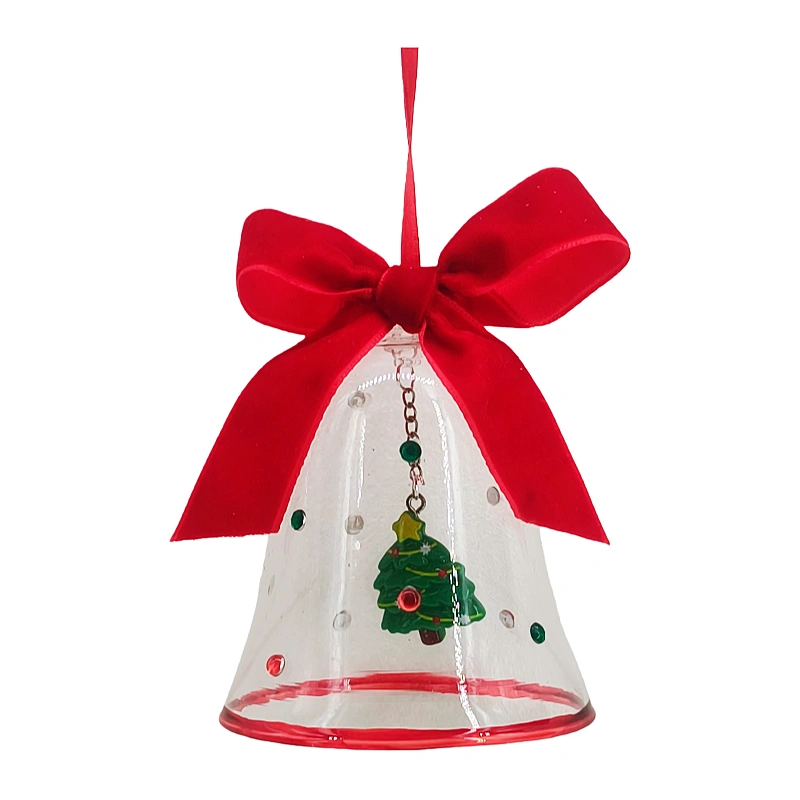
As a hanging ornaments manufacturer, HoeGifts develops products for Christmas, winter holidays, weddings, anniversaries, souvenirs, licensed programs, and seasonal retail collections.
Common materials include:
- Glass
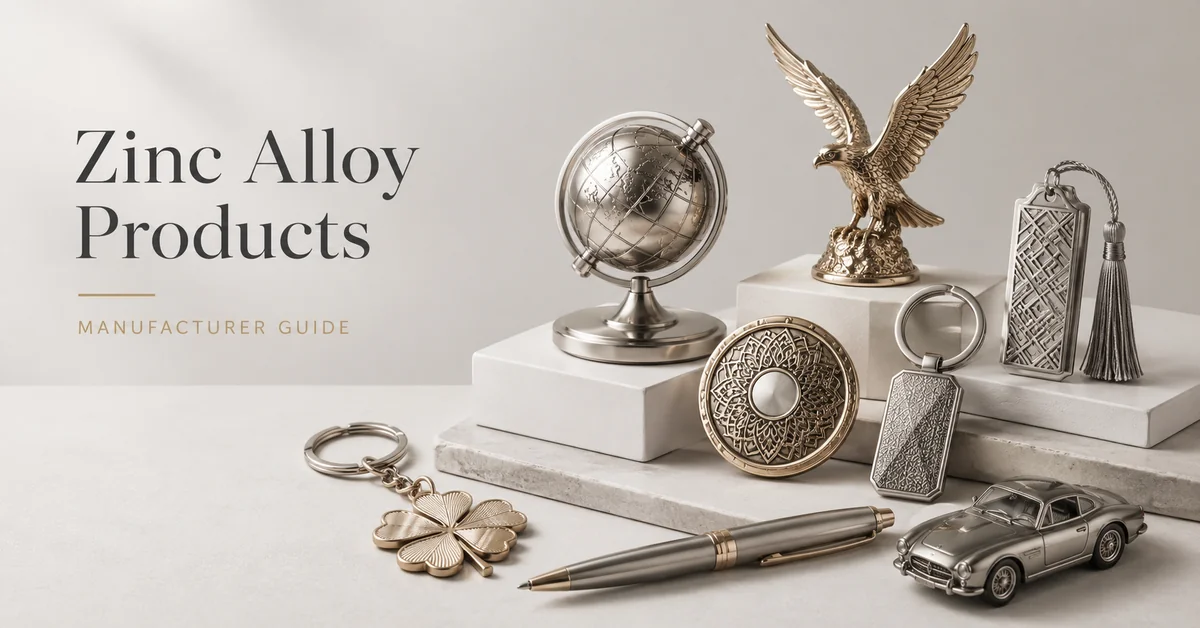
- Zinc alloy
- Aluminum alloy
- Resin
- Acrylic
- MDF
- Fabric
- Ribbon
- Silicone
- Mixed materials
Hanging ornaments may appear simple, but several technical factors directly affect product performance.
Critical Manufacturing Points
Buyers should review:
- Product weight
- Hanging-point strength
- Center of gravity
- Cap or hook fit
- Ribbon attachment
- Surface decoration
- Glass annealing
- Paint and glitter adhesion
- Packaging protection
A product can look correct when placed on a table but hang at the wrong angle once attached to a tree or display stand.
For this reason, hanging performance should be tested with the complete finished product, including the hook, ribbon, cap, and decorative accessories.
Handcrafted Appearance at Production Scale
Many seasonal ornaments use hand painting, glitter, metallic finishes, ribbons, or applied decorations.
These processes naturally introduce some variation.
Scalable production requires the factory to define:
- Decoration sequence
- Approved color references
- Positioning guides
- Acceptable line variation
- Drying time
- Adhesive requirements
- Inspection distance
- Packaging method
The objective is not to remove every handcrafted characteristic. It is to keep the visual differences within an approved commercial range.
Glassware OEM Manufacturing: Matching Material to Application
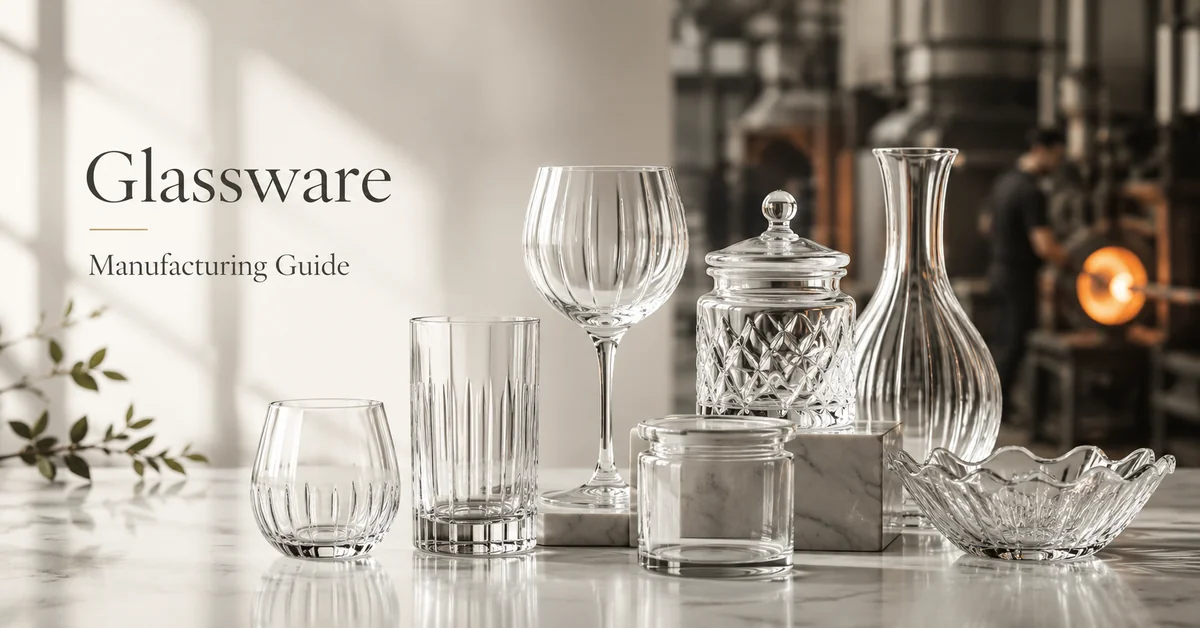
As a glassware OEM supplier, HoeGifts supports both decorative and functional glass products.
Common categories include:
- Tumblers
- Drinking cups
- Glass ornaments
- Candle holders
- Decorative vessels
- Figurines
- Gift sets
- Tabletop décor
The correct glass material depends on the intended use, shape, price level, and production volume.
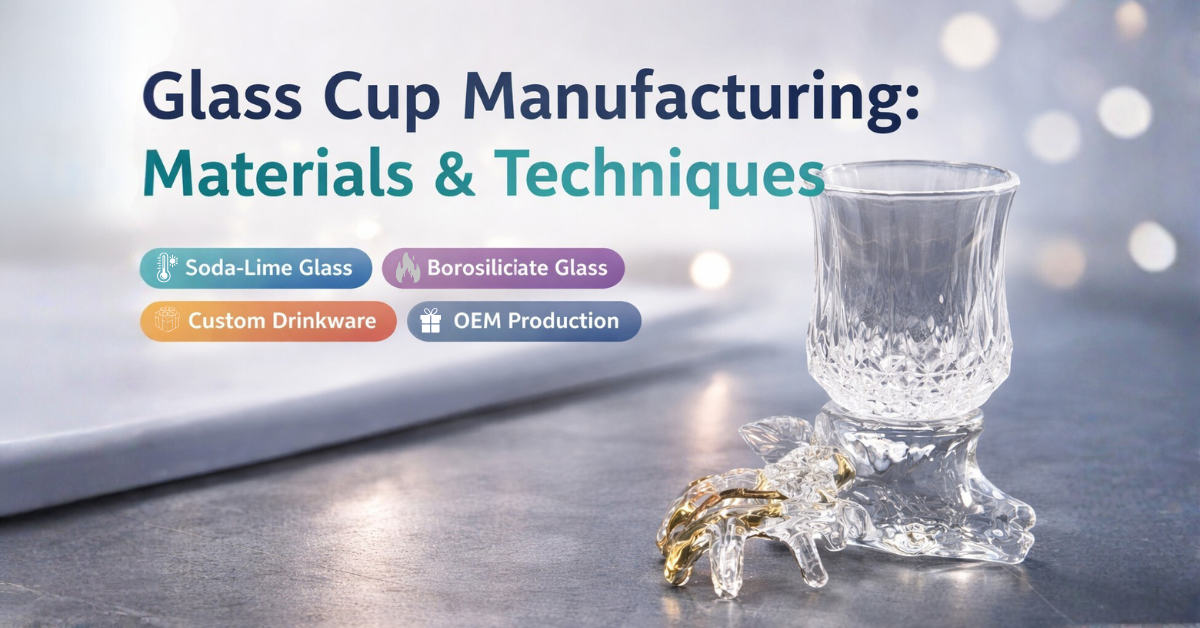
Common Glass Material Options
| Glass material | Main advantages | Common applications |
| Soda-lime glass | Cost-effective and suitable for volume production | Everyday drinkware and decorative products |
| Borosilicate glass | Better resistance to temperature change and lightweight appearance | Hot beverage cups and double-wall glassware |
| Lead-free crystal glass | Brilliance, weight, and premium presentation | Barware and gift collections |
| Colored glass | Visual depth and internal color | Decorative products and collectibles |
| Pressed glass | Texture, thicker structure, and repeatability | Hospitality and vintage-style products |
Material selection should not be based only on appearance.
Buyers should also consider:
- Thermal use
- Impact risk
- Product weight
- Decoration compatibility
- Packaging
- Freight cost
- Compliance
- Target retail price
Glass Production Controls
Depending on the product, quality checks may include:
- Dimensions
- Weight
- Wall thickness
- Rim smoothness
- Base stability
- Bubbles and inclusions
- Surface scratches
- Internal stress
- Decoration adhesion
- Packaging protection
For glassware intended for food or beverage use, the finished decoration, coating, rim, lid, straw, or sleeve may require separate evaluation.
A report for undecorated glass does not automatically apply to a fully decorated final product.
Kitchenware Wholesale Manufacturing: Function Before Decoration
A kitchenware wholesale manufacturer must consider function, safety, cleaning, durability, and consumer use in addition to appearance.
Kitchenware products may involve:
- Glass
- Silicone
- Metal
- Wood
- Acrylic
- Ceramic
- Mixed materials
Before development, buyers should define:
- Food-contact or decorative use
- Hot or cold application
- Moisture exposure
- Cleaning method
- Dishwasher expectations
- Weight and handling
- Storage requirements
- Retail packaging
Functional Product Evaluation
Depending on the item, testing may include:
- Capacity
- Heat resistance
- Lid fit
- Straw fit
- Handle strength
- Surface adhesion
- Base stability
- Leakage
- Cleaning performance
- Repeated-use simulation
A decorative kitchen product should not be presented as food-safe or heat-resistant unless its material, production process, and test results support the claim.
Mixed-Material Home Décor Manufacturing
Operating as a mixed-material home décor factory requires coordination across several production processes.
A single product may combine:
- Glass
- Zinc alloy
- MDF
- Acrylic
- Sand
- Fabric
- Resin
- Silicone
- Paint
- Adhesive
Each material reacts differently during production, assembly, storage, and transport.
Common Mixed-Material Risks
| Risk | Possible cause | Recommended control |
| Component misalignment | Inconsistent assembly fixtures | Use positioning guides |
| Adhesive failure | Wrong adhesive or surface preparation | Test bonded samples |
| Surface scratching | Materials rub during transport | Add non-abrasive protection |
| Color inconsistency | Components come from different processes | Approve a complete color set |
| Warping | Material response to heat or moisture | Confirm storage and material suitability |
| Loose assembly | Weak mechanical or adhesive joint | Add pull or movement testing |
| Shipping damage | Packaging supports only one component | Develop multi-point inserts |
The complete assembled product must be tested, not just the individual components.
For example, an acrylic component may pass its own inspection but still scratch when it contacts a metal frame during transportation.
Custom Decorative Gifts OEM and ODM Services
HoeGifts supports both OEM and ODM development.
The two models serve different buyer needs.
OEM Manufacturing
OEM projects begin with a customer design, drawing, sample, artwork, or detailed specification.
The manufacturer’s responsibility is to reproduce the approved product consistently.
OEM control typically covers:
- Dimensions
- Materials
- Color
- Finish
- Logo
- Decoration
- Assembly
- Packaging
- Production schedule
OEM is suitable for buyers who already have a defined product and need stable execution.
ODM Product Development
ODM projects may begin with:
- A market theme
- Seasonal idea
- Product category
- Character concept
- Target consumer
- Target price
- Reference image
The development team can then support:
- Concept interpretation
- Material selection
- Structural design
- Cost and feasibility review
- Prototype development
- Sample revision
- Packaging coordination
- Production planning
ODM is suitable for buyers who need development support before the product is ready for manufacturing.
OEM vs ODM Comparison
| Area | OEM | ODM |
| Starting point | Completed design or sample | Idea, theme, or product direction |
| Buyer involvement | Provides detailed specifications | Participates in concept approval |
| Factory role | Manufacturing execution | Design development and manufacturing |
| Tooling | Based on confirmed design | Defined after feasibility review |
| Development time | Usually shorter | Usually longer |
| Best for | Established products | New collections and concepts |
Customization Without Uncontrolled Complexity
Customization helps brands differentiate their products, but unnecessary complexity can increase cost, defects, and lead time.
HoeGifts supports customization in:
- Shape
- Size
- Material
- Color
- Logo
- Printing
- Engraving
- Surface finish
- Accessories
- Packaging
- Regional artwork
- Seasonal variations
Where appropriate, modular development can reduce risk.
One base structure may support several SKUs through changes in:
- Color
- Decal
- Ribbon
- Charm
- Printed message
- Packaging
- Surface finish
This allows buyers to test different designs without opening a new mold for every variation.
Prototype and Golden Sample Approval
A digital rendering cannot fully demonstrate:
- Product weight
- Surface texture
- Color under normal lighting
- Hanging balance
- Assembly stability
- Decoration durability
- Packaging fit
Physical sampling is therefore an essential part of OEM development.
What Buyers Should Check on a Sample
- Dimensions
- Material
- Weight
- Color
- Surface finish
- Function
- Decoration
- Logo
- Assembly
- Packaging
After revisions are complete, the approved product becomes the golden sample.
The golden sample should represent the final:
- Product structure
- Material
- Workmanship
- Color
- Decoration
- Accessories
- Packaging
Both buyer and supplier should retain matching references.
Quality Control Embedded Throughout Production
Quality cannot be created only through a final inspection.
It must be controlled throughout the manufacturing process.
Incoming Material Inspection
Materials and components are checked against the project requirements.
These may include:
- Glass
- Silicone
- Metal
- MDF
- Acrylic
- Paint
- Coatings
- Adhesives
- Packaging
- Accessories
First-Piece Approval
Initial production pieces are compared with the golden sample before full output continues.
This helps identify incorrect settings, colors, components, or workmanship early.
In-Process Inspection
Inspection points are selected according to the product.
Examples include:
- Glass forming
- Silicone molding
- Metal casting
- Plating
- Printing
- Hand painting
- Assembly
- Packaging
Final Inspection
Finished products may be reviewed for:
- Appearance
- Dimensions
- Function
- Decoration
- Quantity
- SKU
- Barcode
- Packaging
- Carton marking
For buyer programs using AQL sampling, the inspection level and defect classifications should be confirmed before production.

Product-Specific Quality Priorities
| Product category | Main inspection points |
| Hanging ornaments | Weight, hanging strength, decoration, packaging |
| Glassware | Rim, capacity, stress, decoration, base stability |
| Silicone products | Hardness, tear strength, molding, attachments |
| Zinc alloy products | Casting, plating, enamel, corrosion, assembly |
| Photo frames | Corners, backing, cover, stand, hardware |
| Kitchenware | Function, heat or moisture use, cleaning, stability |
| Mixed-material décor | Alignment, adhesive, component interaction, packaging |
Packaging as Part of Product Engineering
Packaging should be developed during sampling, not after bulk production.
It influences:
- Product protection
- Surface condition
- Retail presentation
- E-commerce performance
- Freight cost
- Carton utilization
- Barcode placement
- Consumer experience
Common protection methods include:
- Tissue wrapping
- Bubble bags
- Corrugated partitions
- Molded pulp
- Foam inserts
- Corner protectors
- Individual boxes
- Gift boxes
- Export cartons
Packaging Validation Questions
Buyers should confirm:
- Does the product move inside the box?
- Does the insert touch painted or glittered surfaces?
- Are fragile corners supported?
- Is the hanging point protected?
- Is the carton too heavy?
- Is the gift box protected during export?
- Are SKU and barcode labels correct?
- Can the packaging survive the intended logistics route?
Packaging should be evaluated with the final decorated product.
MOQ, Sampling, and Lead Time
MOQ is influenced by:
- Custom tooling
- Material purchasing minimums
- Number of colors
- Decoration method
- Packaging
- Accessories
- Number of SKUs
- Manual labor
- Production scheduling
An existing product with custom printing may support a smaller trial order.
A new mold, custom glass color, complicated hand decoration, or premium packaging normally requires a higher commitment.
Complete Project Timeline
Buyers should plan for:
- Product brief
- Feasibility review
- Quotation
- Drawing
- Tooling
- Sampling
- Revisions
- Packaging approval
- Compliance review
- Bulk production
- Final inspection
- Shipping
Production lead time should not be confused with total project lead time.
Supporting Seasonal and Global Retail Programs
Seasonal programs require disciplined scheduling.
Christmas, Valentine’s Day, Easter, Halloween, wedding, and promotional products must arrive before a defined retail period.
HoeGifts plans production backward from the buyer’s required warehouse or retail date.
Important planning factors include:
- Factory holidays
- Material preparation
- Mold development
- Approval cycles
- Hand-decoration capacity
- Packaging production
- Inspection
- Freight booking
- Customs clearance
- Warehouse distribution
A good seasonal supplier should identify deadline risks before order confirmation.
Supporting Licensed and Branded Merchandise
Licensed merchandise requires additional controls.
These may include:
- Factory authorization
- Protected artwork
- Character guidelines
- Approved territories
- Product-category limits
- Artwork version management
- Legal wording
- Production-quantity controls
- Mold and sample security
Licensed projects should not begin until the relevant authorization and project scope have been confirmed.
The exact factory, product category, territory, license period, and retail channel may all affect whether production is permitted.
Compliance and Documentation
Compliance requirements vary according to:
- Material
- Product category
- Destination market
- Intended user
- Age grading
- Retailer
- Product claims
Possible reviews may involve:
- Food-contact requirements
- Chemical restrictions
- Paints and coatings
- Heavy-metal migration
- Small parts
- Sharp edges
- Magnet security
- Product labeling
- Packaging documentation
Testing should apply to the actual finished product.
A report for one raw material does not automatically cover every decoration, attachment, coating, or component.
How to Evaluate an OEM Gift Manufacturer
Before selecting a supplier, B2B buyers should ask:
- Which product categories does the factory specialize in?
- Which manufacturing processes are completed in-house?
- How are subcontracted processes controlled?
- Can the supplier manage multiple materials?
- How are technical drawings and samples approved?
- Are golden samples retained?
- How are repeat-order colors controlled?
- Which quality checks are performed during production?
- Can the supplier develop retail and export packaging?
- Can it support mixed-SKU orders?
- What affects MOQ and lead time?
- How are delays, defects, and corrective actions handled?
A reliable supplier should be willing to discuss limitations and risks before accepting an order.
Common OEM Manufacturing Risks
| Risk | Common cause | Recommended prevention |
| Product cannot scale | Sample relies on uncontrolled manual work | Standardize critical steps |
| Material mismatch | Material chosen only for appearance | Review actual use conditions |
| Color variation | No physical reference retained | Approve and retain a master sample |
| Assembly failure | Components not tested together | Test complete finished product |
| Packaging damage | Packaging developed too late | Approve packed samples |
| MOQ increases | Custom requirements not defined early | Confirm full specification |
| Delivery delay | Tooling and revisions omitted | Build a complete timeline |
| Repeat-order variation | No project records retained | Keep drawings and golden samples |
| Compliance gaps | Raw material report used for final product | Review finished product |
| Mixed-SKU errors | Weak barcode and carton control | Use traceable packing procedures |
Frequently Asked Questions About HoeGifts OEM Manufacturing
What Products Does HoeGifts Manufacture?
HoeGifts manufactures hanging ornaments, glassware, kitchenware, silicone accessories, photo frames, zinc alloy gifts, metal home décor, bathroom accessories, and mixed-material decorative products.
Does HoeGifts Provide OEM Services?
Yes. HoeGifts manufactures products based on customer drawings, samples, artwork, specifications, and packaging requirements.
Does HoeGifts Support ODM Development?
Yes. ODM support may include concept development, material selection, structural review, prototyping, cost optimization, and packaging planning.
Can HoeGifts Develop Custom Molds?
Custom tooling is available depending on the material, product structure, order quantity, and project requirements.
Can Buyers Customize Colors and Finishes?
Yes. Available customization may include colors, printing, decals, engraving, plating, painting, frosting, glitter, ribbons, and other finishes.
Can HoeGifts Produce Mixed-Material Products?
Yes. HoeGifts supports products combining glass, metal, silicone, MDF, acrylic, resin, fabric, and other materials.
What Determines the MOQ?
MOQ depends on tooling, materials, color quantity, decoration, packaging, accessories, and production complexity.
How Are Samples Approved?
The buyer reviews the physical sample for dimensions, material, color, appearance, function, decoration, and packaging before confirming the golden sample.
How Does HoeGifts Control Product Quality?
Quality control may include incoming inspection, first-piece approval, in-process checks, golden-sample comparison, and final inspection.
Can HoeGifts Develop Retail Packaging?
Yes. Packaging support may include individual boxes, gift boxes, inserts, labels, barcodes, and export cartons.
How Early Should Seasonal Projects Begin?
Seasonal projects should begin early enough to allow for design, tooling, sampling, revisions, testing, production, freight, and retail distribution.
What Information Is Needed for a Quotation?
Buyers should provide product references, dimensions, materials, quantity, customization requirements, packaging, target market, and delivery date.
Conclusion: Scalable OEM Manufacturing Requires More Than Capacity
Scalable OEM manufacturing is not achieved by increasing production volume alone.
It requires a connected system covering product development, material engineering, sample approval, process control, quality inspection, packaging, compliance, and delivery planning.
As a hanging ornaments manufacturer, glassware OEM supplier, kitchenware wholesale manufacturer, mixed-material home décor factory, and custom decorative gifts OEM partner, HoeGifts supports buyers across different materials, product categories, and retail channels.
Our focus is to help customers develop products that are:
- Practical to manufacture
- Consistent across batches
- Protected during shipping
- Suitable for the target market
- Scalable for repeat orders
- Aligned with retail timelines
For brands, retailers, distributors, and wholesalers planning a new gift or home décor collection, HoeGifts can provide product feasibility review, sample development, OEM/ODM manufacturing, quality-control planning, packaging, and export support.
Contact HoeGifts with your product reference, dimensions, estimated quantity, customization requirements, packaging needs, target market, and delivery date to receive a project evaluation and quotation.