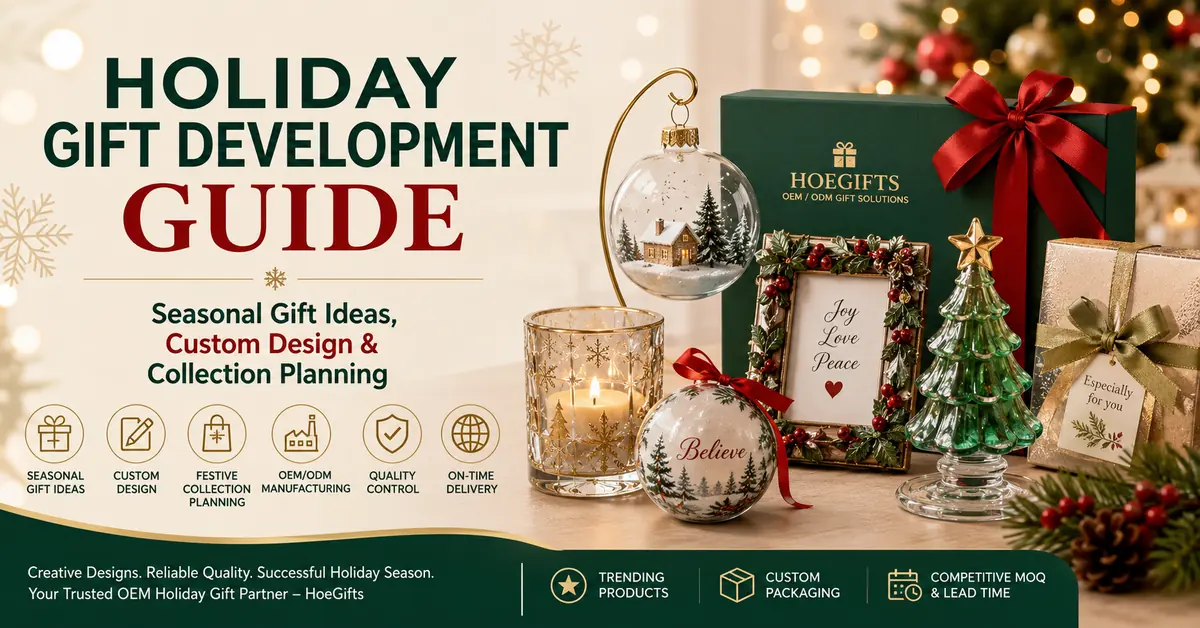

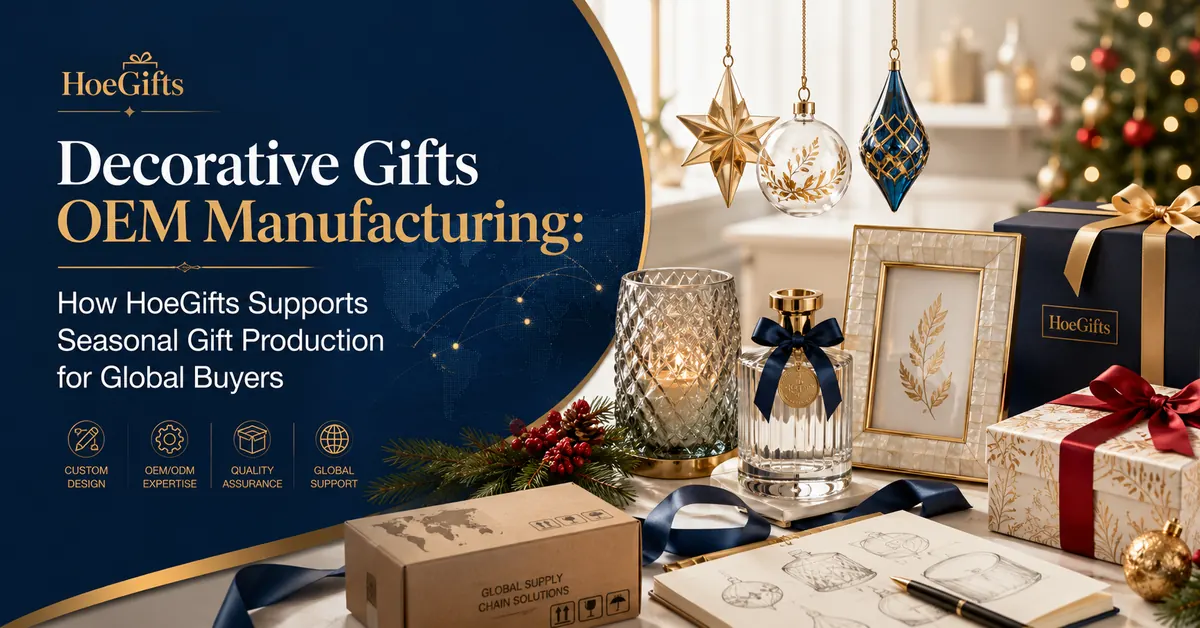

Seasonal gifts are not ordinary decorative products. They are emotional, time-sensitive, and highly dependent on design execution, manufacturing control, packaging protection, and delivery planning.
For global retailers, importers, wholesalers, and private-label brands, choosing a decorative gifts OEM manufacturer is not only about finding a factory that can make attractive products. The supplier must understand seasonal retail calendars, material behavior, product customization, quality control, packaging, compliance, and large-scale production management.
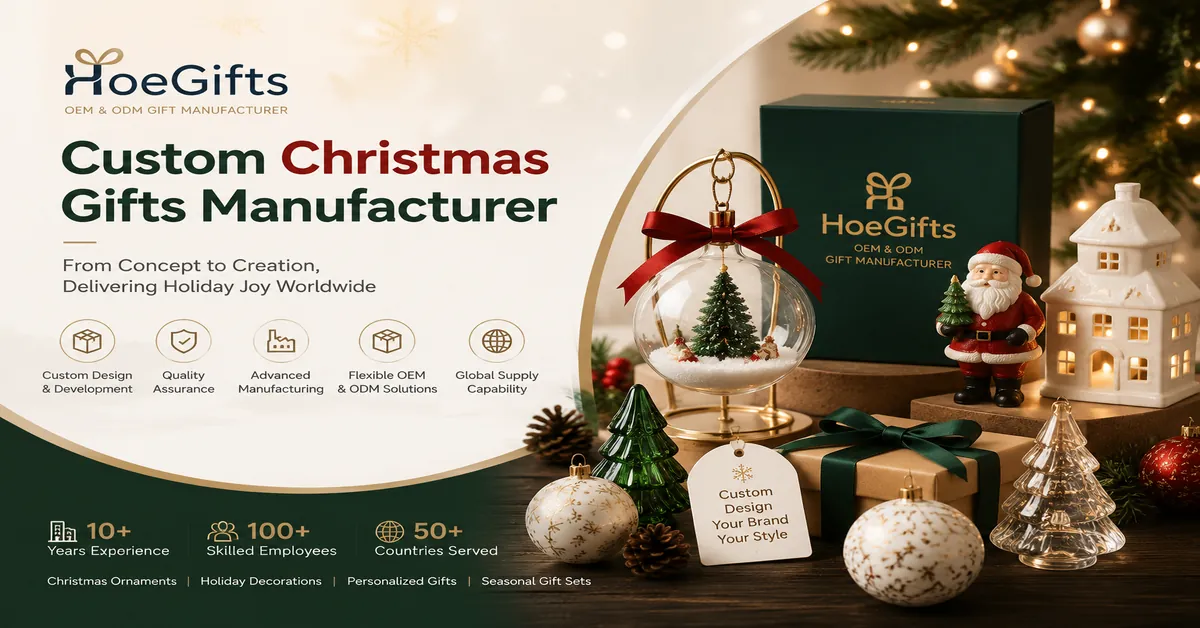
As an OEM/ODM gift manufacturer, HoeGifts supports global buyers with decorative gifts, hanging ornaments, glassware, kitchenware, silicone accessories, zinc alloy products, photo frames, bathroom accessories, and mixed-material home décor.
This article explains how HoeGifts helps buyers turn seasonal gift concepts into scalable, market-ready products, with a focus on glass hanging ornaments, custom Christmas ornaments wholesale programs, home décor OEM manufacturing, and end-to-end seasonal gift production solutions.

How Can OEM Manufacturing Support Seasonal Gift Development?
OEM manufacturing supports seasonal gift development by converting creative concepts into products that can be produced, inspected, packed, shipped, and sold within a fixed retail window.
A successful seasonal gift project normally requires:
- Clear product positioning
- Suitable material selection
- Manufacturable design structure
- Physical sample approval
- Customization planning
- Quality-control standards
- Protective packaging
- MOQ and lead-time planning
- Delivery aligned with the retail calendar
For buyers, the goal is not simply to create a beautiful sample. The goal is to build a product line that can be reproduced consistently and delivered on time.
Key Buying Considerations for Decorative Gifts OEM Manufacturing
| Buyer concern | Why it matters | What to confirm |
|---|---|---|
| Seasonal timing | Late delivery can reduce sales value | Development, production, and shipping schedule |
| Material selection | Affects appearance, cost, durability, and packaging | Glass, metal, silicone, MDF, acrylic, resin, or mixed materials |
| Customization | Drives brand differentiation | Shape, color, logo, finish, accessories, packaging |
| Quality consistency | Impacts retailer acceptance and repeat orders | Golden sample, inspection criteria, AQL when required |
| Packaging | Protects fragile or decorated products | Inner protection, retail box, export carton |
| MOQ | Determines test-order flexibility | Existing mold vs custom tooling |
| Compliance | Required by market, category, and retailer | Product testing and documentation |
| Supplier capability | Reduces sourcing risk | OEM/ODM experience, mixed-material control, communication |
Why Seasonal Decorative Gifts Require Specialized Manufacturing
Seasonal products are different from general home décor items because their commercial value depends heavily on timing and visual impact.
Christmas ornaments, Easter decorations, Halloween gifts, Valentine’s Day keepsakes, wedding favors, and holiday tabletop décor all need to reach the market before peak demand. A product that arrives late may become difficult to sell, even if the design and quality are acceptable.
Seasonal decorative gifts also involve frequent style changes. Buyers may need new colors, themes, characters, materials, packaging, and regional variations each year.
This creates manufacturing challenges such as:
- High SKU diversity
- Short approval timelines
- Decorative consistency requirements
- Fragile materials
- Mixed-material assembly
- Custom packaging
- Seasonal logistics pressure
A professional decorative gifts OEM manufacturer must therefore manage both creativity and production discipline.
Glass Hanging Ornaments Supplier: What Buyers Should Evaluate
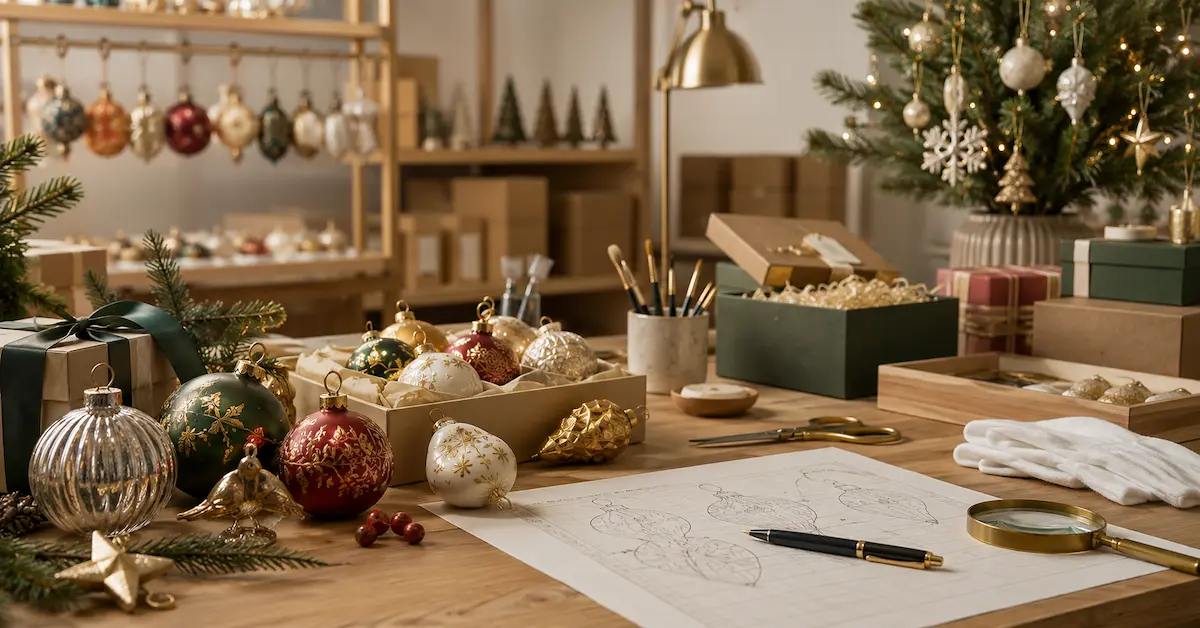
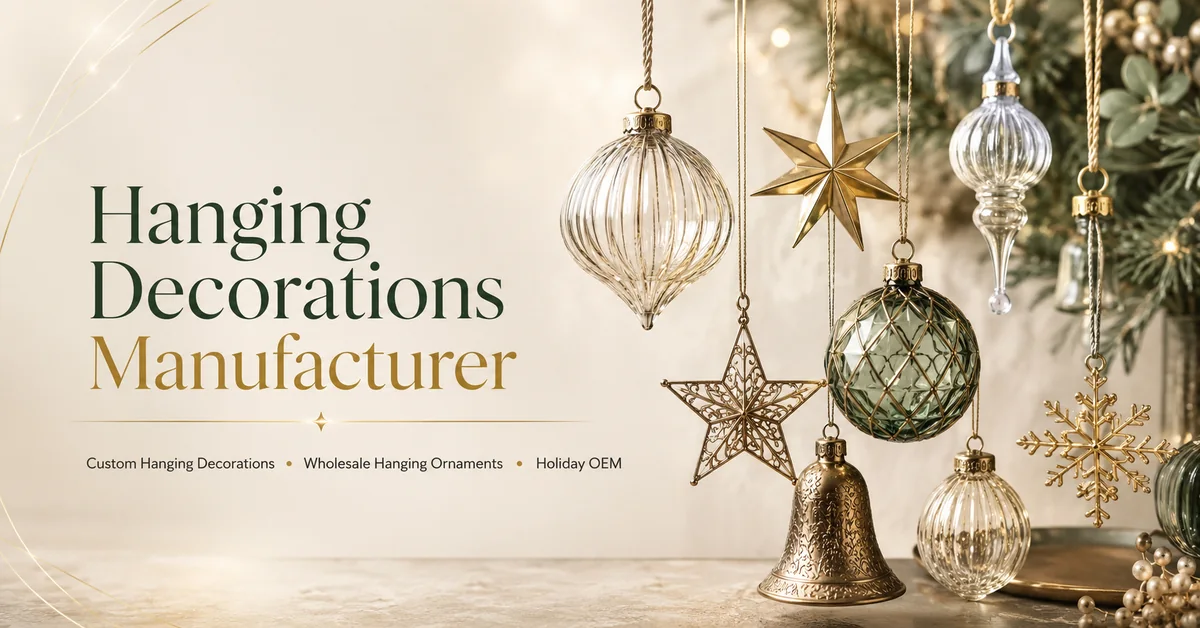
Glass hanging ornaments remain one of the most important categories in seasonal décor, especially for Christmas and winter holiday collections.
Their value comes from:
- Transparency
- Light reflection
- Handmade appearance
- Emotional holiday symbolism
- Premium retail presentation
- Strong giftability
However, glass ornaments also require careful engineering.
Critical Quality Points for Glass Hanging Ornaments
Buyers should evaluate:
- Glass thickness
- Surface clarity
- Bubble and scratch control
- Hanging-point strength
- Weight balance
- Cap, hook, or ribbon attachment
- Paint and glitter adhesion
- Frosted or metallic finish durability
- Packaging fit and breakage protection
A glass ornament may look attractive in a product photo but still fail during retail handling if the hanging part is weak or the packaging does not protect the neck, surface, or decorative details.
Hanging Balance and Display Performance
For a hanging ornament, balance is a functional requirement.
The product should hang in the intended direction after the ribbon, cap, hook, and decorative accessories are attached. If the center of gravity is not controlled, the ornament may tilt forward, rotate sideways, or look unstable on a tree or retail display.
HoeGifts reviews hanging performance during sample development and bulk-production inspection, especially for glass-based and mixed-material ornaments.
Custom Christmas Ornaments Wholesale: Customization Options
Wholesale buyers often need more than standard seasonal designs. Custom Christmas ornaments can help brands create exclusive collections, regional product lines, licensed programs, or private-label holiday ranges.
Common customization options include:
| Custom option | Typical application |
| Custom shape | Brand-exclusive ornament collections |
| Custom color | Regional or retailer-specific holiday palettes |
| Custom logo | Private-label and promotional programs |
| Custom ribbon or hook | Gift-ready and premium presentation |
| Glitter or metallic finish | Stronger seasonal visual impact |
| Interior scene | Glass dome ornaments and storytelling products |
| Custom packaging | Retail display, gift box, or e-commerce box |
| Mixed-material design | Premium home décor and collectible ornaments |
Customization should be planned carefully. Every added feature may affect tooling, MOQ, production time, inspection standards, and packaging requirements.
Home Décor OEM Manufacturing: Materials and Product Categories
Home décor OEM manufacturing often involves multiple product categories and materials. A buyer may source hanging ornaments, tabletop decorations, frames, glassware, bathroom accessories, silicone novelty gifts, and metal souvenirs from the same seasonal program.
HoeGifts supports a wide range of materials, including:
- Glass
- Zinc alloy
- Aluminum alloy
- Silicone
- MDF
- Acrylic
- Resin
- Sand
- Fabric
- Paperboard
- Decorative coatings
Material Selection for Decorative Gifts
| Material | Main advantage | Common product use |
| Glass | Clarity, light reflection, premium feel | Ornaments, glassware, candle holders |
| Zinc alloy | Fine detail, weight, durable finish | Magnets, frames, souvenirs, accessories |
| Silicone | Flexibility, color options, molded shapes | Keychains, holders, coasters, novelty gifts |
| MDF | Cost-effective structure and printable surface | Signs, tabletop décor, mixed-material displays |
| Acrylic | Lightweight and easy to shape or print | Displays, inserts, modern ornaments |
| Resin | Sculptural forms and character details | Figurines and themed decorations |
| Mixed materials | Strong visual depth and product differentiation | Seasonal scenes, gift sets, premium décor |
Material selection should be based on target market, retail price, product function, shipping method, and expected durability.
Mixed-Material Decorative Gifts: Managing Production Complexity
Mixed-material decorative products are popular because they create stronger visual storytelling. A single item may combine glass, MDF, acrylic, metal, sand, fabric, or resin.
For example, a holiday tabletop scene may use:
- MDF base
- Acrylic front panel
- Sand or snow-effect filling
- Printed background
- Metal or glass decorative elements
- Ribbon or hanging accessory
These products are visually rich but require strict assembly control.
Common Mixed-Material Risks
| Risk | Cause | Control method |
| Loose components | Weak adhesive or poor surface preparation | Adhesive testing and assembly checks |
| Scratched surfaces | Materials rub during transport | Non-abrasive packaging protection |
| Misalignment | Manual assembly without fixture | Positioning guides and in-process inspection |
| Color mismatch | Different processes use separate color standards | Full-product color approval |
| Packaging damage | Insert supports only one component | Multi-point packaging support |
| Weight imbalance | Heavy components placed incorrectly | Sample testing and structure review |
HoeGifts reviews these risks during product development rather than waiting until final inspection.
Seasonal Gift Production Solutions: From Concept to Shipment
A scalable seasonal gift project needs a clear workflow.
Product Brief and Market Positioning
The buyer should provide:
- Product type
- Target holiday
- Destination market
- Retail channel
- Target price
- Material preference
- Estimated quantity
- Customization needs
- Packaging requirement
- Required delivery date
This information helps determine whether the project should use an existing mold, modified design, or fully custom tooling.
Feasibility Review
HoeGifts reviews:
- Material suitability
- Structure
- Mold requirement
- Decoration method
- Assembly complexity
- Packaging protection
- Production capacity
- Possible quality risks
This stage helps reduce later delays and cost increases.
Sample Development
Physical samples are used to confirm:
- Size
- Weight
- Color
- Surface finish
- Decoration
- Hanging strength
- Assembly
- Packaging fit
- Overall workmanship
For seasonal products, sample approval must happen early enough to leave time for tooling, production, inspection, and shipping.
Golden Sample Approval
After revisions are complete, the approved sample becomes the production reference.
A golden sample should represent:
- Final material
- Final color
- Final decoration
- Final structure
- Final accessories
- Final packaging
- Approved workmanship standard
Both buyer and supplier should retain a matching sample.
Bulk Production
Bulk production follows the approved sample and project specification.
Key controls may include:
- Incoming material inspection
- First-piece approval
- In-process inspection
- Decoration checks
- Assembly checks
- Packaging verification
- Final inspection
Export Preparation
Final checks may include:
- Carton quantity
- Barcode
- Shipping marks
- Packing list
- Gross weight
- Carton dimensions
- Retail packaging condition
- Product protection
Quality Control for Decorative Gifts OEM Projects
Quality control should be designed according to product type.
| Product category | Key inspection points |
| Glass ornaments | Cracks, chips, hanging strength, decoration, packaging |
| Christmas decorations | Color, glitter, assembly, ribbon, visual consistency |
| Glassware | Rim, capacity, surface, thermal use, decoration |
| Silicone gifts | Hardness, tear resistance, color, molding, attachment |
| Zinc alloy gifts | Casting, plating, enamel, magnet or hardware security |
| Photo frames | Frame corners, backing, transparent cover, stand stability |
| Mixed-material décor | Alignment, adhesive, surface contact, packaging |
| Kitchenware | Function, surface durability, cleaning, safety claims |
Final inspection is important, but it is not enough by itself. In-process inspection helps identify problems before the whole order is complete.
Packaging for Fragile Seasonal Gifts
Packaging is a critical part of seasonal gift production.
A product may pass factory inspection but still fail in the market if it breaks, scratches, or shifts during shipping.
Packaging should be developed based on product shape, material, decoration, and sales channel.
Common packaging options include:
- Tissue wrapping
- Bubble bag
- Corrugated partition
- Molded pulp insert
- Foam insert
- Individual box
- Window box
- Gift box
- Display box
- Export carton
Packaging Questions Buyers Should Ask
- Does the product move inside the box?
- Are painted or glittered surfaces protected?
- Is the hanging point supported?
- Can the retail box survive export handling?
- Is the carton weight reasonable?
- Are barcode and label positions correct?
- Is the packaging suitable for e-commerce or only bulk retail shipment?
- Can packaging be optimized to reduce freight volume?
Packaging should be approved using the final decorated product, not an unfinished sample.
MOQ, Sampling, and Lead-Time Planning
MOQ depends on several factors:
- Existing or custom mold
- Material
- Product size
- Number of colors
- Decoration process
- Packaging type
- Accessories
- Number of SKUs
- Manual labor requirement
- Production schedule
A simple product based on an existing mold may support lower trial quantities. A fully custom Christmas ornament with new tooling, hand decoration, and gift packaging usually requires a higher MOQ.
Typical Project Timeline
| Stage | Buyer and supplier focus |
| Product brief | Confirm product concept and requirements |
| Feasibility review | Check structure, material, cost, and risk |
| Quotation | Confirm specification, MOQ, and pricing |
| Sampling | Develop and revise physical samples |
| Packaging approval | Confirm protection and presentation |
| Production | Manufacture according to golden sample |
| Inspection | Check quality, quantity, and packaging |
| Shipment | Prepare cartons, documents, and logistics |
Buyers should not confuse production lead time with total project lead time. Seasonal products need extra planning time for design, tooling, sample revisions, packaging, compliance, and transport.
Compliance and Market Requirements
Compliance requirements vary depending on product type, material, destination market, retail channel, and user group.
Possible areas include:
- Food-contact requirements
- Chemical restrictions
- Paints and coatings
- Heavy metal migration
- Small parts
- Sharp edges
- Magnet security
- Packaging labeling
- Retailer-specific documentation
A general material report may not be enough. Testing should match the finished product, including decorations, coatings, accessories, and packaging where required.
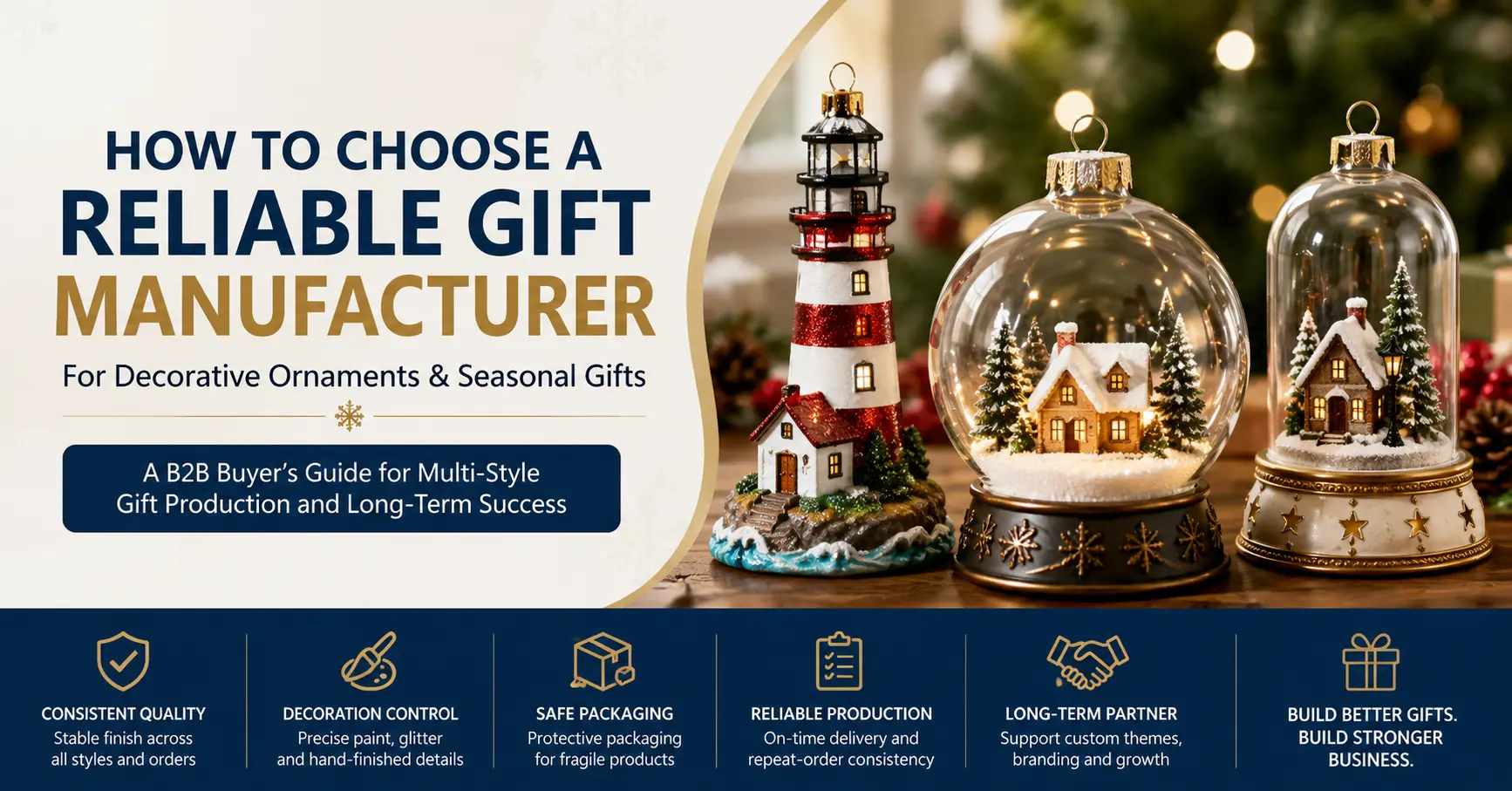
How to Choose a Decorative Gifts OEM Manufacturer
Buyers should evaluate more than product photos and price lists.
Important questions include:
- Does the supplier specialize in decorative gifts or only general products?
- Can the factory support glass, metal, silicone, MDF, acrylic, and mixed materials?
- Which processes are completed in-house?
- How are subcontracted processes controlled?
- Can the supplier develop custom molds?
- How are samples approved?
- Are golden samples retained?
- How are repeat-order colors controlled?
- What quality checks happen during production?
- Can the supplier develop retail and export packaging?
- How does the supplier manage seasonal deadlines?
- What affects MOQ and lead time?
A reliable manufacturer should explain both possibilities and limitations before accepting an order.
Common OEM Manufacturing Risks and Solutions
| Risk | Common cause | Suggested solution |
| Product cannot scale | Sample depends on uncontrolled manual work | Standardize decoration and assembly steps |
| Late delivery | Development starts too close to peak season | Plan backward from retail launch date |
| Decoration inconsistency | No physical reference sample | Approve and retain golden sample |
| Fragile product damage | Packaging developed after production | Test packaging during sample stage |
| MOQ mismatch | Customization not defined early | Confirm tooling and material requirements |
| Compliance gap | Testing does not cover final product | Review finished product and market rules |
| Mixed-SKU error | Weak packing identification | Use barcode and carton control |
| Repeat-order difference | No records retained | Keep artwork, colors, drawings, and samples |
Frequently Asked Questions About Decorative Gifts OEM Manufacturing
What Is a Decorative Gifts OEM Manufacturer?
A decorative gifts OEM manufacturer produces gift and décor products based on customer designs, specifications, samples, artwork, and packaging requirements.
What Products Can HoeGifts Manufacture?
HoeGifts manufactures hanging ornaments, glassware, kitchenware, silicone gifts, photo frames, zinc alloy products, bathroom accessories, metal décor, and mixed-material home décor.
Does HoeGifts Supply Glass Hanging Ornaments?
Yes. HoeGifts supports glass hanging ornaments for Christmas, winter holiday, wedding, souvenir, licensed, and seasonal retail programs.
Can Buyers Order Custom Christmas Ornaments Wholesale?
Yes. Customization may include shape, color, finish, logo, ribbon, hook, interior scene, artwork, and packaging.
Does HoeGifts Provide OEM and ODM Services?
Yes. OEM services follow customer-provided designs, while ODM services support concept development, structure review, sampling, and production planning.
What Determines the MOQ?
MOQ depends on mold requirements, material, color quantity, decoration, packaging, accessories, product size, and production complexity.
How Long Does Sample Development Take?
Sample timing depends on product complexity, tooling, material availability, decoration method, and revision rounds.
How Does HoeGifts Control Product Quality?
Quality control may include incoming material inspection, first-piece approval, in-process checks, golden-sample comparison, and final inspection.
Can HoeGifts Develop Retail Packaging?
Yes. Packaging support may include individual boxes, window boxes, gift boxes, inserts, labels, barcodes, and export cartons.
Can HoeGifts Support Mixed-Material Home Décor?
Yes. HoeGifts supports products combining glass, metal, silicone, MDF, acrylic, resin, sand, fabric, and other decorative materials.
What Information Should Buyers Provide for a Quotation?
Buyers should provide product references, dimensions, material requirements, quantity, customization details, packaging needs, target market, and delivery date.
How Early Should Seasonal Gift Projects Begin?
Seasonal projects should begin early enough to allow for design, tooling, sampling, revisions, packaging, production, inspection, shipping, and retail distribution.
Conclusion: Seasonal Gift Manufacturing Requires Creativity and Control
Successful seasonal gift production depends on more than attractive design.
For global buyers, a decorative gifts OEM manufacturer must provide product-development support, material knowledge, custom production, quality control, packaging engineering, compliance awareness, and delivery planning.
As a glass hanging ornaments supplier, custom Christmas ornaments wholesale partner, home décor OEM manufacturing provider, and seasonal gift production solutions manufacturer, HoeGifts helps brands and retailers develop products that are practical to produce, visually consistent, properly protected, and ready for global markets.
For your next decorative gift or seasonal home décor project, share your product reference, target market, dimensions, estimated quantity, customization needs, packaging requirements, and delivery schedule with HoeGifts to receive a feasibility review and quotation.