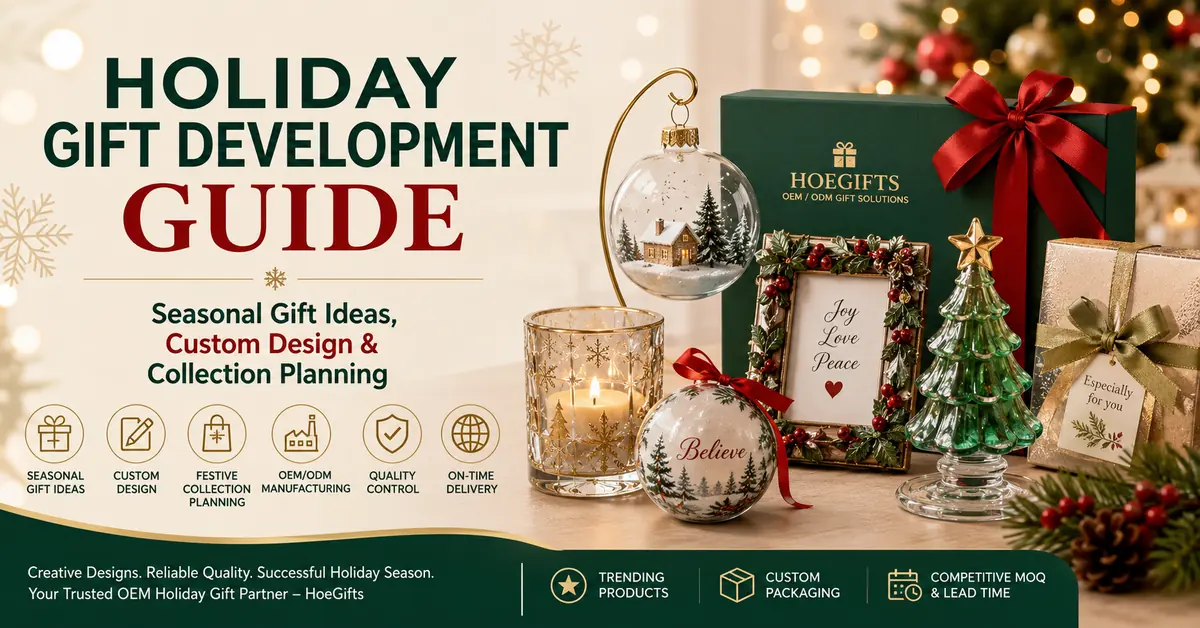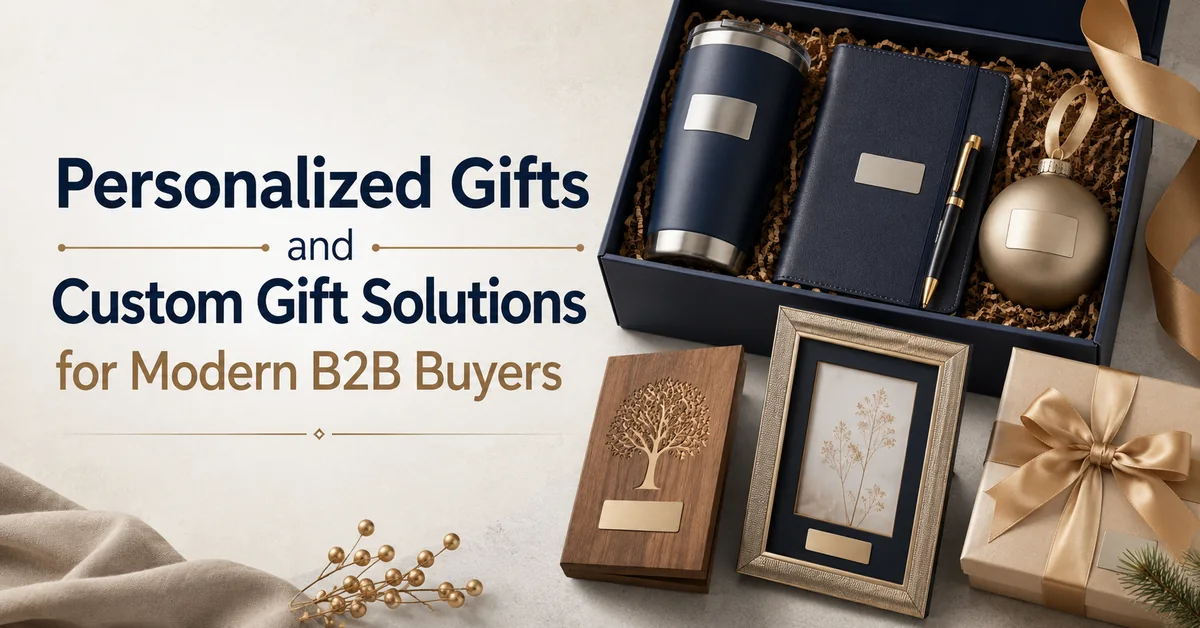




Seasonal gifts are often discussed as a design category. For professional buyers, however, they are equally a calendar, inventory, manufacturing, and risk-management category.
A Christmas ornament that arrives in January has almost no commercial value. A Valentine’s Day frame with the wrong shade of red may miss the brand brief. A Halloween item that performs well in the United States may have limited demand in another market. Even a strong design can fail if the packaging is too large, the minimum order is unrealistic, or the supplier cannot maintain quality across several SKUs.
That is why successful holiday gift development requires more than collecting attractive references.
Retailers, importers, distributors, promotional companies, and private-label brands need to connect four things from the beginning:
- The target holiday and market
- The right product and material
- A realistic production schedule
- A controlled sell-through and inventory plan
This guide explains how to turn holiday and seasonal gift ideas into commercially viable products for global retail, wholesale, and OEM programs.
Seasonal Gift Buying Guide
The best seasonal gifts combine recognizable holiday meaning with practical manufacturing and controlled inventory risk.
Christmas supports the broadest range of ornaments, tabletop décor, glassware, figurines, and gift sets. Valentine’s Day performs well with small keepsakes, photo frames, and romantic décor. Easter and spring collections favor pastel colors, floral themes, and nature-inspired products. Halloween relies on novelty, bold visual storytelling, and carefully controlled quantities.
For OEM buyers, the main priorities are early product development, appropriate material selection, realistic MOQs, gift-ready packaging, regional design adaptation, quality consistency, and delivery well before the retail launch date.
Key Takeaways for B2B Buyers
- Seasonal products should be planned backward from the in-store date.
- A good concept must also be easy to manufacture, pack, ship, and replenish.
- Material selection influences price, breakage, freight, perceived value, and lead time.
- Product quantities should reflect the length and strength of the selling window.
- Regional holidays require different colors, symbols, wording, and packaging.
- Existing molds can reduce development time and test-market risk.
- Gift packaging must protect the item without making freight unnecessarily expensive.
- A supplier should understand both manufacturing and seasonal delivery pressure.
Why Seasonal Gifts Remain Commercially Important
Holiday products benefit from something that many ordinary products do not have: a clear reason to purchase now.
Consumers may delay buying general home décor, but Christmas, Valentine’s Day, weddings, graduations, and other celebrations create natural deadlines.
Seasonal gifts also carry emotional meaning. A glass ornament may represent a family tradition. A photo frame may preserve a wedding memory. A small souvenir may become part of an annual celebration.
This emotional value can support a higher perceived price even when the product itself is compact.
For retailers, seasonal collections can also refresh store displays and online campaigns throughout the year. Instead of depending on one permanent assortment, buyers can introduce limited-time designs that create urgency and repeat visits.
The main commercial challenge is that the opportunity is time-sensitive. Once the selling period ends, remaining inventory may need to be discounted or stored until the next year.
Build the Collection Around the Market Calendar
Seasonal planning should start with the intended launch date, not the factory production date.
A typical product schedule may include:
- Trend and market review
- Concept development
- Artwork confirmation
- Material selection
- Costing
- Tooling
- Sampling
- Revisions
- Packaging development
- Compliance testing
- Bulk production
- Inspection
- International shipping
- Warehouse receiving
- Retail distribution
Each stage needs time. Buyers should also allow a buffer for mold correction, color approval, packaging changes, public holidays, port congestion, and customs clearance.
Example Seasonal Planning Timeline
| Project Stage | Typical Buyer Action | Main Risk |
|---|---|---|
| Concept planning | Select themes, products, and target price | Following trends too late |
| Supplier review | Confirm material and manufacturing feasibility | Design cannot be produced efficiently |
| Sampling | Approve shape, color, function, and packaging | Too many revision rounds |
| Testing | Complete market-specific checks | Testing begins after production |
| Bulk production | Lock specifications and artwork | Late design changes |
| Shipping | Reserve freight and confirm documentation | Missing the retail window |
| Retail launch | Distribute before peak demand | Insufficient selling time |
For high-volume Christmas programs, planning may begin many months before the holiday. Small promotional projects using stock products can move faster, but custom molds, hand finishing, and special packaging require more time.
Christmas and Winter Holiday Gifts
Christmas remains one of the broadest gift and décor categories.
Common products include:
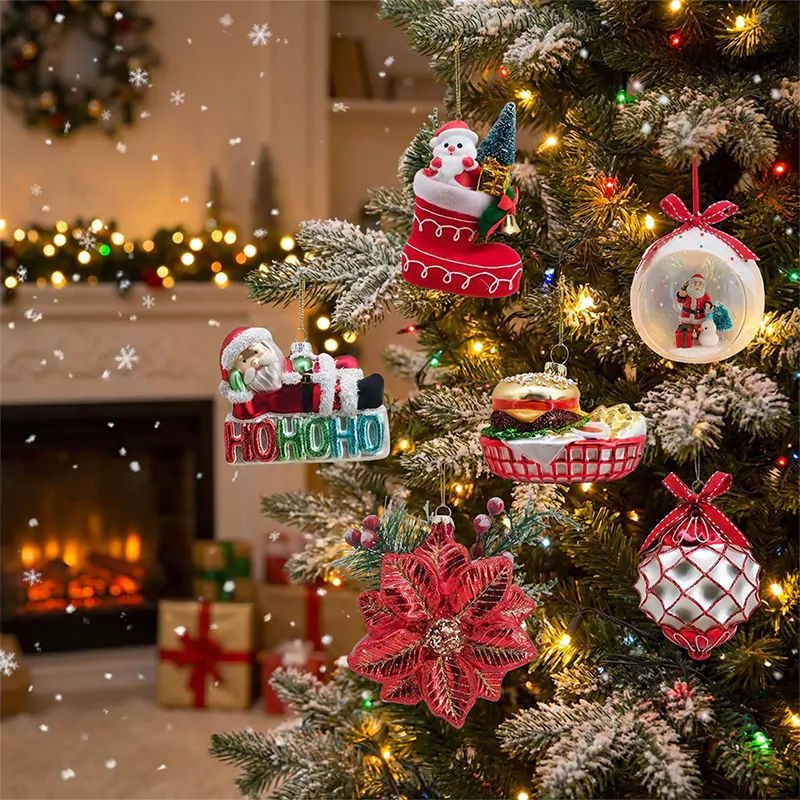
- Glass hanging ornaments
- Metal ornaments
- Snow globes
- Tabletop figurines
- Candle holders
- Photo frames
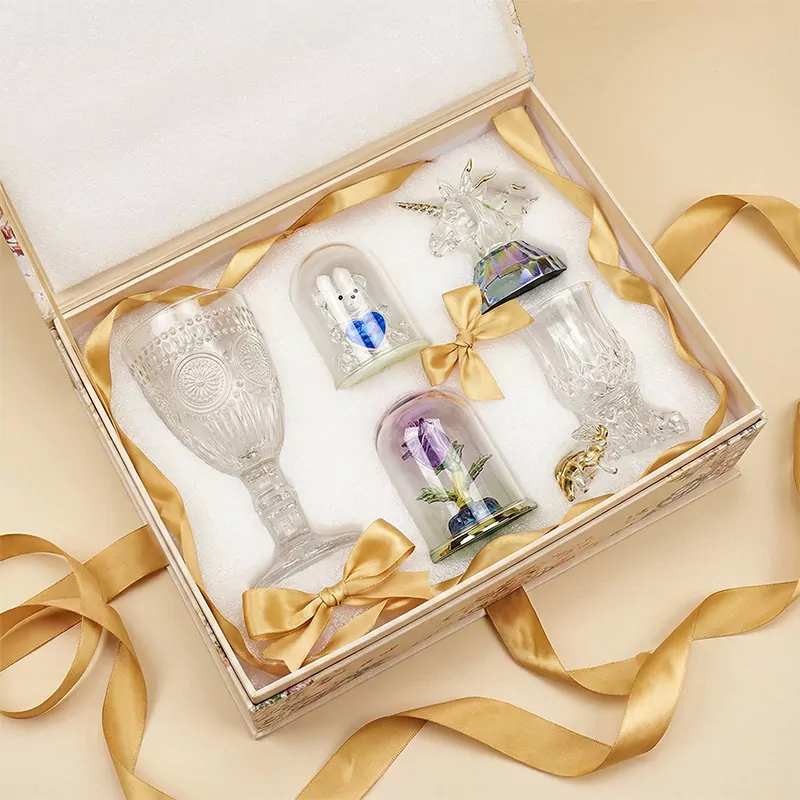
- Decorative drinkware
- Tree accessories
- Keepsake boxes
- Mixed-material scenes
Christmas collections can range from playful mass-market items to premium heirloom-style décor.
Design Directions
Common commercial directions include:
- Traditional red, green, gold, and white
- Natural wood and neutral winter tones
- Nordic and minimalist styling
- Vintage glass ornaments
- Character-based products
- Personalized family gifts
- Religious or nativity themes
- Nature-inspired woodland designs
A strong Christmas program usually includes different price levels. Small hanging ornaments can create entry-level purchases, while tabletop décor and gift-boxed sets support higher retail prices.
Manufacturing Considerations
Christmas products often involve several colors, glitter, ribbons, hand painting, plating, decals, or mixed-material assembly.
These decorative processes increase visual value but can also increase labor, defect risk, and lead time.
Buyers should inspect:
- Glitter shedding
- Paint adhesion
- Ribbon attachment
- Hanging strength
- Plating consistency
- Glass breakage
- Packaging protection
- Color matching across SKUs
Valentine’s Day and Romantic Gifts
Valentine’s Day products usually depend on emotional symbolism rather than large product size.
Common formats include:
- Heart-shaped ornaments
- Couple figurines
- Double photo frames
- Small keepsake boxes
- Decorative glass items
- Personalized name gifts
- Message plaques
- Romantic tabletop accessories
Red and pink remain common, but buyers should not assume every market wants highly literal heart designs.
Modern collections may use muted rose, transparent glass, soft gold, cream, or minimalist line art.
Why Compact Products Work Well
Valentine’s Day has a short selling window. Smaller products can reduce inventory exposure, carton volume, and retail space requirements.
They also suit e-commerce, gifting bundles, and add-on purchases.
Customization can add value through:
- Names
- Dates
- Short messages
- Engraving
- Printed cards
- Gift boxes
- Ribbon colors
For personalized products, the order workflow must clearly separate standard production from customer-specific decoration.
Easter and Spring Gift Collections
Easter and spring collections often use lighter colors and natural imagery.
Popular themes include:
- Rabbits
- Eggs
- Flowers
- Birds
- Bees
- Gardens
- Pastel tableware
- Spring wreaths
- Light tabletop décor
Materials may include glass, wood, MDF, resin, metal, silicone, fabric, and mixed constructions.
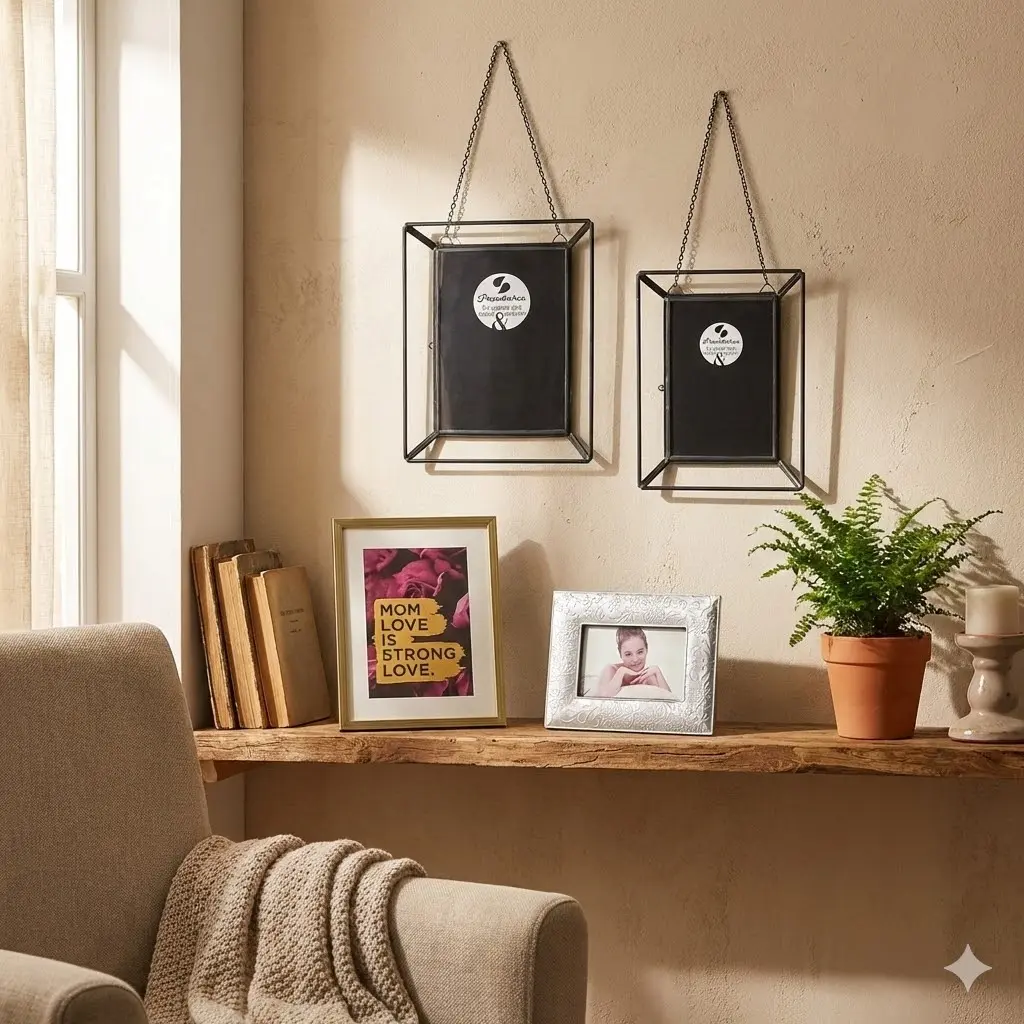
Spring products can have a longer selling life than highly specific holiday items when the design uses subtle seasonal references.
For example, a floral glass decoration may remain relevant after Easter, while a product with a large holiday message becomes difficult to sell once the event passes.
This distinction is important for buyers who want to reduce leftover stock.
Halloween and Themed Novelty Gifts
Halloween performs strongly in markets where themed home decoration, parties, and trick-or-treat traditions are well established.
Common products include:
- Pumpkins
- Ghosts
- Bats
- Skeletons
- Witches
- Haunted houses
- Black cats
- Novelty drinkware
- Tabletop signs
- Hanging ornaments
Halloween allows more humor and exaggerated design than many other gift categories.
Bright orange, black, purple, green, glow effects, and unusual textures can help products stand out.
However, novelty products can age quickly. A highly trend-driven character or phrase may perform well for one season and lose relevance the next.
For this reason, buyers often benefit from:
- Lower initial test quantities
- Flexible packaging
- A mix of classic and trend-driven designs
- Shared components across SKUs
- Existing molds with new color treatments
Weddings, Anniversaries, and Life Events
Not every seasonal product is linked to a fixed public holiday.
Weddings, anniversaries, graduations, births, and housewarming occasions create recurring gifting demand throughout the year, often with regional peaks.
Popular products include:
- Photo frames
- Ring dishes
- Keepsake boxes
- Glass figurines
- Name plaques
- Decorative ornaments
- Candle accessories
- Commemorative gifts
These products usually require a more timeless appearance than Halloween or novelty holiday items.
Durability and emotional value are important because the buyer expects the item to remain on display for years.
Personalization is especially valuable in this category, but the supplier must control spelling, dates, artwork, and individual packaging carefully.
Regional and Cultural Festivals
Global buyers should avoid limiting seasonal planning to Western holidays.
Potential markets may include products for:
- Lunar New Year
- Ramadan and Eid
- Diwali
- Mid-Autumn Festival
- Mother’s Day
- Father’s Day
- Thanksgiving
- National celebrations
- Local religious festivals
- Regional wedding seasons
The same product structure may sometimes be adapted through color, artwork, packaging, or text.
For example, a decorative metal box can serve different regional festivals with new surface graphics and inserts. A glass ornament shape may support several collections through different colors and hanging accessories.
This modular approach reduces tooling cost while allowing market-specific presentation.
Choosing the Right Material
Material influences appearance, durability, freight, packaging, lead time, and retail price.
| Material | Commercial Strength | Main Risk | Suitable Product Types |
| Glass | Brilliance and premium display value | Breakage and packaging cost | Ornaments, figurines, candle holders |
| Zinc alloy | Fine detail and durable weight | Plating and freight weight | Keepsakes, frames, badges, hardware |
| Aluminum alloy | Lightweight modern appearance | Limited sculptural detail | Frames and decorative accessories |
| Resin | Complex shapes and character designs | Chipping and surface inconsistency | Figurines and tabletop décor |
| Wood or MDF | Warm appearance and broad finishing options | Moisture and corner quality | Signs, frames, boxes, scenes |
| Silicone | Flexible and suitable for novelty accessories | Dust attraction and tearing | Keychains, holders, promotional gifts |
| Acrylic | Lightweight and easy to print or cut | Scratching | Flat ornaments and displays |
| Mixed materials | Strong design differentiation | Complex assembly and QC | Premium scenes and gift collections |
The best material is not always the most luxurious one. It is the material that fits the target price, design, shipping method, and expected product life.
Mixed-Material Seasonal Products
Mixed-material products allow designers to combine the strengths of several materials.
Examples include:
- MDF frame with acrylic figures and sand
- Glass panels with metal structure
- Wood base with zinc alloy decoration
- Glass ornament with fabric ribbon
- Acrylic display with LED or paper insert
These combinations create depth and visual interest, but each additional material increases assembly and quality-control complexity.
Buyers should confirm:
- Adhesive suitability
- Component alignment
- Color consistency
- Material interaction
- Packaging friction
- Component separation
- Repair or replacement options
The supplier should assemble and test the complete product, not only inspect individual components.
Developing a Seasonal Collection Instead of One Product
A coordinated collection often performs better than isolated products.
A collection may share:
- Color palette
- Character style
- Material
- Decorative technique
- Packaging design
- Display theme
- Price ladder
For example, a woodland Christmas collection might include a glass ornament, tabletop frame, silicone keychain, and mixed-material display using the same animal artwork.
This approach improves visual merchandising and allows retailers to create stronger product stories.
However, shared design language does not mean every product should use the same material. Each item should be engineered according to its function.
OEM and ODM Development Process
A practical seasonal gift project usually follows these steps:
- Market and holiday definition
Confirm country, retail channel, customer, price, and launch date. - Concept development
Select themes, colors, materials, and product types. - Feasibility review
Supplier checks tooling, assembly, decoration, testing, packaging, and timeline. - Costing and MOQ review
Compare several material or process options. - Artwork and technical drawing
Lock dimensions, structure, color, logo, and decorative details. - Tooling or prototype development
Create molds, mockups, or handmade samples. - Sample approval
Review product, function, appearance, and packaging. - Compliance review
Confirm destination-market requirements. - Golden sample confirmation
Retain the approved standard for production. - Bulk production
Control materials, decoration, assembly, and packing. - Final inspection
Check quality, quantities, SKUs, labels, and cartons. - Shipment
Deliver with enough time for warehouse and retail distribution.
MOQ and Test-Market Strategy
MOQ is influenced by:
- Custom mold
- Number of colors
- Manual finishing
- Packaging printing
- Material purchasing minimums
- Number of SKUs
- Accessories
- Testing
- Assembly complexity
Buyers entering a new market may reduce risk by starting with:
- Existing molds
- Custom colors
- Custom printing
- Neutral gift boxes
- Shared packaging sizes
- Fewer SKUs
- Mixed cartons where feasible
Once sales performance is confirmed, a more exclusive second-generation collection can justify new tooling.
Packaging for Seasonal Gifts
Packaging performs three roles:
- Protecting the product
- Presenting the gift
- Communicating the seasonal story
Common formats include:
- Window boxes
- Kraft boxes
- Color boxes
- Gift boxes
- Hanging cards
- Paper sleeves
- Display-ready cartons
- Reusable boxes
The packaging should match the product value.
A small promotional silicone accessory may only need a display card. A delicate glass ornament may require an insert, inner box, and master-carton partitions. A premium wedding frame may need a gift box and protective sleeve.
Packaging should also be evaluated for:
- Retail shelf size
- E-commerce shipping
- Barcode placement
- Multilingual information
- Recycling labels
- Country-of-origin marking
- Warning instructions
- Carton efficiency
Seasonal Gift Packaging Risks
| Risk | Cause | Prevention |
| Glass breakage | Weak insert or oversized carton | Test final packed product |
| Scratched finish | Components rub during shipping | Add non-abrasive separation |
| Product moves in box | Insert does not fit | Approve packaging with final sample |
| Gift box damage | Weak outer carton | Use export-grade master cartons |
| Wrong holiday label | Mixed artwork versions | Lock files and barcodes |
| Excess freight cost | Oversized gift packaging | Optimize dimensions before printing |
| Late packaging | Box approval begins too late | Develop packaging with product sample |
Quality Control for Seasonal Collections
Seasonal projects often include several designs, which increases the risk of mixed components, incorrect colors, and packaging errors.
A complete QC plan should cover:
- Dimensions
- Material
- Color
- Surface decoration
- Logo and artwork
- Hanging or support strength
- Assembly
- Sharp edges
- Small parts
- Functional performance
- Packaging
- Barcode
- Carton quantities
- SKU separation
For multi-SKU orders, product identification should remain clear throughout production and packing.
Compliance and Intellectual Property
Seasonal gifts may use paints, coatings, glitter, batteries, magnets, small parts, or child-oriented designs.
Applicable requirements depend on the market and product.
Buyers should provide the supplier with:
- Destination country
- Age group
- Retail channel
- Product claims
- Required test list
- Packaging language
- Artwork ownership
Licensed characters, branded graphics, and copied designs require particular care.
A factory’s technical ability to manufacture a character does not mean the buyer has permission to use the intellectual property.
For custom artwork, contracts should clarify:
- Design ownership
- Mold ownership
- Confidentiality
- Authorized production quantity
- Use of samples
- Disposal of rejected goods
Regional Market Differences
North America
Common opportunities include Christmas, Halloween, Valentine’s Day, Thanksgiving, weddings, and promotional gifting.
Buyers often prioritize:
- Strong themed presentation
- E-commerce packaging
- Retail compliance
- Barcode control
- Gift-ready formats
- Reliable delivery schedules
Europe
European buyers may favor:
- Craftsmanship
- Subtle seasonal styling
- Natural or neutral colors
- Packaging reduction
- Material documentation
- Longer-lasting décor
- Easter and Christmas collections
Highly reusable designs may perform better than products with a very short visual life.
Asia-Pacific
The region includes both high-volume and premium markets.
Common priorities include:
- Fast design refresh
- Competitive price
- Flexible quantity
- Promotional items
- Character products
- Modern lifestyle gifts
- Local festival adaptation
Middle East
Gift products often emphasize:
- Premium metallic finishes
- Presentation boxes
- Hospitality gifting
- Corporate programs
- Religious and festival suitability
- Elegant rather than playful styling
Gold-tone, glass, metal, and premium mixed-material designs can perform well when culturally appropriate.
Inventory and Overstock Control
Seasonal overstock is one of the largest commercial risks.
Buyers can reduce exposure by:
- Using timeless elements
- Avoiding printed years
- Sharing components across collections
- Choosing adaptable packaging
- Starting with controlled quantities
- Splitting shipments
- Planning replenishment windows
- Using neutral base products with seasonal accessories
A product with removable seasonal decoration may sometimes be reused in another collection.
For example, a neutral glass candle holder can support Christmas, wedding, or spring packaging without changing the base product.
How to Evaluate a Seasonal Gift Manufacturer
Ask prospective suppliers:
- Which seasonal categories have they produced?
- Can they handle multiple materials?
- Which processes are in-house?
- How are hand-finished products controlled?
- Can they manage mixed-SKU packing?
- How are colors approved and repeated?
- Can they develop retail and export packaging?
- What is the normal sampling timeline?
- How is the critical delivery date managed?
- Can they support smaller test orders?
- Are golden samples retained?
- How are licensed designs protected?
A good supplier should understand why a seasonal delay is more serious than an ordinary delay.
Common Sourcing Risks
| Risk | Commercial Effect | Prevention |
| Late delivery | Lost selling period | Work backward from retail date |
| Trend becomes outdated | Weak sell-through | Balance classic and trend designs |
| MOQ too high | Excess stock | Use existing tools for testing |
| Color inconsistency | Collection looks uncoordinated | Approve physical standards |
| Fragile product | Returns and margin loss | Validate packaging |
| Complex assembly | High defect rate | Simplify hidden structures |
| Wrong regional design | Poor market fit | Localize symbols and wording |
| Artwork infringement | Legal and retailer risk | Verify authorization |
| Mixed SKUs | Warehouse and retail errors | Use barcode and packing controls |
| Unclear specifications | Rework and delays | Lock drawings and samples |
Frequently Asked Questions
1. When should Christmas gift development begin?
Custom programs should begin early enough to allow design, tooling, sampling, testing, production, shipping, and retail distribution. High-volume projects often start many months ahead.
2. Which materials are best for seasonal gifts?
Glass suits premium ornaments, metal supports durable keepsakes, resin allows sculptural forms, silicone works for novelty accessories, and wood or MDF suits signs, frames, and displays.
3. Can seasonal products be ordered in low quantities?
Some can. Existing molds, stock shapes, custom printing, and standard packaging can reduce the entry quantity. New molds and multicolor hand finishing usually require higher MOQs.
4. What is the best way to test a new market?
Begin with fewer SKUs, controlled quantities, existing tooling, and adaptable packaging. Use first-season sales data before investing in a larger exclusive range.
5. How can seasonal overstock be reduced?
Use timeless designs, avoid dated wording, share components across products, split shipments, and select base products that can be repackaged for other occasions.
6. Are custom gift boxes always necessary?
No. Packaging should match the price and fragility of the product. Excessive packaging can reduce margin and increase freight costs.
7. What should be approved before mass production?
Approve dimensions, materials, colors, artwork, decoration, function, packaging, barcodes, test requirements, and the physical golden sample.
8. Can one product be adapted for several holidays?
Yes. Colors, printed artwork, charms, ribbons, cards, and packaging can adapt a common structure to different markets.
9. How should licensed products be handled?
Confirm written authorization, approved artwork, production quantity, market scope, mold ownership, and sample control before manufacturing.
10. What causes seasonal gift delays?
Common causes include late artwork, mold revisions, hand-finishing complexity, packaging approval, compliance testing, holiday factory closures, and freight delays.
11. How should a seasonal supplier be evaluated?
Review similar project experience, process capability, sampling speed, mixed-SKU control, packaging, communication, compliance support, and delivery planning.
12. What information should be included in an RFQ?
Provide the holiday, market, product reference, dimensions, material, colors, quantity, packaging, target price, testing, and required delivery date.
Conclusion
Holiday and seasonal gift ideas become commercially successful only when creative concepts are connected to timing, materials, manufacturing, packaging, regional demand, and inventory strategy.
Christmas supports broad and scalable collections. Valentine’s Day benefits from compact emotional gifts. Easter and spring favor nature-inspired products with longer visual life. Halloween rewards novelty but requires careful quantity planning. Weddings and life events create opportunities for durable, personalized keepsakes.
For OEM and wholesale buyers, the development process should begin with the target market and retail date. From there, suppliers can recommend suitable materials, production methods, tooling, packaging, MOQ, and testing.
The right manufacturing partner should not simply reproduce an image. It should help identify fragile details, inefficient construction, unrealistic timelines, packaging risks, and regional mismatches before production begins.
Before starting a seasonal project, prepare the holiday, country, retail channel, target price, product type, quantity, design references, packaging requirement, compliance list, and required delivery date.
Then request a feasibility review, physical sample, detailed timeline, inspection standard, and packaging proposal.
Seasonal gifting is emotional for the consumer, but it must be disciplined for the buyer. When creativity and manufacturing planning work together, a short selling season can create long-term customer value and a repeatable annual business opportunity.