
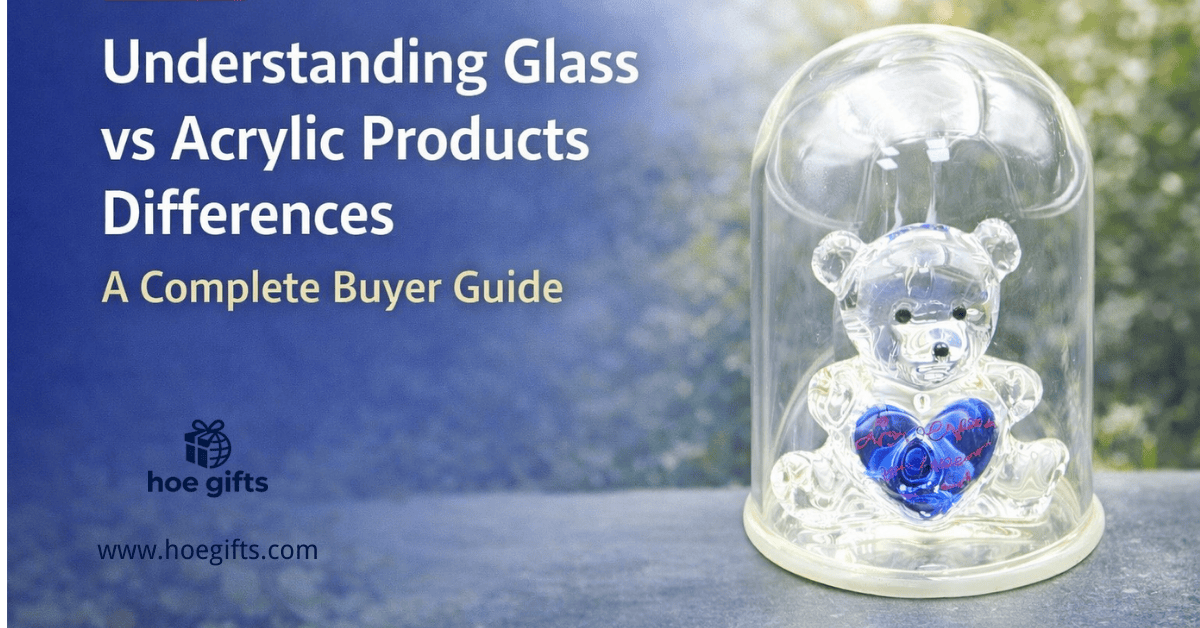

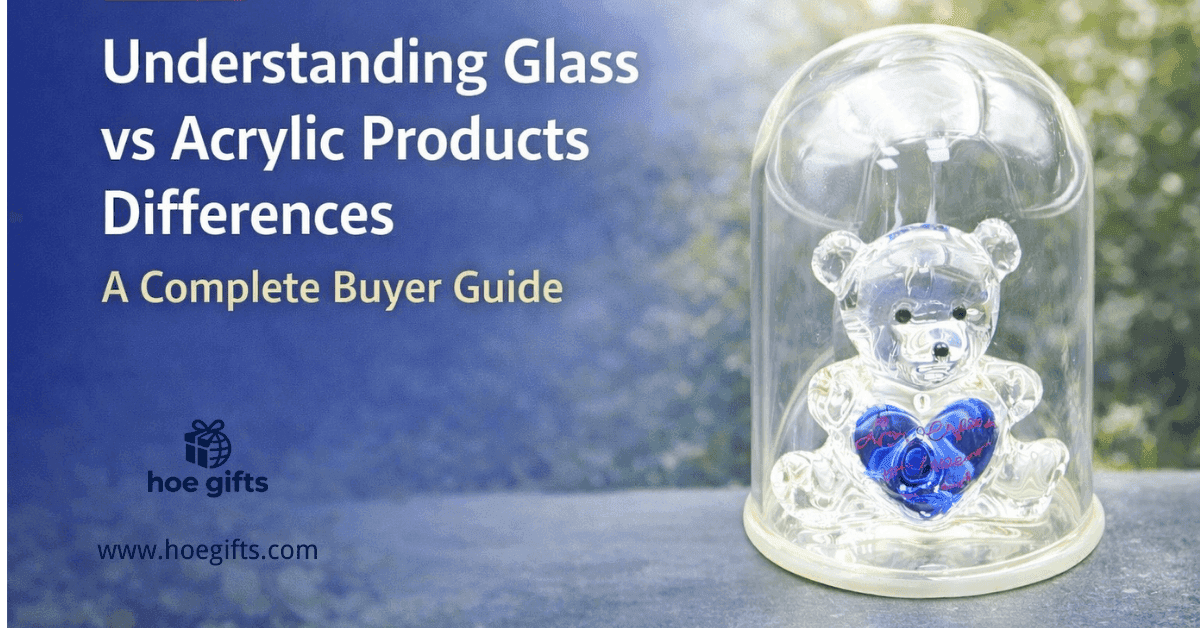
When buyers compare glass vs acrylic products, the correct choice is rarely determined by appearance alone. Material selection affects product positioning, durability, tooling, packaging, freight, compliance, customer experience, and total landed cost.
Glass is generally preferred when a product requires surface hardness, long-term clarity, heat resistance, decorative depth, or a heavier premium feel. Acrylic, also known as PMMA, is often selected when lightweight construction, impact resistance, fast machining, complex flat shapes, or lower shipping weight is more important. Neither material is universally better. The right option depends on the intended use, target market, service environment, order volume, and retail price.
For importers, wholesalers, distributors, gift brands, home décor companies, and OEM product developers, understanding the practical glass vs acrylic products differences is essential before confirming a design or requesting a quotation. This guide explains performance, applications, manufacturing, customization, quality control, cost, sustainability, and supplier evaluation.
Which Is Better, Glass or Acrylic?
Choose glass when the project prioritizes premium appearance, scratch resistance, color stability, decorative craftsmanship, heat resistance, or long-term display value.
Choose acrylic when the project prioritizes low weight, greater impact resistance than ordinary glass, easy machining, rapid prototyping, lower freight weight, or layered and bent designs.
For custom glass products for wholesale, confirm the glass type, forming process, edge treatment, decoration method, packaging structure, and breakage-control plan. For acrylic, confirm the PMMA grade, thickness, UV requirements, surface protection, machining quality, and adhesive compatibility.
Key Takeaways
- Glass provides a premium feel, strong surface hardness, and excellent visual stability.
- Acrylic is lighter and generally more impact resistant, but it scratches more easily.
- Optical-grade acrylic can be extremely clear; glass is not automatically clearer in every application.
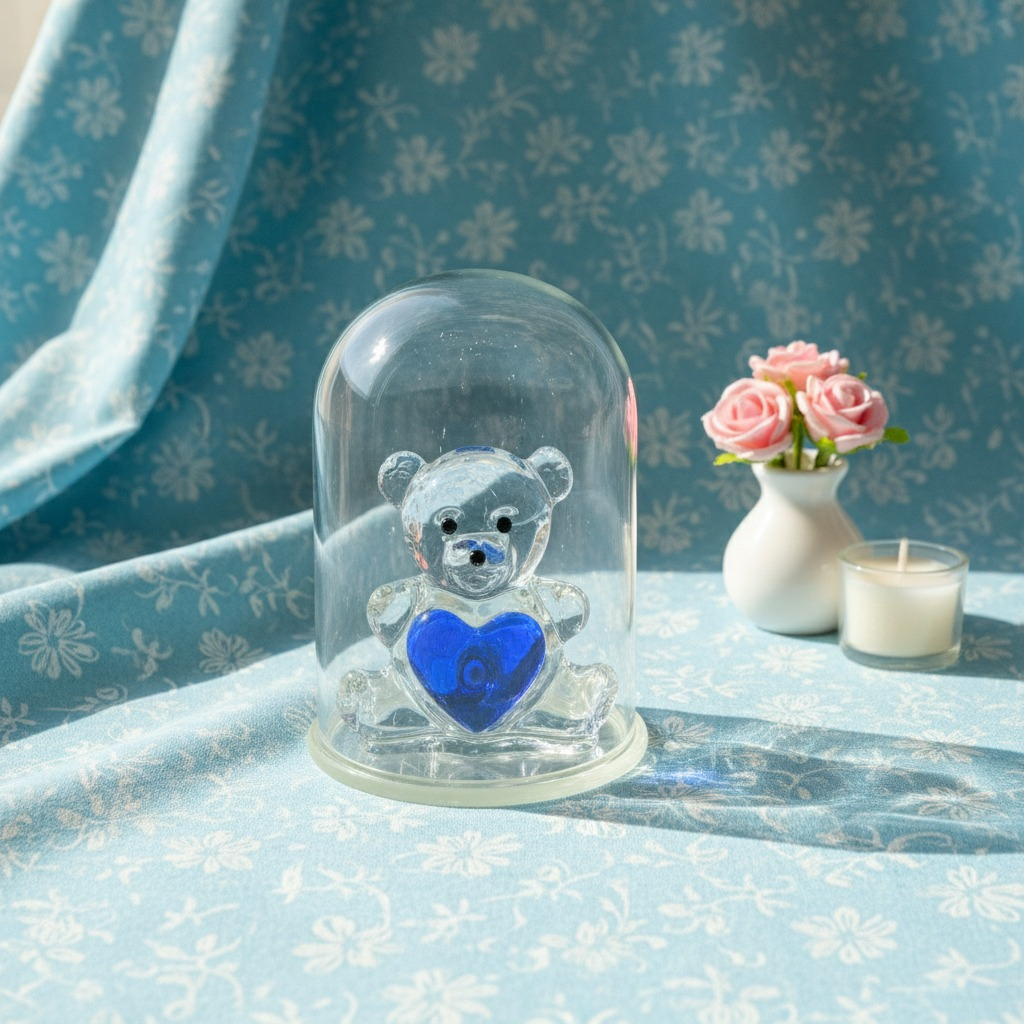
- Glass is often better for ornaments, keepsakes, drinkware, candle accessories, and premium décor.
- Acrylic is often better for signage, display stands, protective covers, and lightweight promotional products.
- Compare total landed cost, not only unit price.
- Finalize the material only after reviewing the application, dimensions, quantity, market, and compliance requirements.
What Are Glass and Acrylic?
Glass
Glass is an inorganic material made by melting mineral-based raw materials and cooling them into a rigid, non-crystalline structure. Common types include soda-lime glass for general household and decorative goods, borosilicate glass for improved temperature performance, pressed glass for repeatable molded shapes, and blown glass for hollow or artistic products.
Glass can be transparent, colored, frosted, painted, plated, engraved, sandblasted, printed, or combined with metal, wood, silicone, resin, and acrylic.
Acrylic
Acrylic is the common trade name for polymethyl methacrylate, or PMMA. It is supplied as cast sheet, extruded sheet, rod, tube, block, or molding resin.
Acrylic can be laser cut, CNC machined, drilled, polished, heat bent, printed, bonded, engraved, layered, or injection molded. Its light weight and impact performance make it useful when transparency is required without the weight or fragility of ordinary glass.
Glass vs Acrylic Products Differences at a Glance
| Factor | Glass Products | Acrylic Products | Buyer Impact |
|---|---|---|---|
| Appearance | Premium, rigid, reflective | Clean, modern, highly transparent | Affects market positioning |
| Weight | Heavier | Much lighter | Affects freight and handling |
| Impact behavior | Hard but brittle | More impact resistant | Important for public or mobile use |
| Scratch resistance | Generally stronger | Scratches more easily | Affects long-term appearance |
| Heat resistance | Usually higher | Lower service temperature | Important near heat sources |
| Processing | Specialized forming and finishing | Easy cutting, drilling, bending | Affects prototyping |
| Shape strengths | Molded, blown, thick decorative forms | Flat, bent, layered, machined forms | Determines feasibility |
| Packaging | Strong breakage protection | Surface protection required | Affects landed cost |
| Perceived value | Often premium | Often practical or contemporary | Influences retail price |
Optical Clarity and Visual Presentation
Optical quality is one of the most misunderstood glass vs acrylic products differences.
High-quality glass provides excellent clarity, brilliance, light refraction, and a premium reflective surface. Decorative glass can create visual depth through thick edges, pressed textures, faceted surfaces, color layers, and hand-applied finishes.
However, high-grade acrylic can also provide excellent light transmission. Optical-grade PMMA may appear clearer than ordinary glass in some applications because it can have low haze and no green edge.
The correct buying questions are:
- What haze level is acceptable?
- Will customers look through the material or mainly at its surface?
- Does the design depend on edge brilliance or light refraction?
- Will the surface be touched and cleaned frequently?
- Is the product used indoors or outdoors?
- Will graphics, gradients, coatings, or metallic finishes be added?
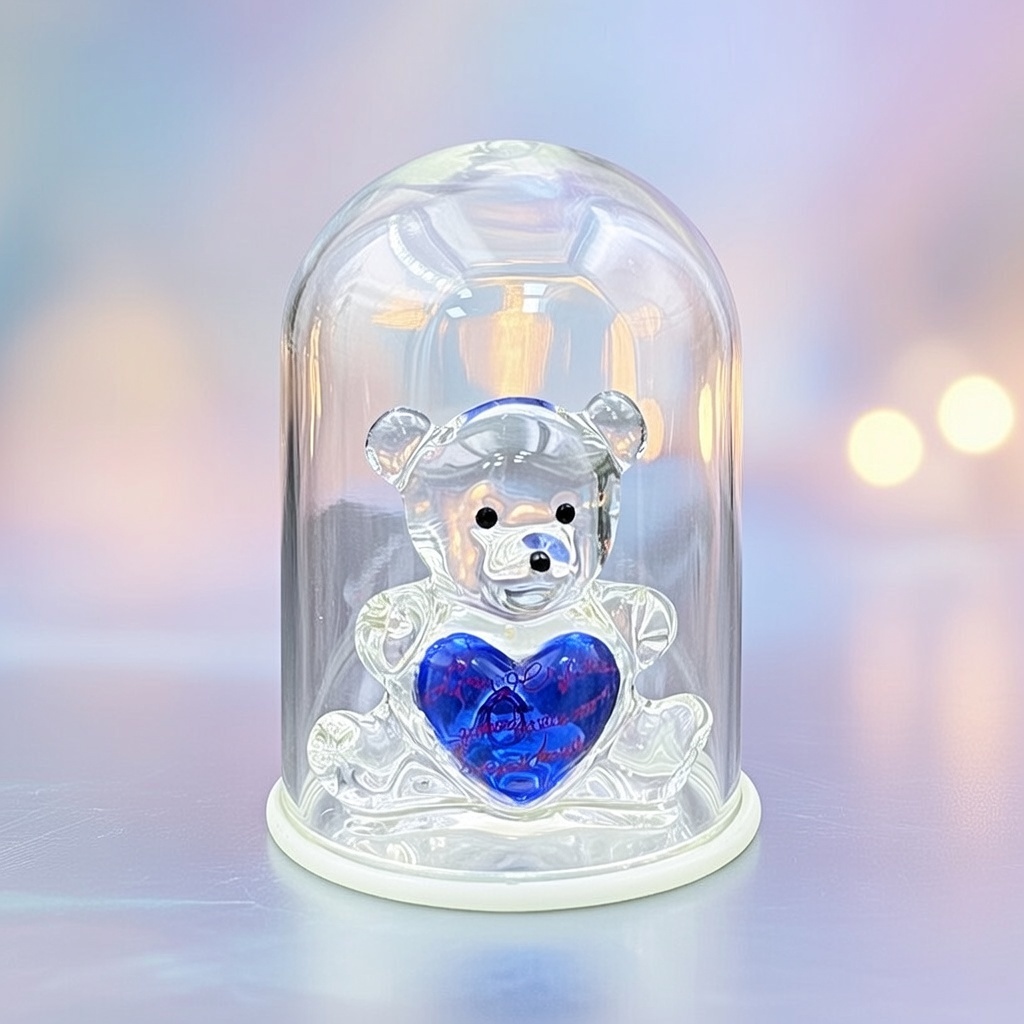
Acrylic is effective for retail displays, protective covers, and signage. Glass often provides stronger perceived value for collectible gifts, ornaments, candle accessories, and decorative table pieces.
Durability and Long-Term Wear
Acrylic is usually more resistant to impact than ordinary glass. This makes it suitable for busy stores, exhibition displays, public fixtures, and products that are frequently transported.
Glass resists surface wear well but can crack or break when subjected to impact, edge damage, sudden temperature change, or poor handling.
Acrylic’s impact advantage does not mean it is maintenance-free. Its softer surface may develop fine scratches, cleaning marks, chemical crazing, stress cracks around holes, or poor bonded joints.
The quality plans must therefore differ.
For glass, inspect edge condition, internal stress, wall thickness, chips, cracks, and protective packaging. For acrylic, inspect surface protection, machining stress, edge polishing, hole position, print adhesion, bonding, and scratch control.
Weight, Packaging, and Freight
Weight is one of the clearest commercial differences. Acrylic is substantially lighter than glass, reducing manual handling and freight weight. This is valuable for large covers, signs, wall panels, hanging decorations, and e-commerce products.
Glass usually requires stronger protection, such as molded pulp, foam, corrugated partitions, corner protectors, individual boxes, export cartons, or pallets. A low glass unit price can become expensive after packaging, freight, breakage allowance, warehouse handling, and replacements are added.
Acrylic reduces breakage risk, but large panels can bend and surfaces can scratch. Protective film and non-abrasive packing materials are essential.
Always compare total landed cost, not only the ex-factory price.
Heat, UV, and Cleaning Conditions
Heat Performance
Glass generally performs better at elevated temperatures, although performance depends on glass type, thickness, shape, and production process. Borosilicate glass may be selected when improved thermal performance is required.
Acrylic softens at lower temperatures and can deform near heat sources. It is generally unsuitable for direct flame, hot cookware, or high-temperature lighting unless specifically engineered and tested.
For candle holders, drinkware, lighting covers, and kitchen accessories, provide the supplier with real operating temperatures instead of requesting only “heat-resistant material.”
UV and Outdoor Use
Glass usually maintains color and transparency well under normal UV exposure. Acrylic also offers good weathering performance compared with many plastics when the correct outdoor grade is used.
Still, a finished acrylic product includes more than PMMA. Inks, adhesives, coatings, laminated films, and colorants may fail before the base sheet. Buyers should confirm material grade, UV stabilization, ink specification, adhesive suitability, installation period, and weathering requirements.
Cleaning Resistance
Glass tolerates many common cleaners, although it is not resistant to every chemical. Acrylic can be damaged by certain solvents or aggressive cleaners, causing haze or fine cracking. Cleaning instructions should be developed with the product.
Manufacturing Methods and Cost Structure
Material name alone does not determine price. Tooling, process, decoration, tolerance, inspection, and packaging may have greater influence.
Common Glass Processes
- Press molding: useful for repeatable shapes and textures.
- Blowing: common for hollow ornaments, vessels, and artistic pieces.
- Cutting and grinding: used for frames, mirrors, panels, and displays.
- Casting or fusing: suitable for thicker decorative pieces.
- Secondary decoration: painting, decals, printing, frosting, engraving, plating, and glitter.
Common Acrylic Processes
- Laser cutting: efficient for flat profiles, signs, and layered designs.
- CNC machining: used for precision contours, holes, and channels.
- Heat bending: suitable for stands, trays, and covers.
- Printing and engraving: supports branding and personalization.
- Bonding: used for boxes, displays, and multi-part structures.
- Injection molding: suitable when volume justifies tooling.
What Are Glass Crafts Used For?
Glass crafts are selected when visual depth, decorative value, permanence, light interaction, or a premium tactile experience matters.
| Application | Why Glass Works | Typical Buyer |
| Holiday ornaments | Reflective finish and collectible appeal | Seasonal gift importers |
| Figurines | Detailed forms and premium presentation | Gift and décor brands |
| Photo frames | Long-term display value | Retailers and souvenir buyers |
| Candle holders | Light diffusion and atmosphere | Home fragrance brands |
| Awards | Engraving and perceived permanence | Corporate gift companies |
| Jewelry boxes | Premium transparent construction | Lifestyle brands |
| Terrariums | Clear viewing and mixed-material design | Home décor wholesalers |
| Souvenirs | Printing, engraving, and custom artwork | Tourism retailers |
| Drinkware | Reusable and premium appearance | Hospitality brands |
This is why custom glass products for wholesale remain commercially relevant even when lighter alternatives exist. The emotional and visual value of glass can support a higher retail price.
When Acrylic Is the Better Choice
Acrylic is often a stronger choice for point-of-sale displays, signage, menu boards, brochure holders, protective covers, layered artwork, exhibition products, product risers, wall decorations, and lightweight hanging items.
It is especially useful when buyers require frequent design changes, rapid prototyping, small-batch personalization, low shipping weight, or complex flat shapes without expensive glass molds.
Custom Glass Products for Wholesale
Wholesale glass projects can be customized in structure, color, surface treatment, branding, and packaging.
Common options include:
- Custom shape and dimensions
- Transparent, colored, frosted, or gradient finishes
- Painting, decals, screen printing, engraving, or sandblasting
- Logo placement and private labeling
- Gift boxes, retail boxes, inserts, barcodes, and instruction cards
- Combination with metal, wood, silicone, or acrylic
The more customized a project becomes, the more important sample approval is. Digital renderings cannot fully predict transparency, reflection, color depth, edge appearance, and mixed-material interaction.
OEM/ODM Development Process
A controlled OEM/ODM workflow usually includes:
- Buyer provides the application, quantity, dimensions, references, market, and target price.
- Supplier evaluates glass, acrylic, or mixed-material feasibility.
- Both sides confirm drawings, tolerances, color, logo, finish, and packaging.
- Supplier separates tooling, sampling, unit cost, and packaging assumptions.
- A prototype or pre-production sample is produced.
- The buyer approves a golden sample.
- Bulk production begins with in-process inspection.
- Final inspection and packing validation are completed before shipment.
- Approved samples and color standards are retained for repeat orders.
MOQ, Lead Time, and Tooling
There is no universal MOQ for glass or acrylic products. It depends on whether the project uses stock or custom material, an existing or new mold, the number of colors, decoration, packaging, size, inspection level, and target price.
Laser-cut acrylic products may support lower development quantities because they do not always require dedicated molds. Injection-molded acrylic normally needs greater tooling investment and volume.
Custom glass shapes may require molds, forming trials, color testing, and packaging development. Existing shapes with custom printing can usually be developed faster.
Request separate schedules for artwork, tooling, sampling, revisions, packaging, production, inspection, and shipping. Production lead time is not the same as the complete project timeline.
Cost Comparison for Wholesale Buyers
| Cost Element | Glass | Acrylic |
| Material | Depends on glass type and color | Depends on PMMA grade and thickness |
| Tooling | May be significant for formed shapes | Low for cut sheet; high for molding |
| Processing | Forming, annealing, polishing, decorating | Cutting, bending, printing, bonding |
| Packaging | Stronger and heavier | Lighter but needs scratch protection |
| Freight | Generally higher | Generally lower |
| Main damage risk | Breakage and chipping | Scratching and stress cracking |
| Retail positioning | Often premium | Practical or design-led |
The better material is the one that produces the strongest margin after all costs and risks are included.
Quality Control for Glass and Acrylic
Glass QC Checklist
- Dimensions and wall thickness
- Bubbles, inclusions, scratches, and color variation
- Edge, rim, chip, and crack inspection
- Internal stress or annealing checks where relevant
- Decoration adhesion and logo position
- Assembly stability
- Thermal testing when required
- Packaging and transport validation
- Final inspection against an approved sample
Acrylic QC Checklist
- PMMA grade and thickness
- Haze, transparency, and color
- Surface scratches and protective film
- Cut edge and polishing consistency
- Hole position, warpage, and dimensional tolerance
- Print adhesion and bonded joints
- UV testing for outdoor products
- Packaging protection against rubbing
Terms such as “high quality” are not measurable. Buyers should define acceptable scratches, bubbles, color differences, tolerances, and decoration defects before production.
Compliance and Market Requirements
Compliance depends on the final product, intended use, and destination.
Possible requirements include food-contact testing for drinkware, limits for paints and coatings, chemical requirements for European markets, California Proposition 65 assessment, retailer restricted-substance lists, packaging labels, or mechanical safety tests for children’s products.
A supplier should not claim that every glass or acrylic product is automatically compliant. Testing must match the actual material, decoration, finished product, and application.
Sustainability: Avoid Simplistic Claims
Glass can be recyclable, but acceptance depends on glass type, color, coatings, decoration, local collection systems, and the available recycling stream. Decorative glass, mirrors, heat-resistant glass, and mixed-material items may not be accepted with standard container glass.
Acrylic can be recycled through mechanical or chemical processes, but collection infrastructure is less widely available in many markets. Adhesives, printing, mixed materials, and contamination can reduce recyclability.
A responsible B2B approach includes designing for long life, reducing unnecessary material, using recyclable packaging, separating components where practical, reducing production rejects, optimizing carton size, and verifying local recycling claims before printing them on packaging.
How to Evaluate a Supplier
A capable supplier should do more than provide a low quotation.
Ask:
- Does the supplier manufacture the product or subcontract it?
- Which glass or PMMA grades are available?
- Can the supplier explain the material recommendation?
- Are drawings and tolerances reviewed before sampling?
- What quality tests are performed?
- Can the supplier develop export packaging?
- Is a golden sample retained?
- How are nonconforming goods handled?
- Who owns the mold and artwork?
- How are repeat-order color and quality controlled?
A trustworthy OEM partner should identify risks, recommend changes, and explain cost trade-offs before production.
Common Sourcing Risks
| Risk | Typical Cause | Prevention |
| Glass breakage | Weak packaging or edge damage | Validate inserts and cartons |
| Acrylic scratches | Poor surface protection | Maintain film through packing |
| Color variation | No physical standard | Approve a master sample |
| Logo failure | Wrong ink or preparation | Perform adhesion tests |
| Size mismatch | Incomplete drawing | Confirm tolerances |
| Outdoor fading | Wrong grade or ink | Define weathering needs |
| Delayed launch | Tooling and revisions ignored | Build a full schedule |
| High landed cost | Freight and packaging omitted | Compare total cost |
| IP exposure | No ownership terms | Sign NDA and define ownership |
| Returns | No final inspection | Use agreed QC criteria |
Decision Guide
Choose glass when the product needs premium shelf appeal, strong scratch resistance, long-term display value, heat performance, decorative depth, or a substantial feel.
Choose acrylic when the product must be lightweight, impact resistant, rapidly prototyped, frequently updated, cut into complex flat shapes, or shipped economically.
Consider mixed materials when glass provides the visual focus while acrylic, metal, wood, or silicone improves structure, weight, or assembly.
Frequently Asked Questions
1. Is acrylic clearer than glass?
High-quality acrylic can offer excellent transparency and low haze. Glass provides different visual benefits, including surface hardness, brilliance, and light refraction. Compare actual grades and thicknesses.
2. Is acrylic safer than glass?
Acrylic is generally more impact resistant and less likely to shatter like ordinary glass. Safety still depends on thickness, mounting, heat, and intended use.
3. Does acrylic yellow outdoors?
Outdoor-grade PMMA can perform well. Discoloration may come from unsuitable material, inks, coatings, adhesives, or prolonged exposure. Specify weathering requirements.
4. Which material scratches more easily?
Acrylic scratches more easily. Use protective film, non-abrasive packaging, and clear cleaning instructions.
5. Which is better for premium gifts?
Glass is often preferred for ornaments, awards, keepsakes, figurines, and decorative gifts because of its weight and premium finish.
6. Which is better for retail displays?
Acrylic is often better for lightweight stands, signs, covers, and frequently updated displays. Glass may suit luxury displays.
7. Can glass products be customized for wholesale?
Yes. Shape, color, finish, logo, decoration, packaging, and mixed-material components can be customized, subject to MOQ and process feasibility.
8. Can acrylic products be ordered in small quantities?
Laser-cut and printed acrylic can often support smaller trials. Injection-molded products normally require higher tooling investment and volume.
9. Which material is cheaper?
Neither is always cheaper. Cost depends on dimensions, thickness, tooling, decoration, labor, packaging, freight, and volume.
10. What are glass crafts used for?
They are used for home décor, ornaments, souvenirs, awards, candle accessories, frames, figurines, terrariums, drinkware, and personalized gifts.
11. What should be approved before mass production?
Approve drawings, physical samples, color standards, logo placement, packaging, labels, tests, and inspection criteria.
12. Are glass products always more sustainable?
No. Sustainability depends on product life, production, freight, breakage, recycling access, and local infrastructure.
Conclusion
Understanding glass vs acrylic products differences allows B2B buyers to make decisions based on application and total commercial value rather than assumptions.
Glass is a strong choice for premium appearance, scratch resistance, decorative craftsmanship, heat performance, and long-term display. Acrylic is often better for lightweight, impact-resistant, machined, layered, and frequently customized products.
For custom glass products for wholesale, the key questions extend beyond color and unit price. Buyers should evaluate manufacturing methods, decoration, tolerances, packaging, inspection, breakage control, compliance, MOQ, lead time, and supplier accountability.
Before requesting a quotation, prepare the product dimensions, intended application, reference images, estimated quantity, target market, logo files, packaging needs, and testing requirements. This information helps the supplier recommend the right material and provide an accurate project plan.
If your project involves decorative glass, acrylic, or a mixed-material structure, request a feasibility review and pre-production sample before bulk production. A controlled sampling and quality process is the most effective way to protect your timeline, budget, and brand reputation.