

In today’s evolving homeware and beverage industry, glass cups are no longer just functional items—they represent quality, sustainability, and aesthetic value. From premium cafés to modern households, the demand for high-quality glassware continues to grow globally. Behind every well-crafted product lies a complex system of material selection, engineering precision, and efficient glass cup manufacturing.
This article explores the full journey of glass cups, focusing on the glassware production process, the advantages of borosilicate glass cups, the importance of custom glassware OEM, and the increasing role of sustainable glass materials in modern production.
The Growing Importance of Glass Cup Manufacturing
The global demand for glass drinkware has surged due to increasing awareness of sustainability and product safety. Unlike plastic alternatives, glass offers durability, recyclability, and a premium user experience.
Modern glass cup manufacturing is no longer limited to simple forming techniques. Today, manufacturers focus on:
- Precision shaping and consistency
- Heat resistance and durability
- Visual clarity and aesthetic appeal
- Customization for branding and retail differentiation
Efficient glass cup manufacturing also requires balancing cost control with quality standards, especially when supplying international markets. Manufacturers that master scalable glass cup manufacturing processes are better positioned to meet bulk demands without compromising design integrity.
Breaking Down the Glassware Production Process
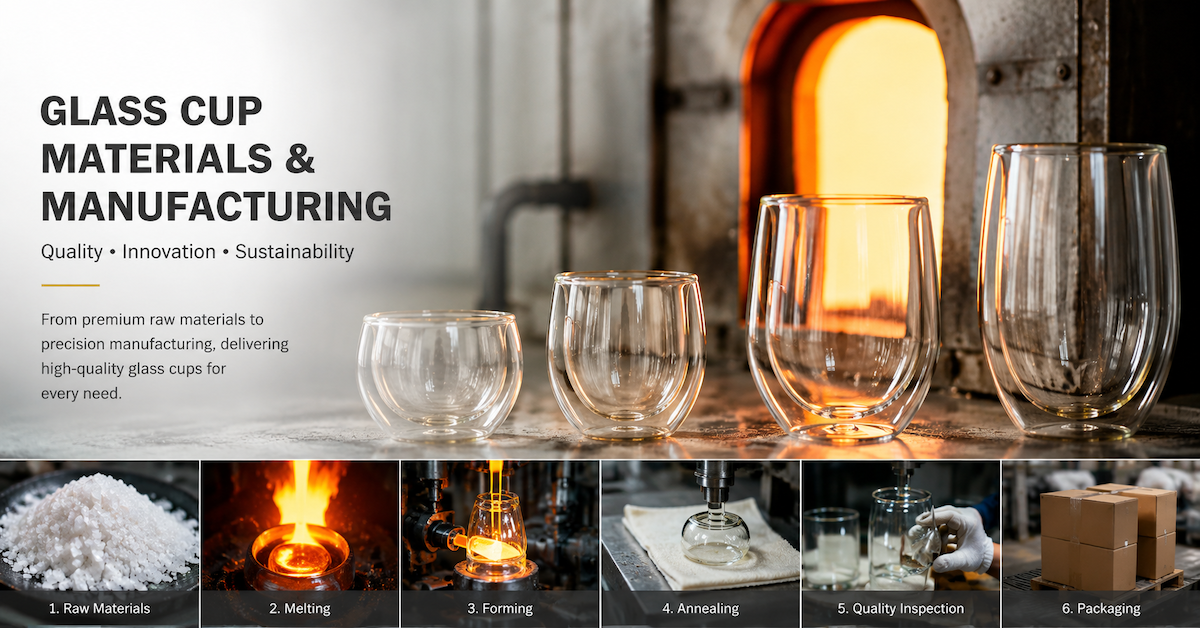
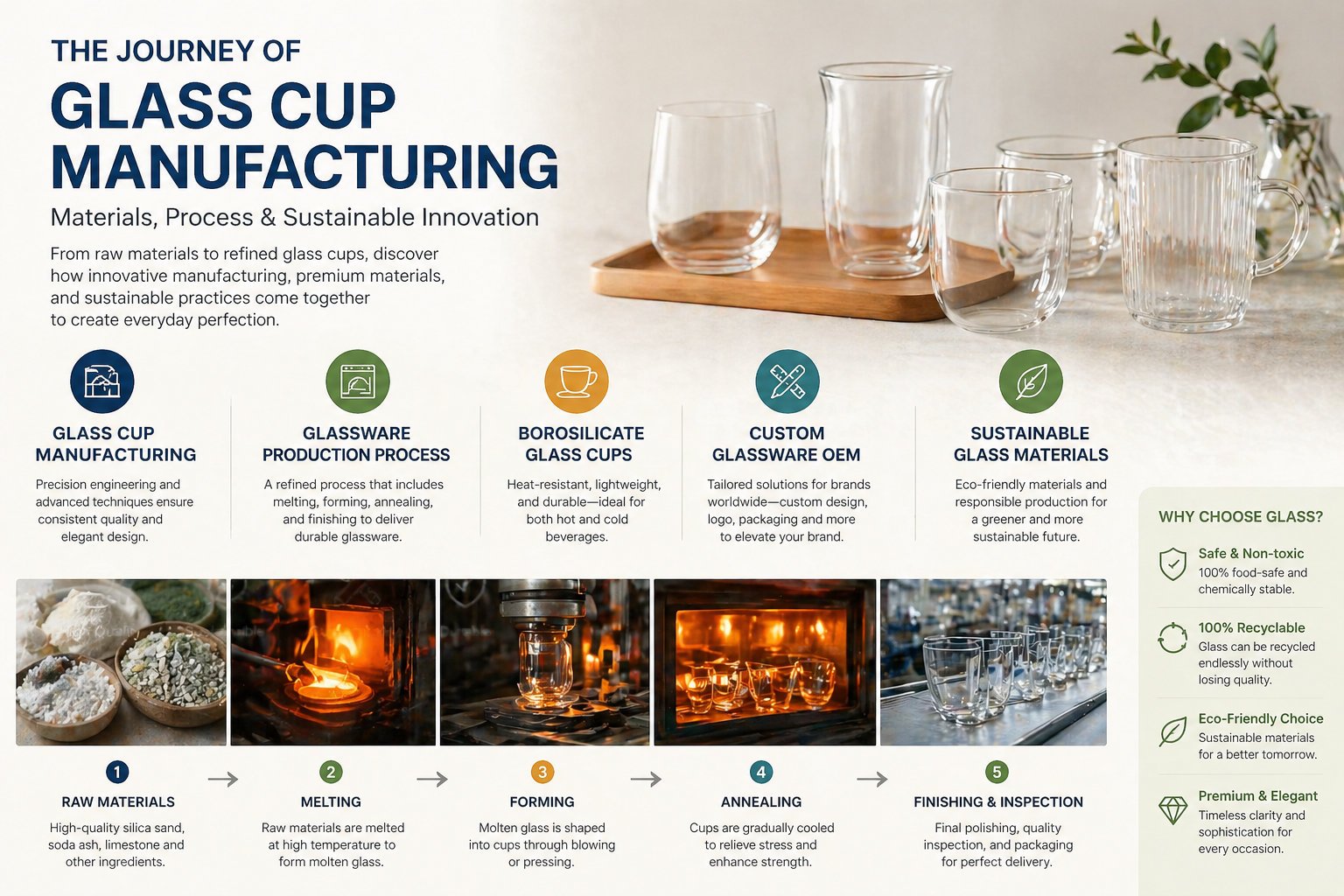
The glassware production process involves several key stages that transform raw materials into finished glass cups. Each step must be carefully controlled to ensure product consistency and durability.
1. Raw Material Selection
The primary ingredients include:
- Silica sand
- Soda ash
- Limestone
- Additives for clarity and strength
In advanced glassware production process systems, manufacturers may also incorporate recycled glass to improve sustainability.
2. Melting and Refining
Raw materials are heated at extremely high temperatures (around 1700°C) until they form molten glass. This stage is critical in the glassware production process, as impurities must be removed to ensure optical clarity.
3. Forming Techniques
Depending on the design, molten glass is shaped using:
- Blowing (manual or machine-assisted)
- Press molding
- Casting
Each method within the glassware production process affects the final product’s thickness, weight, and structure.
4. Annealing
Annealing is essential in the glassware production process. It involves slowly cooling the glass to relieve internal stress, preventing cracking or breakage during use.
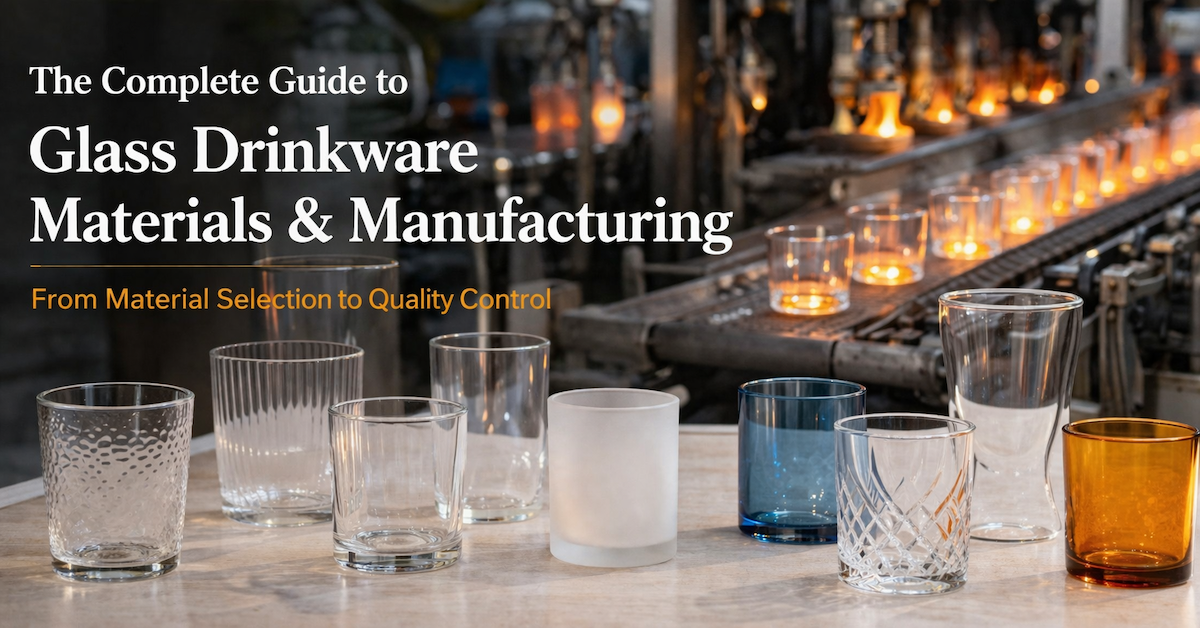
5. Finishing and Decoration
Final touches include:
- Polishing
- Printing or engraving
- Coating or coloring
A well-controlled glassware production process ensures uniform quality across all production batches.
Why Borosilicate Glass Cups Are in High Demand
Among various glass types, borosilicate glass cups stand out for their superior performance. Known for their heat resistance and durability, they are widely used in both household and commercial applications.
Key Advantages of Borosilicate Glass Cups
- Thermal Resistance
Borosilicate glass cups can withstand extreme temperature changes, making them ideal for hot beverages like coffee and tea. - Durability
Compared to standard glass, borosilicate glass cups are less prone to cracking or shattering. - Lightweight Design
Despite their strength, borosilicate glass cups remain lightweight and easy to handle. - Chemical Stability
They do not react with liquids, preserving the taste and safety of beverages.
As a result, many premium brands prioritize borosilicate glass cups in their product lines to enhance consumer trust and product value.
The Role of Custom Glassware OEM in Market Differentiation
In competitive retail environments, generic products rarely stand out. This is where custom glassware OEM solutions become essential.
What Is Custom Glassware OEM?
Custom glassware OEM (Original Equipment Manufacturing) allows brands to design unique glass products while outsourcing production to specialized manufacturers.
Benefits of Custom Glassware OEM
- Brand Identity Development
Through custom glassware OEM, businesses can create signature designs that reflect their brand image. - Flexible Design Options
From shape and size to printing and packaging, custom glassware OEM offers full customization. - Cost Efficiency at Scale
Bulk production via custom glassware OEM reduces unit costs while maintaining quality. - Faster Market Entry
Experienced manufacturers streamline the custom glassware OEM process, reducing development time.
Today, many global retailers rely on custom glassware OEM partnerships to create exclusive collections that attract consumers and strengthen brand positioning.
Sustainable Glass Materials: The Future of Glass Manufacturing
Sustainability is no longer optional—it is a key driver of innovation in the glass industry. The adoption of sustainable glass materials is transforming how glass cups are produced and consumed.
Why Sustainable Glass Materials Matter
- Environmental Responsibility
Using sustainable glass materials reduces reliance on raw resource extraction. - Recyclability
Glass is 100% recyclable, and sustainable glass materials support closed-loop production systems. - Energy Efficiency
Incorporating recycled content lowers energy consumption in the melting stage. - Consumer Preference
Modern consumers increasingly prefer products made from sustainable glass materials.
Applications in Manufacturing
Many manufacturers now integrate sustainable glass materials into their glass cup manufacturing systems by:
- Using recycled glass cullet
- Reducing emissions in production
- Designing eco-friendly packaging
By combining sustainable glass materials with efficient glassware production process methods, manufacturers can meet both environmental and commercial goals.
Integrating Innovation in Glass Cup Manufacturing
To remain competitive, manufacturers must continuously innovate. Advanced glass cup manufacturing now includes:
- Automated forming systems for precision
- Smart quality control technologies
- Lightweight yet durable product engineering
At the same time, combining borosilicate glass cups with custom glassware OEM services enables brands to deliver both functionality and design uniqueness.
Quality Control in Glassware Production
Consistency is critical in glass production. High-quality glassware production process systems include:
- Raw material inspection
- Real-time monitoring during forming
- Final product testing
When producing borosilicate glass cups, quality control becomes even more important due to the higher performance expectations.
Packaging and Global Distribution
Packaging plays a vital role in protecting fragile products like glass cups. Manufacturers must design packaging that:
- Minimizes breakage during transport
- Supports efficient shipping
- Aligns with branding
Eco-conscious brands also integrate sustainable glass materials into packaging, further enhancing their sustainability profile.
Choosing the Right Manufacturing Partner
Selecting a reliable partner for custom glassware OEM and glass cup manufacturing is crucial. Key factors include:
- Technical expertise in glassware production process
- Experience with borosilicate glass cups
- Ability to use sustainable glass materials
- Scalability and delivery reliability
A strong OEM partner ensures that every stage—from design to distribution—is optimized for quality and efficiency.
Conclusion
The evolution of glass cup manufacturing reflects broader industry trends toward sustainability, customization, and high-quality production. From mastering the glassware production process to leveraging custom glassware OEM, manufacturers play a critical role in shaping the future of glassware.
With increasing demand for borosilicate glass cups and growing emphasis on sustainable glass materials, businesses that invest in innovation and reliable manufacturing partnerships will gain a significant competitive advantage.