
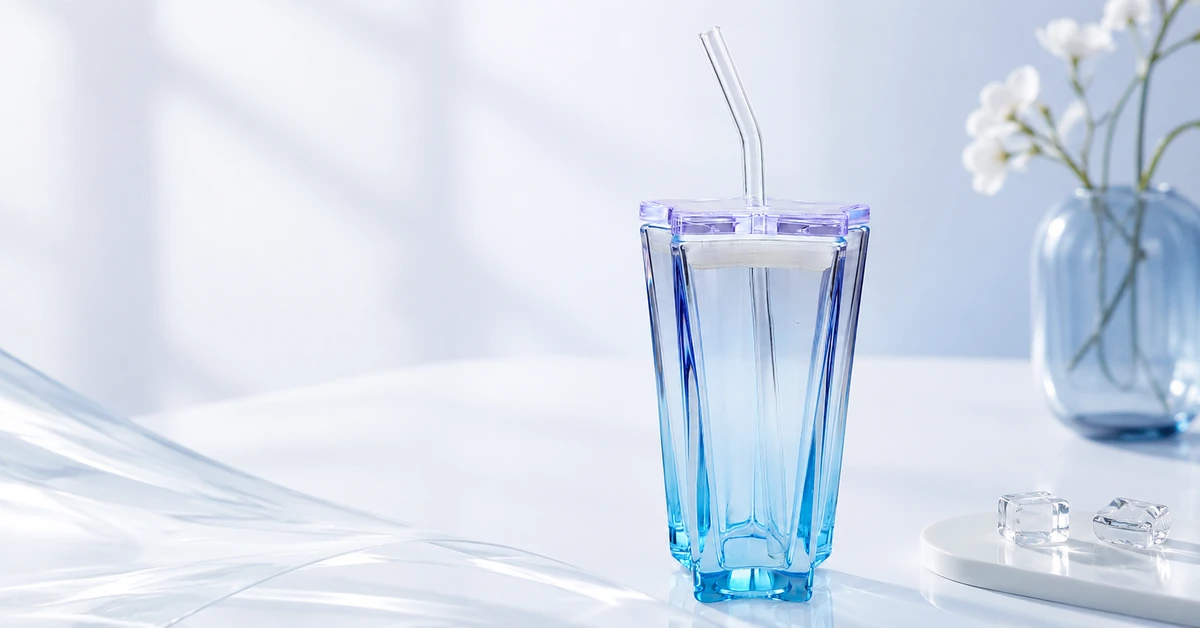

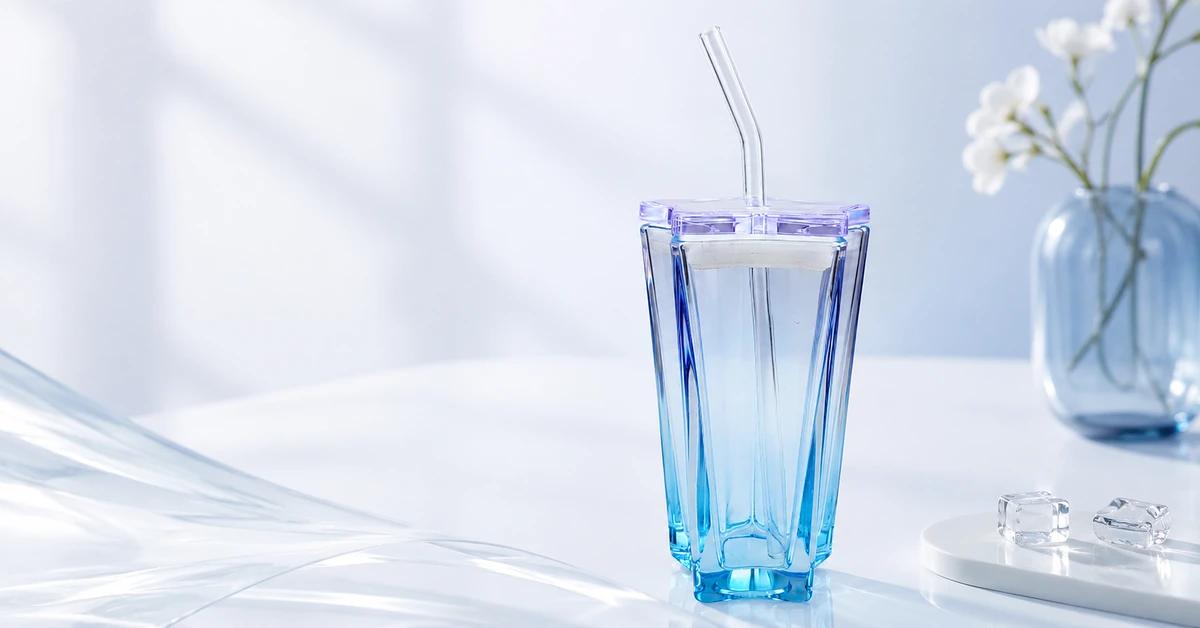
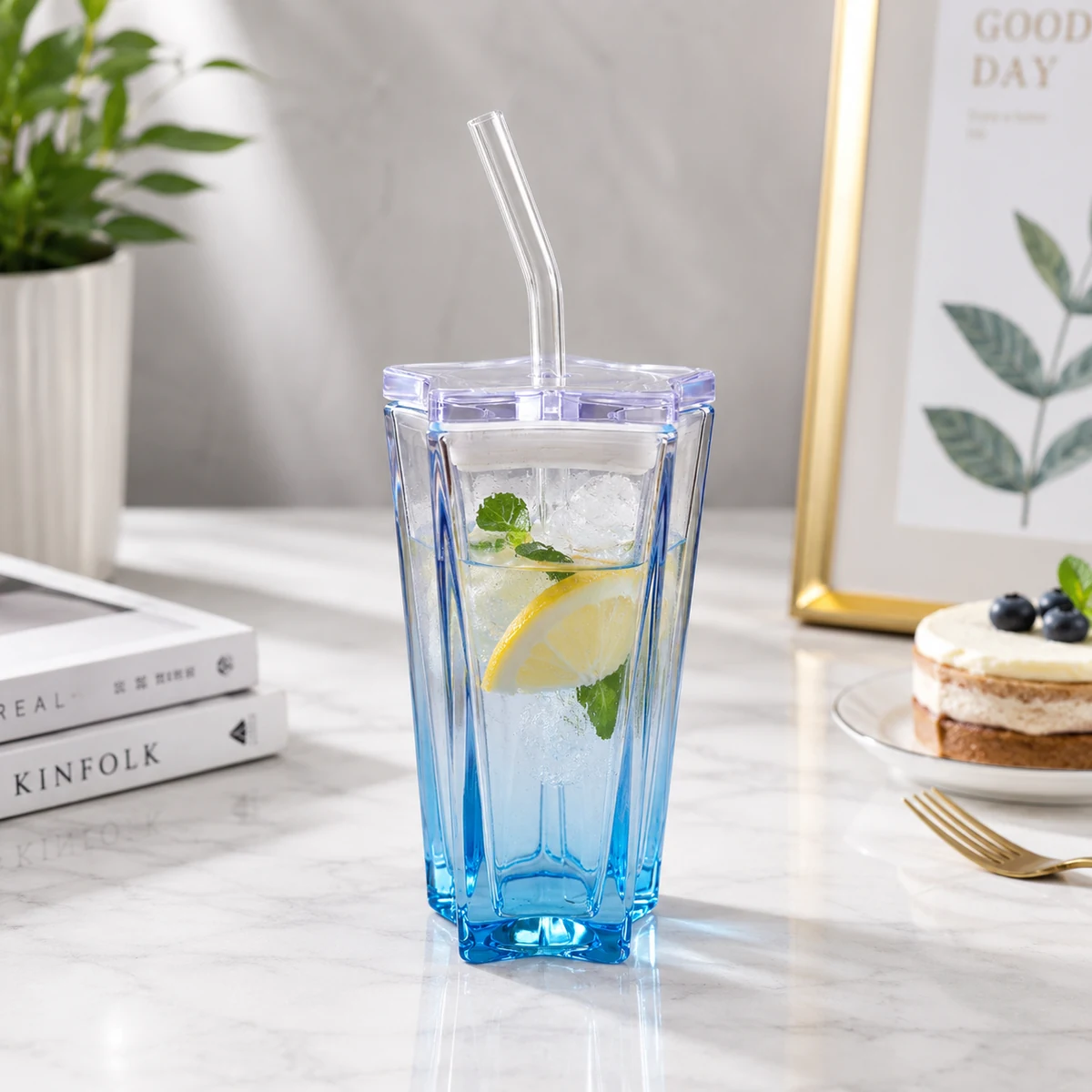
A gradient blue glass tumbler is a reusable drinkware cup made from glass with a smooth blue color-transition finish. It is commonly used for iced coffee, tea, smoothies, juice, infused water, and lifestyle beverage products. For B2B buyers, this type of drinkware is valuable because it combines visual appeal, reusable functionality, and customization potential. When sourcing gradient glass tumblers, buyers should evaluate glass quality, lid and straw options, packaging safety, logo customization, MOQ, lead time, and supplier experience.
Why Gradient Blue Glass Tumblers Are Becoming Popular
The beverage market has changed significantly in recent years. Consumers are no longer looking only for a cup that can hold a drink. They want products that look good, feel premium, support sustainable living, and match their personal lifestyle.
This is why the gradient blue glass tumbler has become a strong product category for drinkware brands, cafes, gift suppliers, and lifestyle retailers.
The gradient blue finish gives the cup a modern and refreshing look. Compared with plain transparent cups, gradient glass tumblers offer stronger shelf appeal and better visual differentiation. They are especially suitable for iced beverages, summer drink collections, reusable cup programs, and branded promotional gifts.
For B2B buyers, the value is not only in the appearance. A well-designed reusable glass cup can support retail sales, brand promotion, private label programs, and eco-friendly product lines.
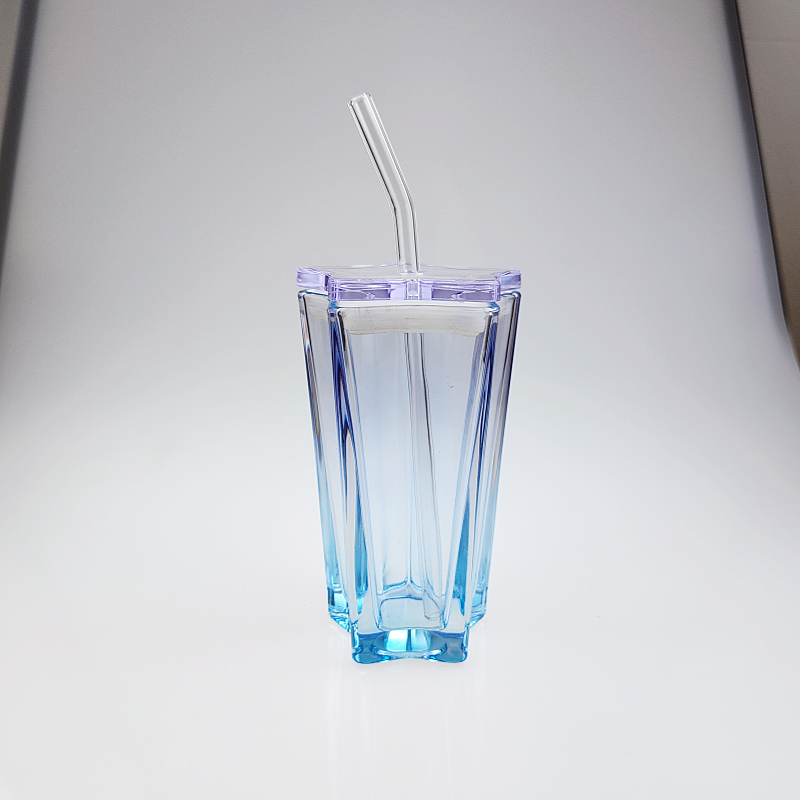
What Is a Gradient Blue Glass Tumbler?
A gradient blue glass tumbler is a glass drinking cup with a color transition effect, usually moving from deep blue to light blue or from transparent to blue. It may come with a bamboo lid, plastic lid, silicone sleeve, glass straw, stainless steel straw, or silicone straw.
Common features include:
| Feature | Description | Buyer Value |
|---|---|---|
| Material | Soda-lime glass or borosilicate glass | Determines durability and temperature resistance |
| Color Finish | Gradient blue spray, coating, or colored glass effect | Improves visual appeal |
| Lid Option | Bamboo, PP, silicone, stainless steel | Supports different markets and price levels |
| Straw Option | Glass, silicone, stainless steel | Adds convenience and reusable value |
| Capacity | Commonly 350ml, 450ml, 500ml, 600ml | Matches different beverage uses |
| Customization | Logo, packaging, color, lid, straw, gift box | Supports private label and brand programs |
A modern drinkware cup is no longer judged only by size or material. Buyers also need to consider how the cup looks in product photos, how it feels in the hand, whether it fits retail packaging, and whether it can be customized for different market positioning.
Glass Tumbler with Straw: Why Buyers Should Pay Attention
The glass tumbler with straw is one of the strongest trends in reusable drinkware. It is popular because it fits multiple beverage habits: iced coffee, fruit tea, smoothies, cold brew, milk tea, lemonade, and infused water.
For cafes and beverage chains, glass tumblers with straws can be used as branded merchandise. For gift companies, they can be sold as lifestyle gifts. For supermarkets and homeware retailers, they are easy to position as eco-friendly drinkware.
A glass tumbler with straw also gives buyers more product combinations. For example:
| Product Combination | Suitable Market |
| Glass tumbler + bamboo lid + glass straw | Eco-conscious lifestyle market |
| Glass tumbler + plastic lid + silicone straw | Affordable retail and promotional market |
| Glass tumbler + stainless steel straw | Premium reusable drinkware market |
| Gradient tumbler + custom logo + gift box | Corporate gift and private label market |
This flexibility makes the product suitable for both mass retail and customized brand projects.
Why Reusable Glass Cups Fit Sustainability Trends
Sustainability is one of the most important drivers in the drinkware industry. Many consumers are reducing single-use plastics and choosing reusable products for daily beverages.
A reusable glass cup offers several advantages:
- It can be used repeatedly for hot or cold drinks.
- It is easy to clean and does not retain odor easily.
- It provides a cleaner and more premium drinking experience.
- It supports eco-friendly branding for cafes, retailers, and gift companies.
- It can be packaged as part of a sustainable lifestyle product line.
For B2B buyers, sustainability should not be treated only as a marketing slogan. It should be supported by product design, packaging, material safety, and supplier transparency.
For example, if a brand wants to promote an eco-friendly drinkware collection, the supplier should be able to support recyclable packaging, safe material documentation, durable product design, and stable quality control.
Applications of Gradient Blue Glass Tumblers
Gradient blue glass tumblers can be used in many business scenarios. Their strong visual appeal makes them suitable for both retail display and online product photography.
| Application | Target Buyers | Product Requirement |
| Cafes and beverage shops | Coffee chains, tea shops, juice bars | Logo printing, straw options, retail packaging |
| Retail homeware | Supermarkets, lifestyle stores | Standard capacity, strong packaging, shelf-ready design |
| Corporate gifts | Gift companies, event planners | Custom logo, gift box, bulk supply |
| E-commerce brands | Amazon sellers, DTC brands | Attractive color, safe packaging, low defect rate |
| Hospitality | Hotels, resorts, restaurants | Durable glass, easy cleaning, consistent supply |
| Promotional campaigns | Brands and agencies | Fast sampling, custom artwork, cost control |
This wide application range is why custom glass tumblers are attractive to distributors, importers, and private label brands.
How to Choose the Right Glass Material
Not all glass tumblers are the same. For B2B sourcing, glass quality directly affects breakage rate, customer satisfaction, and after-sales cost.
The two common choices are soda-lime glass and borosilicate glass.
| Material | Advantages | Limitations | Best For |
| Soda-lime glass | Cost-effective, clear appearance, suitable for mass production | Lower thermal shock resistance | Retail drinkware, promotional cups |
| Borosilicate glass | Better heat resistance, lighter feel, premium positioning | Higher cost | Premium drinkware, hot/cold beverage use |
If the tumbler is mainly used for cold drinks, soda-lime glass may be enough. If the product is positioned as premium reusable drinkware for both hot and cold beverages, borosilicate glass is usually a better choice.
Buyers should confirm the intended beverage use before choosing materials. A mismatch between product material and application can lead to complaints, breakage, or poor user experience.
Key Customization Options for Custom Glass Tumblers
A custom glass tumbler is valuable because it can be adapted to different brand identities and retail markets. Customization should not stop at logo printing. B2B buyers should consider the full product system.
Common customization options include:
- Glass color
Gradient blue, clear, amber, pink, green, smoky gray, or custom Pantone-inspired colors. - Logo method
Screen printing, decal, laser engraving, etching, or UV printing. - Lid material
Bamboo, plastic, silicone, stainless steel, or mixed material lid. - Straw material
Glass, silicone, stainless steel, or reusable plastic. - Capacity
350ml, 450ml, 500ml, 600ml, or custom sizes. - Packaging
White box, kraft box, color box, window box, gift box, or retail-ready packaging. - Accessories
Cleaning brush, sleeve, straw pouch, label, barcode, instruction card.
For brand owners, these options help create different price levels. For distributors, they help serve multiple customer segments with the same base product.
Quality Control Points Before Bulk Ordering
Before placing a bulk order, buyers should check several quality points. A beautiful tumbler can still fail in the market if the finish is unstable, the lid does not fit well, or packaging cannot protect the product during shipping.
Important quality checks include:
| QC Point | What to Check |
| Glass clarity | No obvious bubbles, scratches, or cloudy areas |
| Color consistency | Gradient finish should be stable across batches |
| Rim smoothness | Drinking rim must be safe and polished |
| Lid fit | Lid should match the cup opening securely |
| Straw quality | No sharp edges, cracks, or weak points |
| Logo durability | Printing should not peel easily |
| Packaging strength | Must pass basic shipping protection needs |
| Capacity accuracy | Cup volume should match product specification |
For international buyers, packaging testing is especially important. Glassware is fragile, and poor packaging can create high loss rates during ocean shipping, air shipping, warehouse handling, or last-mile delivery.
MOQ, Sampling, and Lead Time
For B2B buyers, MOQ and lead time are critical. The exact MOQ depends on material, color, decoration method, packaging, and customization level.
General sourcing logic:
| Order Type | Typical Requirement |
| Stock design | Lower MOQ, faster delivery |
| Custom logo | Medium MOQ, sample approval required |
| Custom color | Higher MOQ, color matching needed |
| Custom mold | Highest MOQ, longer development time |
| Gift box packaging | Additional MOQ and printing setup |
Sampling is strongly recommended before mass production. Buyers should confirm:
- Glass thickness
- Color effect
- Lid and straw combination
- Logo position and size
- Packaging structure
- Barcode and label requirements
- Drop protection for shipping
A reliable supplier should provide clear sample timelines, production timelines, and packing details before order confirmation.
Cost Factors That Affect Glass Tumbler Pricing
The price of a gradient blue glass tumbler depends on more than the glass itself. Many details can change the final cost.
Main cost factors include:
- Glass material and thickness
- Capacity and shape
- Gradient color process
- Lid material
- Straw material
- Logo printing method
- Packaging type
- Order quantity
- Inspection requirements
- Shipping method
For example, a clear glass tumbler with a plastic lid and standard box will be more cost-effective. A gradient blue borosilicate glass tumbler with bamboo lid, glass straw, custom logo, and premium gift box will cost more but may achieve a higher retail price.
Buyers should not compare prices only by product photo. They should compare full specifications, packaging, and quality standards.
How to Evaluate a Glass Tumbler Supplier
Choosing the right supplier is as important as choosing the right product. For B2B buyers, the supplier should support stable production, customization, communication, quality control, and export packaging.
A good supplier should be able to answer:
- What glass material is used?
- Can the color be customized?
- What logo methods are available?
- What is the MOQ for each customization option?
- Can the supplier provide samples before bulk production?
- How is glassware packed for export?
- What quality checks are performed before shipment?
- Can the supplier support private label packaging?
- What is the normal lead time?
- Can the supplier handle repeat orders consistently?
Factory-type suppliers are often stronger in process control, packaging adjustment, and long-term customization. Trading companies may offer more product variety, but buyers should confirm whether quality control and production follow-up are strong enough.
Gradient Blue Glass Tumbler vs Regular Clear Glass Cup
| Item | Gradient Blue Glass Tumbler | Regular Clear Glass Cup |
| Visual Appeal | Strong and decorative | Simple and basic |
| Retail Differentiation | Higher | Lower |
| Custom Branding | Good for lifestyle brands | Good for general use |
| Cost | Usually higher | Usually lower |
| Best Use | Gifts, cafes, branded drinkware | Restaurants, daily tableware |
| Online Photo Performance | Stronger | More ordinary |
For brands that want a more eye-catching product, gradient blue glass tumblers are often more suitable. For buyers focused mainly on low cost and basic function, regular clear glass cups may be enough.
Packaging Considerations for Export
Glassware packaging must balance appearance and protection. This is especially important for e-commerce sellers and distributors who ship products through multiple logistics stages.
Recommended packaging options:
- Inner protection
Bubble bag, paper wrap, molded pulp, or foam insert. - Individual box
White box, kraft box, or printed retail box. - Master carton
Strong export carton with proper separation. - Gift packaging
Suitable for corporate gifts, holiday campaigns, or premium retail. - Labeling
Barcode, SKU label, warning label, recycling mark, or market-specific instructions.
Before bulk production, buyers should request packing photos or a packing test. A small packaging improvement can reduce breakage and improve customer reviews.
OEM/ODM Process for Custom Glass Tumblers
A professional OEM/ODM process helps reduce communication errors and production risks.
Typical process:
- Buyer sends product concept, reference photo, logo, or target price.
- Supplier confirms material, size, capacity, lid, straw, and packaging.
- Supplier provides quotation and MOQ.
- Buyer confirms sample order.
- Supplier produces sample and sends photos or physical sample.
- Buyer approves color, logo, packaging, and details.
- Supplier starts bulk production.
- QC inspection is completed before shipment.
- Goods are packed and shipped according to agreed terms.
For custom glass tumblers, sample confirmation is especially important because color, transparency, and logo position can look different in real products compared with digital mockups.
Common Risks and How to Avoid Them
B2B buyers should pay attention to the following risks:
| Risk | Possible Cause | Solution |
| Color variation | Unstable coating or batch difference | Confirm color standard before production |
| Breakage during shipping | Weak packaging | Request export-grade packing |
| Lid does not fit | Size tolerance issue | Confirm lid sample with cup sample |
| Logo peeling | Wrong printing method | Choose suitable printing process |
| High defect rate | Poor QC | Require pre-shipment inspection |
| Delayed delivery | Unclear production schedule | Confirm timeline before deposit |
A reliable sourcing process should identify these risks early instead of waiting until bulk goods arrive.
FAQ
1. What is a gradient blue glass tumbler?
It is a reusable glass cup with a blue color transition effect, often used for iced coffee, tea, smoothies, juice, and lifestyle beverages.
2. Can gradient blue glass tumblers be customized?
Yes. Buyers can customize logo, color, capacity, lid, straw, packaging, and sometimes cup shape.
3. What is the best material for a reusable glass cup?
For basic cold drink use, soda-lime glass is cost-effective. For premium hot and cold drink use, borosilicate glass is often preferred.
4. Are glass tumblers with straws suitable for cafes?
Yes. They are suitable for cafes, tea shops, juice bars, and coffee brands because they are reusable, stylish, and brandable.
5. Can I add my brand logo to a glass tumbler?
Yes. Common logo methods include screen printing, decal, UV printing, laser engraving, and etching.
6. What packaging is best for glass tumblers?
Export-grade individual boxes with inner protection are recommended. For premium sales, printed gift boxes are better.
7. What capacity is common for modern drinkware cups?
Common capacities include 350ml, 450ml, 500ml, and 600ml, depending on the drink type and target market.
8. Are reusable glass cups eco-friendly?
They can help reduce single-use cup consumption when used repeatedly. Packaging and production choices also affect sustainability.
9. What should buyers check before bulk production?
Buyers should confirm glass quality, color, logo, lid fit, straw quality, packaging, MOQ, lead time, and inspection standards.
10. Are custom glass tumblers good for corporate gifts?
Yes. They are suitable for promotional campaigns, company gifts, event merchandise, and private label gift collections.
11. How can I reduce breakage during shipping?
Use strong individual packaging, proper carton structure, inner protection, and pre-shipment packing checks.
12. What is the difference between a factory and a trading company?
A factory usually has stronger control over production and customization. A trading company may offer wider product variety but needs strong QC support.
Conclusion
The gradient blue glass tumbler represents more than a stylish drinking cup. It reflects several important trends in the modern drinkware market: sustainability, personalization, reusable design, and stronger visual presentation.
For B2B buyers, the best product is not simply the most attractive cup in a catalog. It is the product that matches the target market, price level, packaging requirement, customization need, and logistics conditions.
Whether you are sourcing a glass tumbler with straw for cafes, a reusable glass cup for lifestyle retail, a modern drinkware cup for e-commerce, or a custom glass tumbler for branded gifts, careful supplier evaluation is essential.
If you are planning a custom drinkware project, prepare your target capacity, logo file, preferred lid and straw combination, packaging requirement, and estimated order quantity. A professional supplier can then help you confirm the most suitable material, process, MOQ, and production plan.