
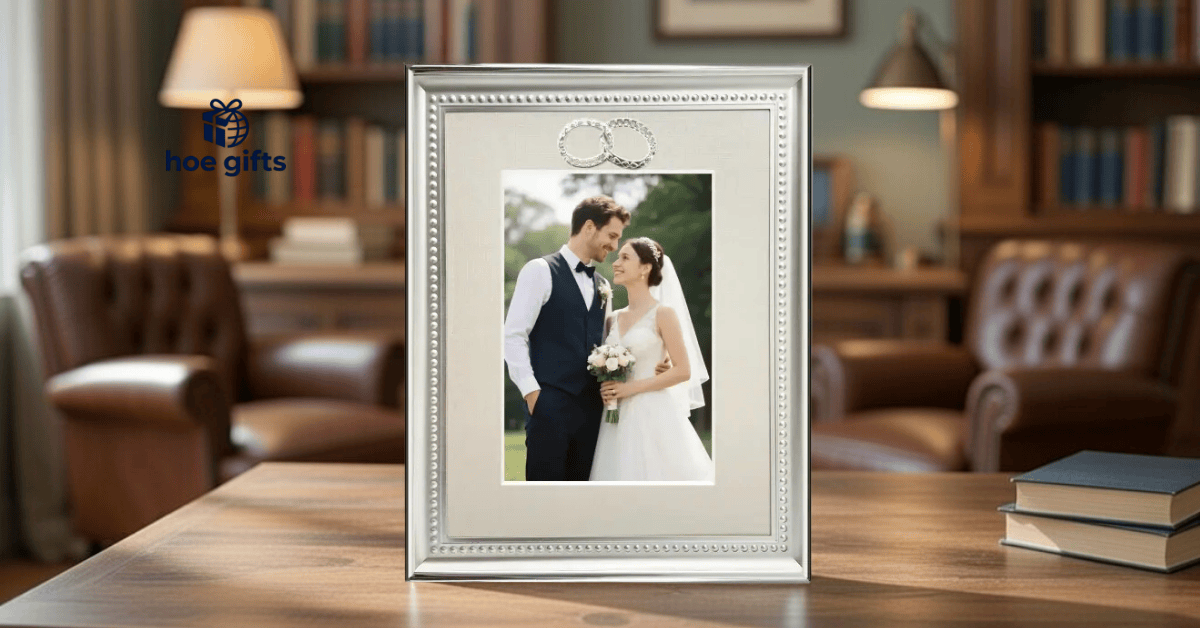

Photo frames are easy to underestimate.
They appear simple: four sides, a transparent cover, a backing board, and a stand or hanging hook. Yet experienced buyers know that small construction differences can decide whether a frame sells smoothly or becomes a source of returns.
A corner that opens after two weeks, a stand that cannot support the frame, or a backing board that bends in humid weather may look like minor defects at the factory. Once the product reaches hundreds of retail stores, those “small” issues become expensive.
That is why choosing a bulk photo frames supplier should involve more than comparing unit prices. Importers, wholesalers, home décor brands, gift companies, and private-label retailers need to assess materials, construction, finishing, production control, packaging, communication, and repeat-order reliability.
This guide explains how to choose a photo frame manufacturer, when custom size photo frames OEM projects make commercial sense, and what buyers should check before confirming mass production.
Photo Frame Supplier Buying Guide: Materials
A reliable bulk photo frames supplier should be able to recommend the right material for the target market, produce consistent dimensions and finishes, develop protective export packaging, and repeat the same product quality across future orders.
Before placing an order, buyers should verify the frame material, corner construction, backing board, photo opening, stand or hanging system, surface finish, packaging method, MOQ, lead time, inspection standard, and customization capability.
The best supplier is not always the one with the lowest quotation. It is the one that can deliver the required product at a predictable total cost with fewer defects, delays, and packaging losses.
Quality Control & Key Purchasing Considerations
- Match the frame material to the retail price, design style, and application.
- Inspect the corner joints, backing, fasteners, and display structure—not only the front appearance.
- Test packaging with the actual product and shipping route.
- Approve a physical sample before bulk production.
- Confirm whether the supplier can reproduce colors and finishes for repeat orders.
- Use custom size photo frames OEM only when the added differentiation justifies tooling and development costs.
- Compare total landed cost rather than relying only on ex-factory price.
Why Photo Frames Remain a Reliable Wholesale Product
Photo frames continue to perform well because they serve several markets at the same time.
A single product category can be sold through home décor stores, gift shops, wedding suppliers, photography studios, online marketplaces, hotels, corporate gift programs, and seasonal retail collections.
Unlike fast-fashion products, many frame designs have a relatively long commercial life. Neutral wood finishes, metallic frames, baby photo frames, wedding frames, memorial products, and tabletop double frames may remain sellable for several seasons.
The category also allows brands to create clear price levels.
A basic MDF frame can serve mass retail. An aluminum alloy frame can target modern interiors. A zinc alloy or resin frame with decorative details can enter the gifting market. A mixed-material frame with metal, glass, enamel, fabric, or wood can support a more distinctive private-label collection.
For buyers, this flexibility is attractive. It also makes supplier capability more important because different materials require different production and quality-control methods.
Start with the Target Market, Not the Supplier Catalog
One of the most common sourcing mistakes is selecting a frame from a catalog before defining the market.
A product that works for a discount retailer may not be suitable for a wedding gift collection. A heavy decorative frame may look premium but become too expensive for e-commerce shipping. A delicate tabletop stand may be acceptable for home use but unsuitable for hospitality projects.
Before asking a bulk photo frames supplier for prices, define:
- Target customer
- Retail channel
- Expected retail price
- Photo size
- Display method
- Material preference
- Design style
- Estimated quantity
- Packaging format
- Destination market
This information helps the manufacturer recommend a realistic construction instead of quoting a visually similar product that does not meet the actual commercial need.
Photo Frame Materials and Their Best Applications
Different materials affect cost, weight, durability, appearance, tooling, and packaging.
| Material | Main Advantages | Common Limitations | Best Applications |
|---|---|---|---|
| Solid wood | Natural texture and premium feel | Higher cost and possible variation | Premium home décor and gifts |
| MDF | Stable, economical, easy to finish | Vulnerable to moisture if poorly sealed | Mass retail and private label |
| Aluminum alloy | Lightweight, clean, modern appearance | Limited sculptural detailing | Contemporary frames and offices |
| Zinc alloy | Detailed casting and premium weight | Higher weight and plating cost | Wedding, baby, and commemorative gifts |
| Iron or steel | Strong and suitable for thin profiles | Requires good rust protection | Industrial and minimalist décor |
| Resin | Supports sculptural and decorative shapes | Can chip if poorly formulated | Ornamental and seasonal frames |
| Acrylic | Lightweight and modern | Scratches more easily | Promotional and contemporary products |
| Mixed materials | Strong differentiation | More complex assembly and QC | Branded and higher-value collections |
A professional supplier should be able to explain why a certain material fits the project. Buyers should be cautious when a manufacturer recommends the same construction for every market simply because it is already available.
How to Choose a Photo Frame Manufacturer
Knowing how to choose a photo frame manufacturer requires looking at several areas together.
1. Relevant Manufacturing Experience
Years in business alone do not prove suitability. Ask whether the supplier has experience with the specific material and frame structure you plan to buy.
A factory that mainly produces wooden frames may not understand zinc alloy plating. A metal gift supplier may handle decorative frames well but have limited experience with large wall-mounted products.
Relevant experience should include:
- Similar materials
- Similar dimensions
- Similar retail channels
- Similar packaging requirements
- Similar order quantities
Request actual production photos, samples, or project examples rather than relying only on a company introduction.
2. In-House and Outsourced Processes
Many photo frame projects involve several processes: cutting, molding, polishing, painting, plating, printing, glass or acrylic cutting, backing assembly, and packaging.
It is normal for some steps to be outsourced. The important question is how the supplier controls them.
Ask:
- Which processes are completed in-house?
- Which processes are subcontracted?
- How are subcontractors approved?
- Who checks incoming semi-finished components?
- How are color and finish standards communicated?
- Who is responsible when an outsourced process fails?
A supplier that openly explains its production chain is usually easier to manage than one that claims everything is made internally but cannot show the process.
3. Mixed-SKU Production Ability
Wholesale frame orders often include several sizes, finishes, or designs in one program.
Mixed-SKU production creates practical challenges. Components can be packed into the wrong cartons. Barcodes may be mixed. A finish approved for one size may look different on another. Carton quantities may vary.
A capable bulk photo frames supplier should have a clear system for:
- SKU identification
- Component separation
- Barcode control
- Packing lists
- Carton markings
- Production scheduling
- Final quantity verification
This matters especially for retail programs where one shipment contains several designs.
Product Construction: Where Quality Problems Usually Begin
The front of the frame receives most of the buyer’s attention, but many failures occur at the back.
Corner Joints
For wood and MDF frames, corners should align cleanly without visible gaps, glue marks, or uneven steps. Weak joints may open after temperature changes or transport vibration.
For metal frames, check welding, casting seams, screws, and mechanical connections. Decorative alloy frames should not have sharp casting edges or unstable joined sections.
Transparent Cover
The cover may be glass, acrylic, or another transparent sheet.
Buyers should confirm:
- Thickness
- Clarity
- Scratch level
- Edge treatment
- Fit inside the frame
- Protective film where needed
Acrylic reduces weight and breakage but scratches more easily. Glass provides a rigid and familiar appearance but requires stronger packaging.
Backing Board
Thin or poorly finished backing boards can bend, absorb moisture, or release fibers.
The backing should fit the frame properly and remain easy for the user to remove and reinstall. Fasteners should hold it securely without requiring excessive force.
Stand and Hanging Hardware
Tabletop frames need a stable stand angle. The product should not tip forward or collapse when placed on a smooth surface.
Wall frames require correctly positioned hooks that can support the product weight. Double-use frames must work reliably in both orientations if portrait and landscape display is promised.
Practical Photo Frame Quality Checklist
| Inspection Area | What to Check |
| Dimensions | Outer size, photo opening, depth, and tolerance |
| Corners | Alignment, strength, gaps, and excess adhesive |
| Surface | Scratches, dents, paint marks, plating defects |
| Cover | Clarity, cleanliness, chips, and correct fit |
| Backing | Flatness, thickness, edge quality, easy removal |
| Stand | Stability, hinge strength, and display angle |
| Hardware | Secure hooks, clips, tabs, and screws |
| Decoration | Correct logo, artwork, color, and position |
| Packaging | Protection, carton quantity, labels, and barcode |
| Function | Photo insertion, tabletop use, and wall hanging |
Before production, buyers should convert these points into an agreed inspection standard. “Good quality” is too vague to resolve a dispute.
Custom Size Photo Frames OEM: When It Creates Real Value
Standard sizes are practical for volume retail, but custom size photo frames OEM projects can help brands create products that competitors cannot easily copy.
Custom sizing is especially useful for:
- Wedding and anniversary collections
- Baby handprint or keepsake frames
- Corporate award programs
- Hospitality room décor
- Professional photography packages
- Museum and souvenir collections
- Limited-edition gift sets
- Multi-opening collage frames
The strongest OEM projects usually solve a specific market need. Customization should not be added simply to make the product “different.”
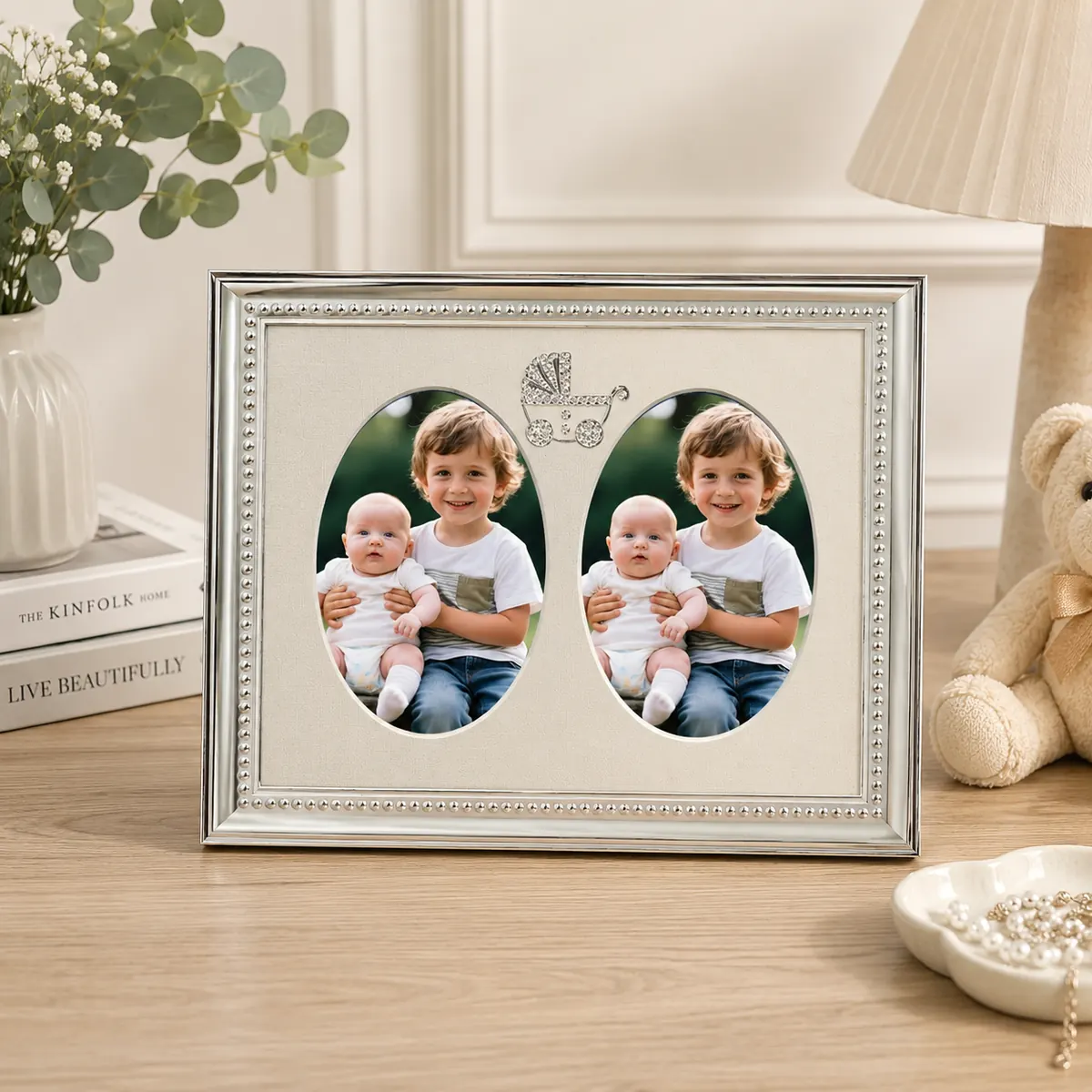
For example, a wedding gift brand may need two photo openings and space for engraved names. A hotel project may require a non-standard wall size that matches the interior design. A baby gift collection may combine a photo opening with a decorative metal element.
In these cases, custom dimensions support the product concept and justify the added development cost.
A Practical OEM Development Workflow
A well-managed OEM project normally follows these stages.
Step 1: Product Brief
The buyer provides the target market, dimensions, reference images, material preference, estimated order volume, target price, and packaging requirements.
Step 2: Feasibility Review
The supplier reviews structure, material, weight, assembly, mold requirements, and possible production risks.
This stage is important. A responsible factory may recommend changing a thin edge, adjusting the stand angle, increasing the backing thickness, or simplifying a decoration.
Step 3: Drawings and Quotation
Both sides confirm the drawing, photo opening, outside dimensions, material specifications, finish, logo, accessories, and packaging.
Tooling and sample costs should be listed separately from unit cost.
Step 4: Prototype or Sample
The first sample is used to check appearance, structure, function, and packaging fit.
For decorative products, a physical sample is more reliable than a digital rendering because metallic finishes, textures, color depth, and product weight are difficult to judge on screen.
Step 5: Golden Sample Approval
Once the sample is approved, it becomes the production reference. Both buyer and supplier should retain one.
Step 6: Bulk Production and Inspection
The factory follows the confirmed specifications and performs incoming, in-process, and final checks.
Step 7: Packing and Shipment
Final carton markings, quantities, labels, barcodes, and shipping protection are verified before loading.
MOQ, Tooling, and Lead Time
MOQ varies according to material and process.
An existing MDF frame with custom printing may support a lower MOQ. A custom zinc alloy frame requiring a new mold, plating, and gift-box packaging usually needs a larger quantity.
Factors that affect MOQ include:
- New or existing mold
- Number of sizes
- Number of colors
- Custom finish
- Printing or engraving
- Special accessories
- Packaging quantity
- Mixed-SKU ratio
- Material purchasing minimums
Lead time should be divided into development and production.
Development may include drawing, mold making, sampling, finish approval, packaging proofing, and revisions. Production includes material preparation, manufacturing, assembly, inspection, and packing.
Buyers should not assume that a quoted “30-day lead time” starts before all samples and artwork are approved.
Understanding the Real Cost of Bulk Photo Frames
The lowest unit price does not always produce the lowest landed cost.
A realistic calculation should include:
- Product cost
- Tooling
- Sampling
- Packaging
- Inspection
- Inland transport
- International freight
- Customs costs
- Breakage allowance
- Returns
- Replacement shipments
A cheaper frame with weak packaging may cost more after breakage and customer complaints. A lightweight design may reduce freight but lose the premium feel expected by the market.
The correct decision depends on the product’s selling price and risk level.
Packaging: The Hidden Part of Product Quality
Photo frame packaging must protect several vulnerable areas at once: the corners, surface, transparent cover, decoration, stand, and hanging hardware.
Common protection methods include:
- Tissue or non-abrasive wrapping
- Protective film
- Bubble bag
- Corner guards
- Corrugated partitions
- Molded pulp
- Foam inserts
- Individual inner boxes
- Strong export cartons
Packaging should be designed around the product, not selected after manufacturing is complete.
For e-commerce, individual drop protection is especially important. For wholesale pallet shipments, carton compression and internal movement matter more.
A supplier should be willing to provide packing photos, carton dimensions, gross weight, and a sample packed in the final proposed method.
Compliance and Documentation
Photo frames may appear low-risk, but requirements vary by market and product type.
Buyers may need to review:
- Surface coatings
- Paints and inks
- Plated metal components
- Adhesives
- Wood or MDF materials
- Packaging labels
- Small decorative parts
- Children’s product claims
- Retailer-specific restricted-substance requirements
The documentation should match the actual materials and finished product. A general report for a different item or raw material may not be sufficient.
Avoid asking only, “Does this product pass compliance?” Instead, give the supplier the destination market, retail channel, user group, and required test list.
Factory vs Trading Company
A factory may offer stronger process control, more direct engineering communication, and better repeat-order traceability. A trading company may provide a wider product range and combine products from several factories.
Neither model is automatically better.
For a focused custom size photo frames OEM project, direct factory involvement can be valuable. For a broad mixed-material collection with many small quantities, an experienced trading partner may simplify sourcing.
The key is transparency. Buyers should know who makes the product, who controls quality, and who is responsible for corrective action.
Common Sourcing Risks and Prevention
| Risk | Common Cause | Prevention |
| Corner gaps | Poor cutting or assembly | Approve joint standard and inspect |
| Color variation | Uncontrolled finish batches | Retain approved color sample |
| Scratched cover | Weak handling protection | Use film and non-abrasive packing |
| Unstable stand | Poor hinge or angle design | Test on multiple surfaces |
| Frame breakage | Inadequate inner packaging | Validate packed samples |
| Wrong SKU packing | Weak identification system | Use barcode and carton checks |
| Delayed shipment | Unclear approval schedule | Build a complete project timeline |
| Repeat-order mismatch | No retained master sample | Keep golden samples and records |
| Logo error | Unapproved artwork version | Lock final artwork in writing |
| Cost increase | Incomplete initial specification | Confirm all components before order |
RFQ Checklist for Buyers
When requesting a quotation, provide:
- Product reference or drawing
- Outer dimensions
- Photo opening size
- Material
- Color and finish
- Cover material
- Backing type
- Stand or hanging requirements
- Logo or artwork
- Packaging format
- Estimated quantity
- Number of SKUs
- Destination market
- Required tests
- Target delivery date
A detailed RFQ reduces quotation changes and helps suppliers identify production risks early.
Frequently Asked Questions
1. What makes a reliable bulk photo frames supplier?
A reliable supplier provides stable product quality, accurate dimensions, controlled finishes, protective packaging, clear communication, and repeatable production for future orders.
2. Which material is best for wholesale photo frames?
There is no single best material. MDF suits cost-sensitive retail, wood fits premium collections, aluminum supports modern designs, and zinc alloy or resin works well for decorative gifts.
3. Can photo frames be customized in size?
Yes. Custom size photo frames OEM services can modify the outside dimensions, photo opening, material, finish, decoration, backing, stand, and packaging.
4. What determines the MOQ?
MOQ depends on tooling, materials, colors, packaging, accessories, order volume, and whether the design uses an existing or custom mold.
5. Should I use glass or acrylic covers?
Glass offers rigidity and a familiar premium feel. Acrylic is lighter and less likely to break but requires protection against scratches.
6. How should I approve a custom frame?
Approve a physical sample that includes the final material, finish, transparent cover, backing, stand, logo, and packaging.
7. What are the main quality problems?
Common issues include corner gaps, unstable stands, scratched covers, bent backing boards, finish variation, loose hardware, and insufficient packaging.
8. How can I reduce shipping damage?
Use product-specific corner protection, inner wrapping, partitions or inserts, strong cartons, and packed-sample testing before production.
9. Can suppliers produce mixed-SKU orders?
Many can, but buyers should verify how the supplier controls barcodes, carton markings, quantities, and separation between designs.
10. How do I compare supplier quotations?
Compare the complete specification, packaging, tooling, quality standard, lead time, inspection, and freight impact—not only unit price.
11. Is a custom mold always required?
No. Custom printing, backing, packaging, or some size changes may use existing components. Sculptural metal or resin designs often require new tooling.
12. What should I confirm for repeat orders?
Confirm that the supplier retains approved samples, drawings, color standards, packaging files, and production records.
Conclusion
Choosing a bulk photo frames supplier is a commercial decision, not only a purchasing task.
The supplier affects product quality, packaging efficiency, launch timing, repeat-order consistency, and customer satisfaction. A low quotation may look attractive at the beginning, but weak construction, unstable finishes, and poor export packaging can quickly remove the apparent savings.
Start by defining the target market and product position. Then evaluate the supplier’s experience, material knowledge, production controls, packaging capability, communication, and willingness to identify risks before manufacturing.
For custom size photo frames OEM projects, approve the structure and function before focusing on surface decoration. A beautiful frame that tips over, scratches during packing, or cannot be reproduced consistently will not support a long-term product line.
Before confirming an order, request a complete quotation, technical drawing, physical sample, packing proposal, inspection standard, and production schedule. These steps create a clearer project for both buyer and manufacturer—and greatly improve the chance of receiving a product that performs well after it leaves the factory.