

In the global decorative gifts market, successful products are rarely accidental. Behind every bestselling ornament lies a rigorous design and product development process—one that balances creativity, engineering precision, material science, and market demand.
Using a handcrafted glass ornament project as a real-world example, this article explores how thoughtful design development transforms an initial idea into a commercially scalable, retail-ready product trusted by global brands.
Design Begins with Storytelling, Not Materials
The first stage of product development is concept definition, not production.
For seasonal décor—especially Christmas ornaments—design is driven by emotional storytelling. Consumers are not purchasing glass alone; they are buying nostalgia, tradition, and celebration.
Key concept inputs include:
-
Seasonal symbolism (Christmas, winter, celebration)
-
Target retail positioning (mass retail vs. premium gifting)
-
Brand tone (classic, handcrafted, contemporary)
-
Market expectations for color, texture, and finish
In this project, the core concept focused on heritage craftsmanship—a timeless glass ornament enhanced with decorative detailing and ribbon accents to evoke traditional European holiday aesthetics.
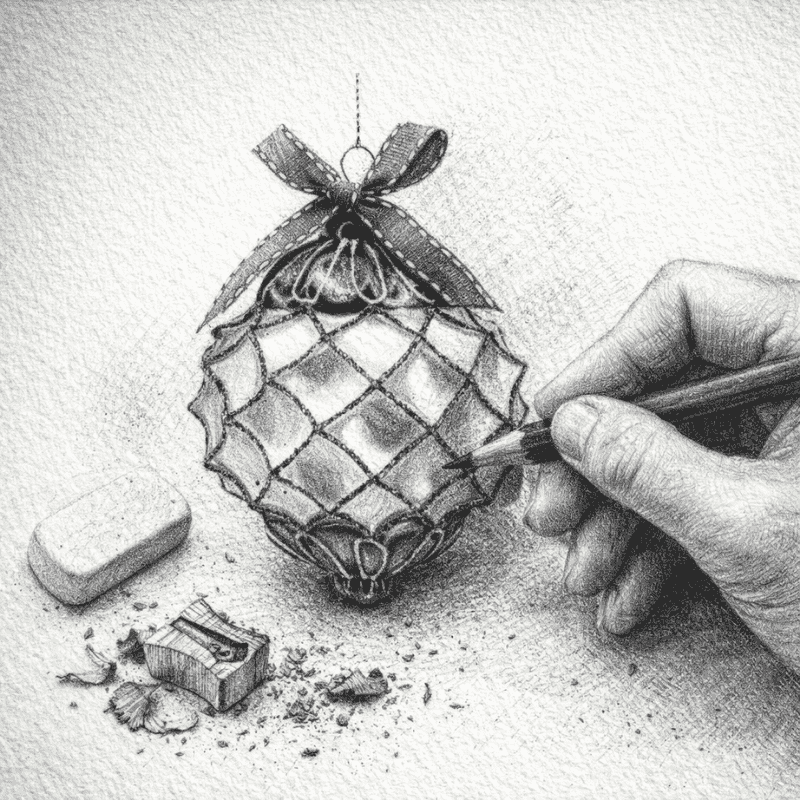
Hand Sketching: Translating Emotion into Form
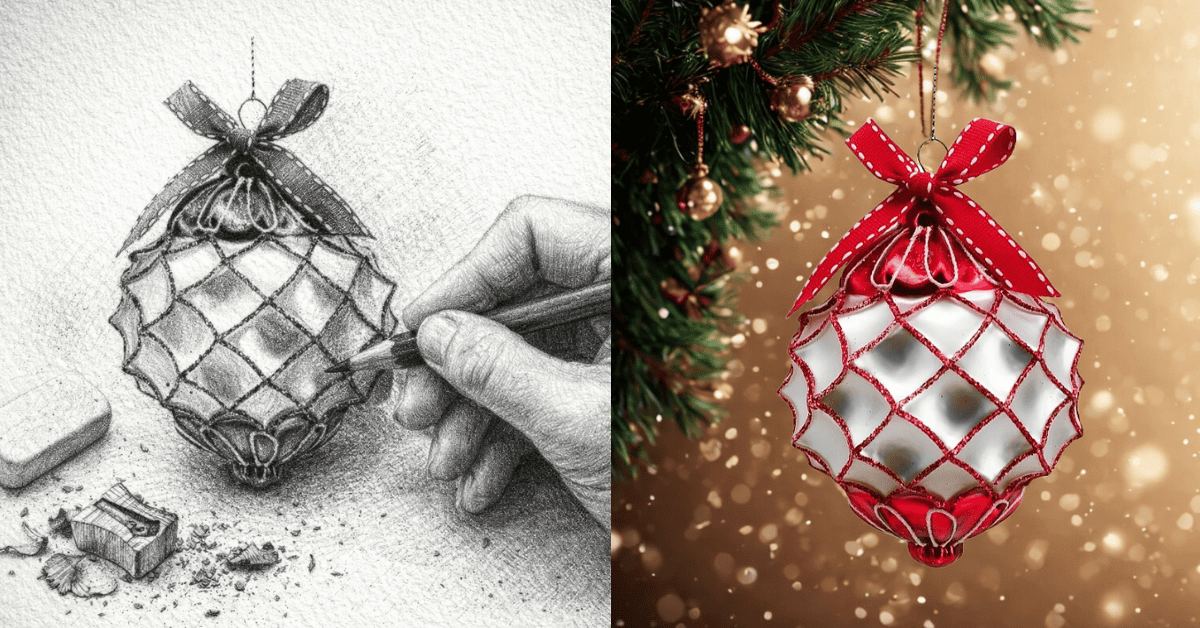
Before CAD files or molds exist, hand-drawn sketches remain a critical step in high-quality ornament development.
Sketching allows designers to:
-
Explore proportions and symmetry
-
Refine surface patterns and relief depth
-
Visualize how light interacts with glass contours
-
Anticipate structural stress points
The pencil sketch stage bridges artistic vision and manufacturability. For glass ornaments, this is especially important, as wall thickness, curvature, and decorative overlays directly affect both aesthetics and yield rates during production.
Unlike mass plastic items, handcrafted glass products demand early design decisions that respect the behavior of molten glass during shaping and cooling.
Material Engineering: Choosing Glass for Performance and Beauty
Once the form is finalized, design development moves into material selection.
For premium hanging ornaments, borosilicate and soda-lime glass are commonly evaluated based on:
-
Thermal stability during blowing and annealing
-
Optical clarity and light diffusion
-
Compatibility with hand-painting, glitter, and metallic finishes
-
Weight balance for safe hanging
Engineering teams collaborate closely with designers to ensure that the selected glass composition supports both visual refinement and production consistency—especially when scaling from small batches to thousands of units.
Prototype Development: Where Design Meets Reality
Prototyping is the most revealing phase of product development.
At this stage, physical samples expose gaps that drawings cannot:
-
Surface detailing depth vs. breakage risk
-
Ribbon attachment strength
-
Decorative coating adhesion
-
Hanging balance and center of gravity
Multiple prototypes are often produced, adjusting:
-
Glass thickness by millimeters
-
Decorative line spacing
-
Top cap and hook geometry
-
Color saturation under different lighting
This iterative process ensures the final product maintains its design intent without compromising durability or safety standards.
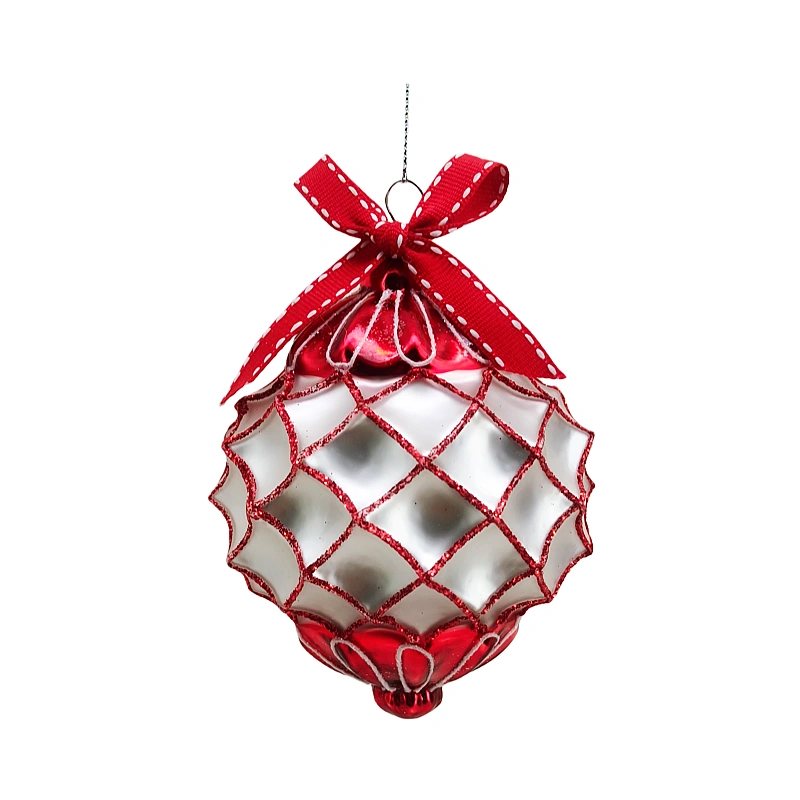
Decorative Finishing as a Design Discipline
In premium ornaments, decoration is not an afterthought—it is part of the product architecture.
Finishing techniques may include:
-
Hand-applied glitter lines
-
Metallic paint accents
-
Frosted or semi-transparent coatings
-
Fabric or ribbon embellishments
Each decorative layer introduces additional production variables. Design teams must account for:
-
Drying times
-
Manual labor skill requirements
-
Color consistency across batches
-
Long-term colorfastness
Effective design development anticipates these factors early, reducing costly revisions later in production.
Design for Scalability: From Artisan to Global Supply
A common failure point in decorative product development is designs that cannot scale.
Successful OEM/ODM development ensures that:
-
Manual steps are repeatable
-
Decoration tolerances are clearly defined
-
Quality checkpoints are embedded in the process
-
Packaging protects delicate finishes during shipping
In this project, the design was refined to maintain a handcrafted appearance while allowing for controlled, semi-manual production, enabling export at scale without losing perceived value.
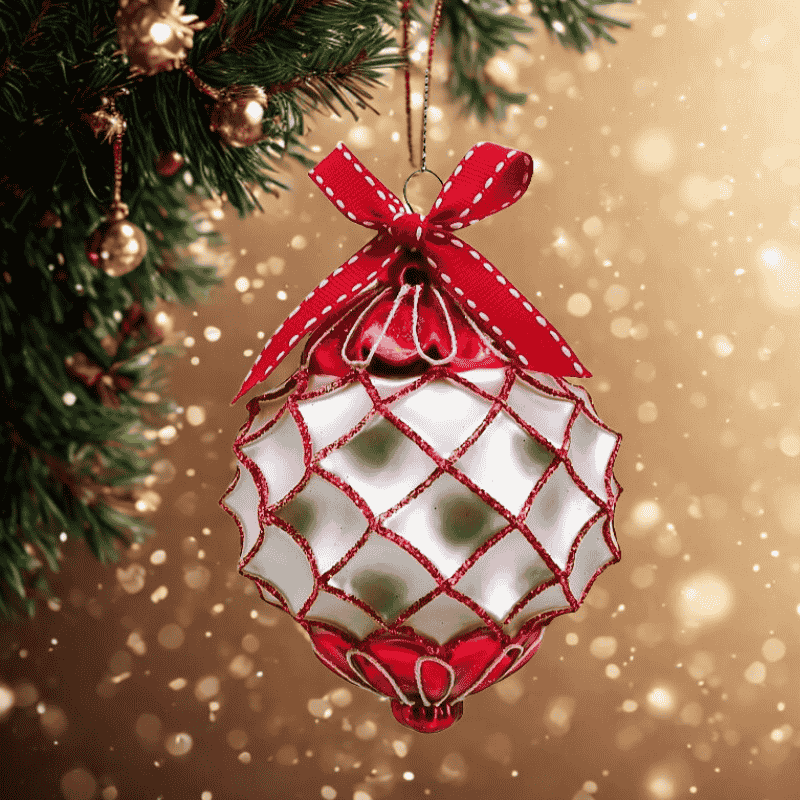
Final Application: Design in the Consumer Environment
The final validation step is contextual—how the ornament performs in real consumer settings.
When displayed on a Christmas tree:
-
Light reflection enhances glass depth
-
Decorative patterns create visual rhythm
-
Ribbon accents reinforce seasonal warmth
A well-developed design does not rely on studio lighting alone; it performs equally well in homes, retail displays, and e-commerce imagery.
This is where design, engineering, and marketing converge.
Why Design & Product Development Matter in B2B Manufacturing
For global brands and retailers, design capability is no longer optional—it is a strategic differentiator.
Strong product development delivers:
-
Faster concept-to-market cycles
-
Higher retail acceptance rates
-
Lower defect and return ratios
-
Stronger brand storytelling through physical products
Manufacturers with integrated design and development teams are better positioned to support licensed programs, seasonal collections, and long-term partnerships.
Conclusion: Design Is the Foundation of Trust
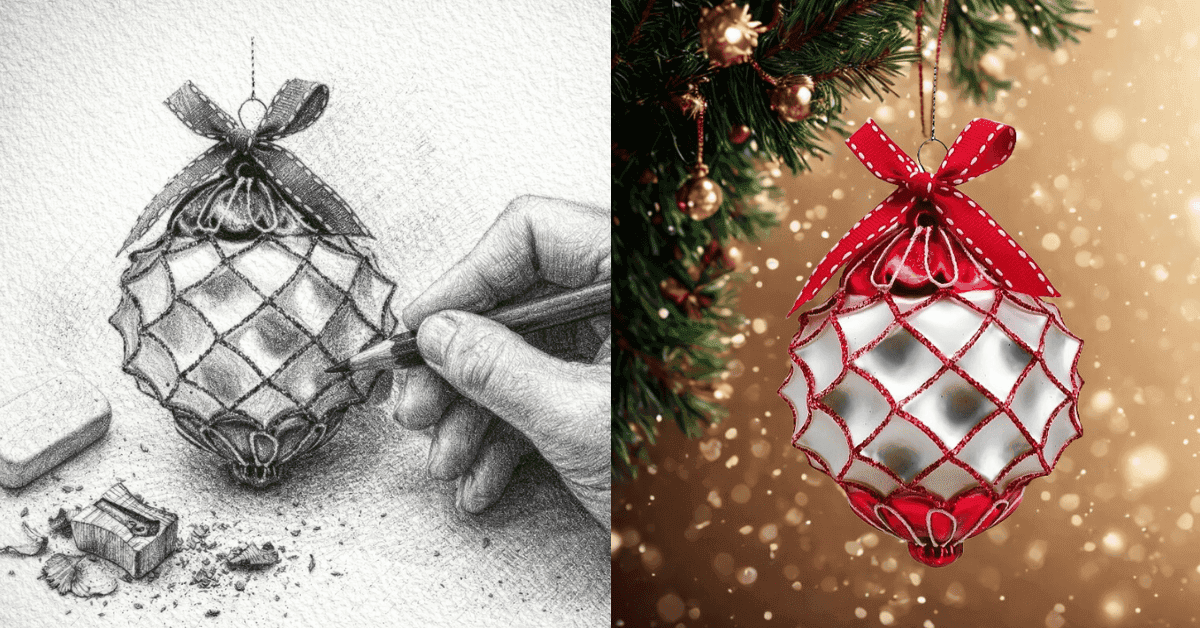
From a pencil sketch to a finished glass ornament hanging on a Christmas tree, every stage of design and product development shapes the final perception of quality.
In today’s competitive gift and décor market, brands succeed not by producing more—but by designing better.
Thoughtful development transforms decoration into experience, craftsmanship into scalability, and ideas into products that resonate across global markets.