


Glass products have remained important in the gift and home décor market because they combine visual beauty, emotional value, premium presentation, and long-term usability.
For retailers, wholesalers, importers, and private-label brands, glass is not only a decorative material. It can support seasonal collections, home décor programs, personalized gifts, collectible products, tableware, candle holders, and premium retail displays.
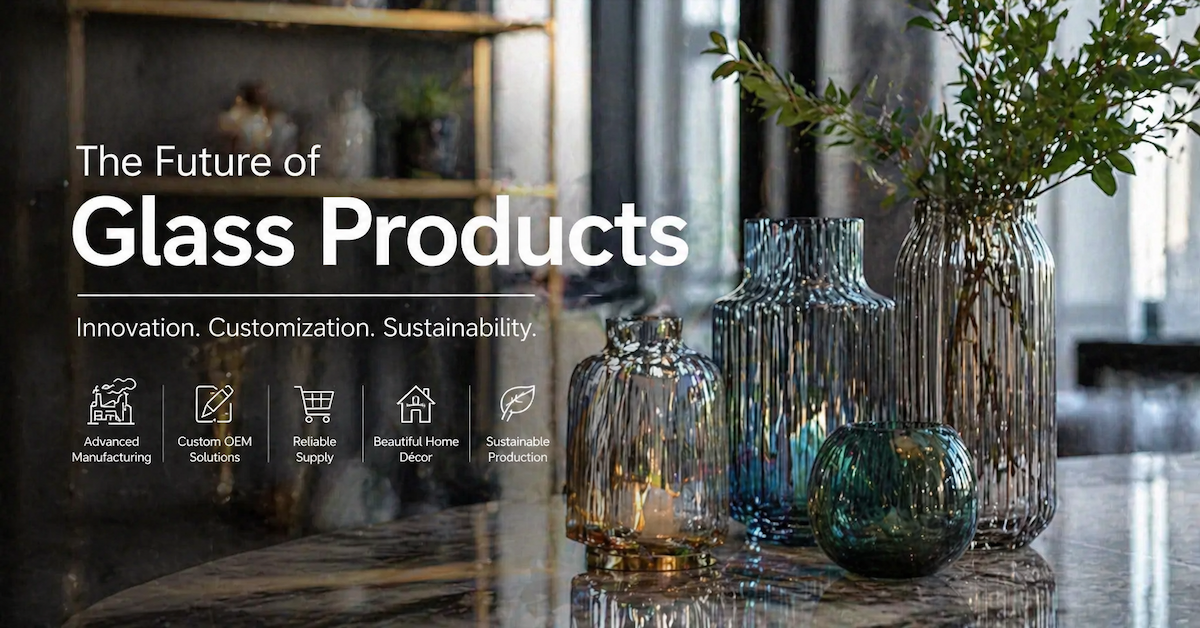
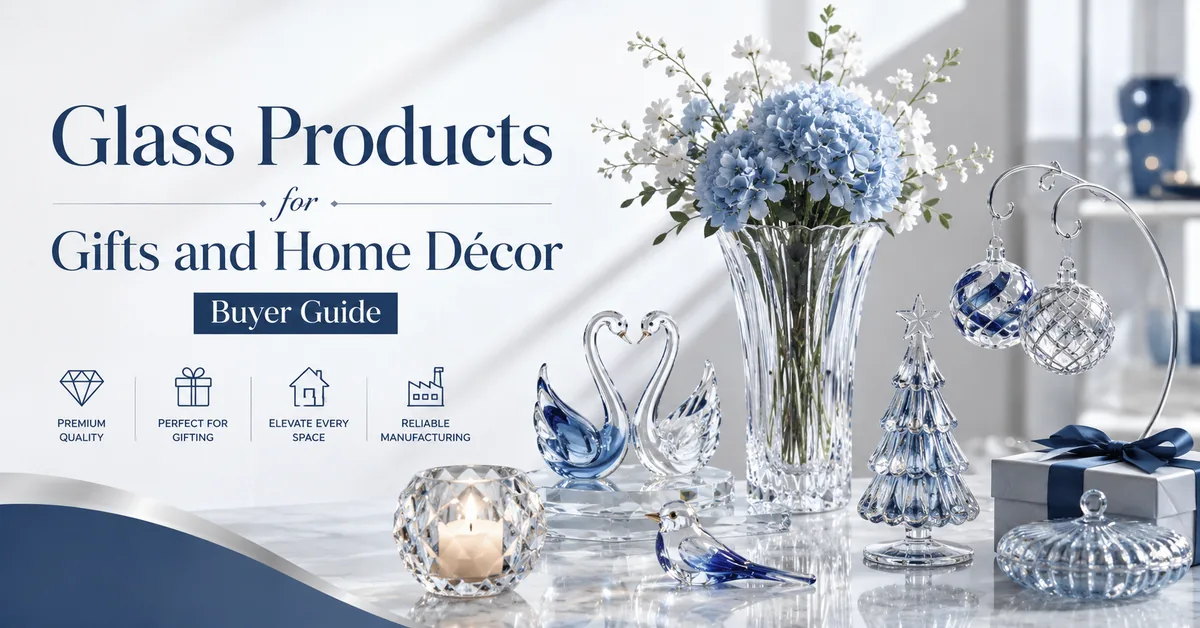
From glass home décor accents to decorative glass figurines, handcrafted glass ornaments, seasonal glass decorations, and wholesale glass gifts, glass offers a rare balance of elegance, versatility, and commercial value.
However, sourcing glass products successfully requires more than choosing attractive shapes. Buyers need to evaluate glass type, forming process, decoration method, packaging, breakage risk, quality control, MOQ, production lead time, and supplier capability.
As an OEM/ODM gift and home décor manufacturer, HoeGifts supports global buyers with glass ornaments, glassware, decorative glass gifts, seasonal products, and mixed-material gift collections. This guide explains why glass continues to perform strongly in modern gifting and how B2B buyers can develop scalable glass product programs with lower sourcing risk.
Why Do Glass Products Remain Popular in Gifts and Home Décor?
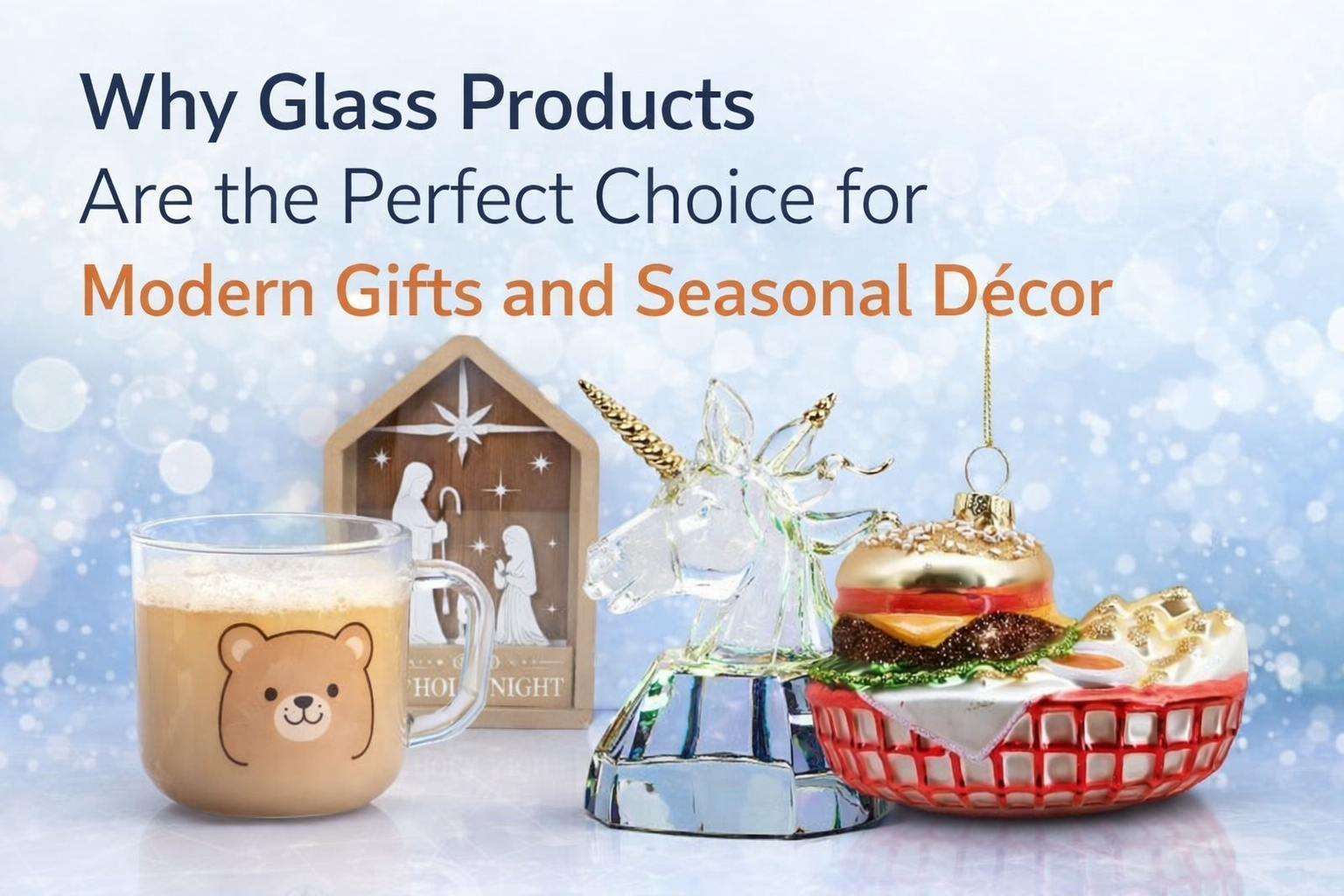
Glass remains popular because it delivers strong perceived value while adapting to many design styles and product categories.
It can appear:
- Minimalist
- Luxury
- Handmade
- Seasonal
- Traditional
- Modern
- Collectible
- Functional
- Decorative
Unlike many short-term trend materials, glass can fit both classic and contemporary product lines. It reflects light, displays color beautifully, and works well with wood, metal, ceramic, fabric, acrylic, and packaging materials.
For buyers, this means glass can support both everyday home décor and seasonal gift programs without losing visual relevance.
Key Buying Considerations for Wholesale Glass Gifts
Before developing glass products, B2B buyers should confirm the product’s commercial purpose.
| Buyer consideration | Why it matters | What to confirm |
|---|---|---|
| Product category | Different glass products require different processes | Ornament, figurine, vase, glassware, candle holder, décor |
| Target market | Influences style, price, and compliance needs | North America, Europe, Asia-Pacific, or other markets |
| Glass type | Affects clarity, weight, cost, and durability | Soda-lime, borosilicate, colored glass, pressed glass |
| Decoration | Creates visual value but adds production variables | Painting, glitter, decal, frosting, metallic finish |
| Packaging | Protects fragile products during shipping | Insert, gift box, individual box, export carton |
| MOQ | Depends on mold, material, finish, and packaging | Existing shape vs custom design |
| Quality standard | Controls visual consistency and breakage risk | Golden sample, inspection criteria, AQL if required |
| Retail channel | Affects packaging and product positioning | Gift shop, department store, e-commerce, supermarket |
Glass can support premium pricing, but only when the finished product, packaging, and quality level match buyer expectations.
Timeless Visual Appeal Across Interior Styles
One major advantage of glass home décor is its ability to adapt to different interior styles.
Glass can work in:
- Scandinavian interiors
- Minimalist spaces
- Modern luxury homes
- Farmhouse décor
- Classic interiors
- Boutique hotel displays
- Seasonal retail environments
- Gift shop collections
Clear glass creates a clean and refined appearance. Colored glass adds warmth and personality. Frosted glass creates softness. Metallic details add a premium effect. Hand-painted details create storytelling and collectible value.
This flexibility allows buyers to build different product lines from one material category.
For example, a simple clear glass vase may suit minimalist home décor, while the same base shape with gold detailing can become a premium holiday gift item.
Emotional Value in Decorative Glass Figurines
Decorative glass figurines are often purchased for emotional reasons.
They may represent:
- Animals
- Family symbols
- Religious themes
- Travel memories
- Holiday characters
- Fantasy figures
- Nature elements
- Milestones
- Personal collections
This storytelling value makes glass figurines suitable for gift shops, souvenir programs, seasonal collections, and collectible product lines.
A decorative glass figurine is rarely purchased only because of its material. It is purchased because the design communicates meaning.
For B2B buyers, this means successful figurine development should begin with a clear product story.
The product brief should define:
- Theme
- Target customer
- Occasion
- Retail price
- Display method
- Color direction
- Packaging format
- Order quantity
- Delivery schedule
The stronger the story, the easier it becomes to build a product collection rather than a single item.
Handcrafted Glass Ornaments for Seasonal Retail Programs
Handcrafted glass ornaments are especially important in Christmas and winter holiday collections.
They perform well because they combine:
- Light reflection
- Decorative detail
- Emotional tradition
- Giftability
- Collectible value
- Premium shelf appeal
Common ornament types include:
- Blown glass ornaments
- Molded glass ornaments
- Glass dome ornaments
- Hand-painted ornaments
- Glitter ornaments
- Metallic finish ornaments
- Character ornaments
- Animal ornaments
- Religious ornaments
- Souvenir ornaments
Why Hanging Performance Matters
A glass ornament must do more than look beautiful in a product photo.
It should hang correctly and safely when displayed.
Buyers should review:
- Ornament weight
- Glass neck strength
- Cap fit
- Hook security
- Ribbon strength
- Center of gravity
- Decoration placement
- Packaging contact points
If the hanging point is not aligned with the product structure, the ornament may tilt, rotate, or look unstable.
For this reason, hanging tests should use the complete finished product, including cap, ribbon, hook, and decoration.
Seasonal Glass Decorations and Retail Timing
Seasonal glass decorations can create strong retail impact, but they also carry strict timing pressure.
Christmas, Easter, Halloween, Valentine’s Day, wedding, and other seasonal programs must arrive before the sales window begins.
Late delivery can reduce the value of the product even when quality is acceptable.
Seasonal glass products usually require:
- Early concept confirmation
- Fast but careful sampling
- Packaging approval before mass production
- Clear production schedule
- Shipment planning
- Retail-ready labeling
- Accurate SKU control
For glass products, packaging cannot be treated as a final step. It must be developed during sampling because shape, decoration, and fragility all affect protection requirements.
Common Glass Product Categories for B2B Buyers
| Category | Typical products | Main buyer value |
| Glass home décor | Vases, candle holders, tabletop décor | Interior styling and premium display |
| Decorative glass figurines | Animals, characters, symbolic designs | Collectible and emotional gifting |
| Handcrafted glass ornaments | Christmas and seasonal hanging items | Holiday tradition and premium seasonal sales |
| Seasonal glass decorations | Easter, Halloween, wedding, festive décor | Strong campaign and collection potential |
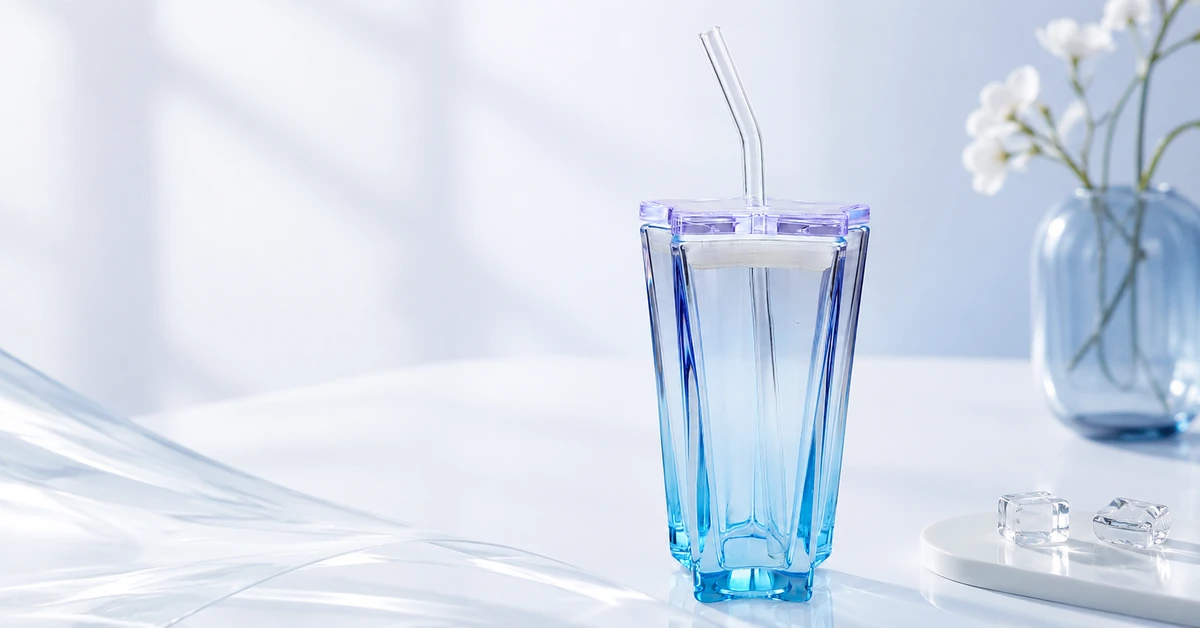
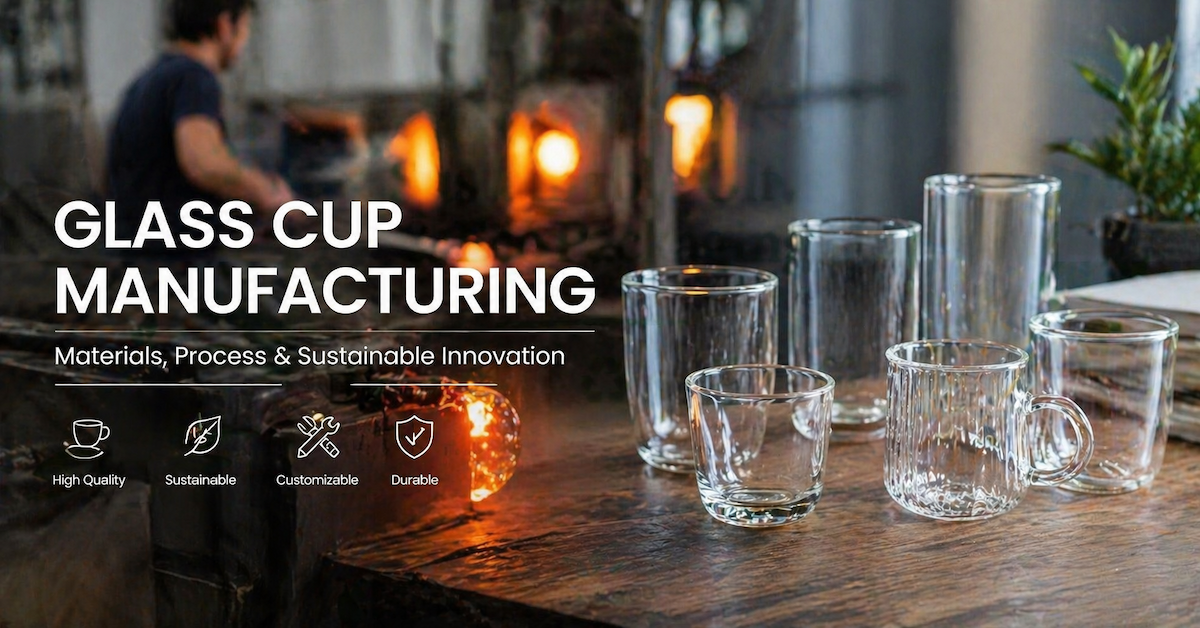
| Glassware gifts | Cups, tumblers, mugs, drinkware sets | Functional gifting and daily use |
| Mixed-material glass gifts | Glass with metal, wood, resin, or fabric | Strong visual differentiation |
The best category depends on buyer channel, price positioning, market season, and customization needs.
Glass Material Options for Gift and Home Décor Products
Different glass types suit different product goals.
| Glass option | Main advantage | Common use |
| Soda-lime glass | Cost-effective and widely used | Ornaments, décor, general glassware |
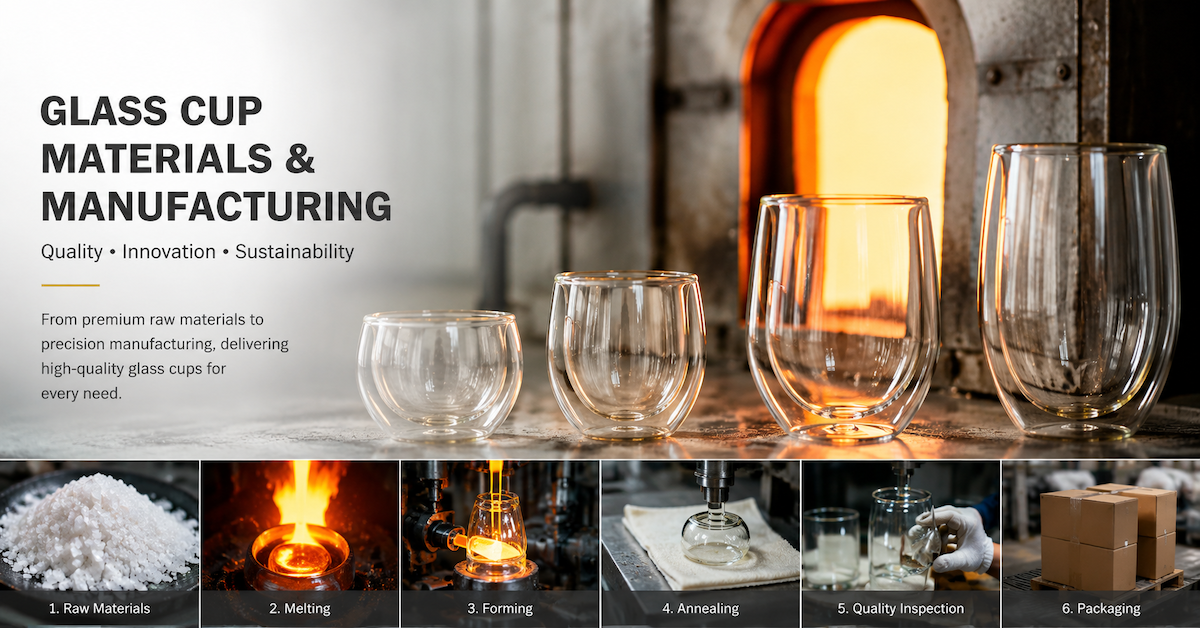
| Borosilicate glass | Lightweight and better thermal performance | Drinkware, double-wall cups, refined designs |
| Colored glass | Strong visual depth | Decorative collections and seasonal items |
| Pressed glass | Repeatable patterns and thicker structure | Candle holders, bowls, vintage-style décor |
| Blown glass | Handmade appearance and delicate shapes | Ornaments and premium decorative gifts |
Material selection should consider appearance, cost, weight, forming method, decoration, packaging, and product use.
A glass cup, ornament, figurine, and candle holder may all use glass, but they require different design and quality priorities.
Manufacturing Processes for Glass Gift Products
Glass products can be manufactured through different processes depending on the design.
Blown Glass
Blown glass is often used for ornaments and decorative shapes.
It supports lightweight forms and handcrafted visual character.
Important controls include:
- Wall thickness
- Shape consistency
- Neck strength
- Annealing
- Surface clarity
- Decoration compatibility
Molded or Pressed Glass
Molded and pressed glass can create repeatable shapes, textures, and heavier structures.
They are suitable for:
- Candle holders
- Bowls
- Decorative bases
- Patterned glass items
- Tabletop décor
Important controls include mold accuracy, surface finish, stress control, and edge smoothness.
Hand Decoration
Hand decoration adds value but also introduces variation.
Common methods include:
- Hand painting
- Glitter application
- Frosting
- Metallic accents
- Decals
- Ribbons
- Beads
- Internal decorative scenes
The supplier should define acceptable variation before bulk production begins.
Decoration Methods and Production Risks
| Decoration method | Visual value | Risk to control |
| Hand painting | Artistic and detailed appearance | Color and line variation |
| Glitter | Strong holiday impact | Shedding and adhesive failure |
| Frosting | Soft premium finish | Uneven coating or fingerprints |
| Metallic finish | Luxury presentation | Scratching and color inconsistency |
| Decal | Repeatable artwork | Edge defects and adhesion issues |
| Ribbon or fabric | Gift-ready appearance | Fraying and weak attachment |
| Internal scene | Strong storytelling value | Assembly alignment and packaging protection |
Decoration should be evaluated on the finished product, not separately.
For example, glitter adhesion may look acceptable before packaging, but rubbing against an insert during shipping can create quality complaints.
Quality Control for Glass Home Décor and Gift Products
Glass quality control should cover both structure and appearance.
| Inspection area | What to check |
| Glass body | Cracks, chips, bubbles, distortion, scratches |
| Dimensions | Height, width, wall thickness, capacity if applicable |
| Surface | Cleanliness, smoothness, coating, fingerprints |
| Decoration | Color, position, completeness, adhesion |
| Hanging part | Cap, hook, ribbon, pull strength |
| Function | Stability, balance, standing or hanging performance |
| Packaging | Movement, contact points, carton strength |
| Labeling | SKU, barcode, warning labels, retail requirements |
For repeat orders, finished products should be compared with the retained golden sample.
Packaging for Wholesale Glass Gifts
Packaging is one of the most important parts of glass product development.
A glass item may pass production inspection but still fail if packaging allows movement, friction, or impact during shipping.
Common packaging formats include:
- Tissue wrapping
- Bubble bag
- Molded pulp insert
- Foam insert
- Corrugated partition
- Individual box
- Window box
- Gift box
- Display box
- Export carton
Packaging Questions Buyers Should Ask
- Does the product move inside the box?
- Are fragile points protected?
- Does the insert touch painted or glittered surfaces?
- Is the box suitable for retail display?
- Can the carton support stacking?
- Is the packaging suitable for e-commerce shipment?
- Are barcode and SKU labels clear?
- Is the carton weight reasonable?
- Can freight volume be optimized?
Packaging should be approved with the final decorated sample.
A blank glass sample cannot fully show where paint, glitter, ribbon, or accessories may rub against the insert.
MOQ, Sampling, and Lead Time for Custom Glass Products
MOQ depends on the product design and manufacturing process.
Important factors include:
- Existing or custom mold
- Glass type
- Product size
- Decoration process
- Number of colors
- Packaging
- Accessories
- Manual labor
- Number of SKUs
- Production schedule
A stock glass shape with custom painting may support a smaller trial order.
A fully custom glass ornament, special color, new mold, or complex hand decoration usually requires higher MOQ and longer development time.
Typical Development Timeline
| Stage | Main work |
| Product brief | Confirm category, market, quantity, and design direction |
| Feasibility review | Check material, structure, decoration, packaging, and risk |
| Quotation | Confirm cost, MOQ, tooling, and lead time |
| Sampling | Produce and review physical sample |
| Revision | Adjust shape, color, decoration, or packaging |
| Golden sample | Approve final production standard |
| Bulk production | Control forming, decoration, assembly, and packing |
| Inspection | Compare with golden sample and defect criteria |
| Shipment | Prepare cartons, labels, documents, and logistics |
Buyers should plan total project time, not only bulk production time.
Sustainability and Long-Term Product Value
Glass can support a sustainability-focused product strategy when it is designed for long-term use, reuse, and careful storage.
Many glass decorations are not disposable seasonal items. Consumers often keep glass ornaments, figurines, and decorative pieces for years.
For brands, this creates several advantages:
- Longer product life
- Stronger emotional value
- Better premium positioning
- Potential collectible series
- Reduced dependence on low-cost disposable trends
However, sustainability claims should be accurate and supported by product design, material choices, packaging decisions, and market requirements.
Visual Merchandising Benefits of Glass Products
Glass products perform well in retail displays because they interact naturally with light.
They can create:
- Sparkle
- Reflection
- Color depth
- Transparency
- Premium shelf appeal
- Strong holiday atmosphere
In stores, glass ornaments and figurines can become visual anchors for seasonal displays.
For e-commerce, high-quality photography can show clarity, texture, reflection, and decorative detail. This helps buyers present glass products more effectively in online catalogs, marketplaces, and brand websites.
How to Evaluate a Wholesale Glass Gifts Supplier
Buyers should evaluate more than product photos.
A reliable supplier should be able to explain:
- Which glass processes are available
- Which products are made in-house
- Which decoration steps are controlled internally
- How samples are reviewed
- How golden samples are retained
- How glass breakage risk is reduced
- How packaging is developed
- How repeat-order colors are controlled
- What affects MOQ and lead time
- Which compliance documents may be required
- How mixed-material glass products are assembled
A strong supplier should be willing to identify risks before production begins.
Common Sourcing Risks for Glass Products
| Risk | Common cause | Prevention |
| Breakage during shipment | Weak packaging or unsupported fragile points | Approve packed samples |
| Decoration inconsistency | No physical color or artwork standard | Retain golden sample |
| Glitter shedding | Weak adhesive or poor curing | Perform handling and packaging tests |
| Hanging failure | Weak cap, hook, or ribbon | Test complete finished product |
| Surface scratches | Packaging friction or handling | Add protective layers |
| Color variation | Batch differences or process changes | Define color tolerance |
| Late delivery | Sampling and packaging time omitted | Plan complete project timeline |
| Repeat-order difference | Poor records | Keep drawings, artwork, and samples |
| Compliance gap | Raw material report used for final product | Review finished product requirements |
Frequently Asked Questions About Glass Gifts and Home Décor Products
Why Are Glass Products Popular in Gift and Home Décor Markets?
Glass products are popular because they combine visual elegance, light reflection, emotional value, premium presentation, and broad application across home décor, seasonal gifts, and collectibles.
What Are Common Glass Home Décor Products?
Common products include vases, candle holders, tabletop decorations, glass figurines, decorative vessels, framed glass décor, and mixed-material display items.
What Are Decorative Glass Figurines Used For?
Decorative glass figurines are used for gifting, collecting, souvenirs, seasonal decoration, religious themes, animal designs, and retail display collections.
Can Buyers Customize Handcrafted Glass Ornaments?
Yes. Customization may include shape, color, painting, glitter, metallic finish, internal decoration, ribbon, cap, logo, and packaging.
What Determines the MOQ for Wholesale Glass Gifts?
MOQ depends on mold requirements, glass type, decoration, colors, packaging, accessories, product size, and production complexity.
How Are Glass Products Packed for Export?
Packaging may include tissue wrapping, bubble bags, molded pulp, foam inserts, corrugated partitions, individual boxes, gift boxes, and export cartons.
What Quality Issues Should Buyers Check?
Buyers should check cracks, chips, bubbles, scratches, surface finish, decoration, hanging strength, stability, packaging, and comparison with the golden sample.
Are Glass Products Suitable for Seasonal Gift Programs?
Yes. Glass is widely used for Christmas ornaments, Easter decorations, Halloween décor, wedding gifts, candle holders, and collectible seasonal items.
Can Glass Products Be Combined With Other Materials?
Yes. Glass can be combined with metal, wood, MDF, acrylic, resin, silicone, fabric, ribbon, sand, and decorative accessories.
What Information Should Buyers Provide for a Quotation?
Buyers should provide product references, size, material preference, decoration, quantity, packaging, target market, price level, and delivery date.
Conclusion: Glass Products Combine Beauty, Emotion, and Commercial Value
Glass remains one of the most valuable categories in modern gifts and home décor because it offers elegance, emotional appeal, premium perception, and broad product flexibility.
For B2B buyers, glass can support many commercial opportunities, including glass home décor, decorative glass figurines, handcrafted glass ornaments, seasonal glass decorations, wholesale glass gifts, and mixed-material decorative collections.
But success depends on more than material choice. Buyers need the right design, glass process, decoration method, quality standard, packaging solution, MOQ plan, and production schedule.
As an OEM/ODM gift and home décor manufacturer, HoeGifts supports global buyers with custom glass product development, seasonal gift production, packaging, quality control, and export-ready manufacturing solutions.
For your next glass gift or home décor collection, share your product reference, target market, dimensions, quantity, customization needs, packaging requirements, and delivery schedule with HoeGifts to receive a feasibility review and quotation.