

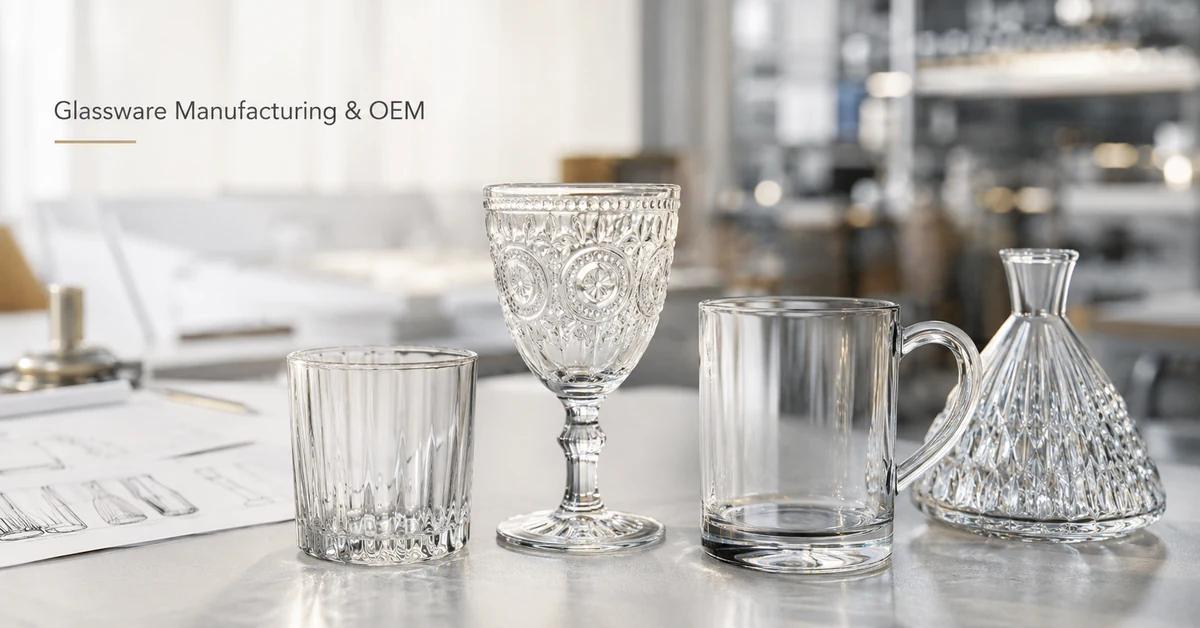
For retailers, importers, hospitality buyers, and lifestyle brands, sourcing glassware is rarely as simple as choosing a shape and placing an order. A successful project must balance product appearance, material performance, manufacturing feasibility, packaging protection, quality expectations, and delivery planning.
That is why choosing the right glassware manufacturer matters. The best partner does more than produce cups, vases, ornaments, candle holders, or decorative glass gifts. A capable supplier helps turn a product concept into a retail-ready program with clear specifications, controlled quality, practical packaging, and a structure that supports repeat orders.
This guide explains how B2B buyers can evaluate custom glassware OEM capabilities, compare a manufacturer with a trading supplier, plan private-label collections, reduce production risk, and develop glassware programs for international retail, gifting, and home décor markets.
Buyer Snapshot: What Matters Before You Source Glassware
Before contacting a wholesale glassware supplier, buyers should define the commercial and technical requirements that will shape the project.
| Buyer Requirement | Why It Matters | What to Prepare |
|---|---|---|
| Product category | Determines materials, molds, decoration, and packing | Reference photos, sketches, or product dimensions |
| Target market | Affects labeling, food-contact requirements, and packaging expectations | Sales regions and retail channel details |
| Order quantity | Influences mold costs, MOQ, unit price, and production scheduling | Forecast quantity or launch volume |
| Customization level | Determines whether an OEM or private-label approach is suitable | Logo, colors, patterns, packaging, and branding files |
| Quality standard | Helps align expectations before sampling | Defect tolerance, visual standards, and inspection needs |
| Shipping method | Affects inner packing, carton structure, and freight cost | Air, sea, parcel, or warehouse delivery preferences |
For most buyers, the strongest starting point is to define the intended use of the product. A beer mug for hospitality, a borosilicate tumbler for lifestyle retail, a colored goblet for wedding collections, and a decorative glass dome for gifting all require different production and packaging priorities.

Why This Guide Helps B2B Buyers
A glass product may look simple, but it can involve multiple manufacturing decisions: glass composition, wall thickness, forming method, annealing, surface decoration, assembly, printing, packaging, and inspection.
A professional glassware manufacturer should help buyers understand these decisions before mass production begins. This reduces the risk of mismatched samples, avoidable breakage, inconsistent color, unsuitable packaging, and unexpected cost changes later in the project.
This guide is designed for buyers who need to source:
- Drinkware and beverage service products
- Glass mugs, tumblers, goblets, and cups
- Decorative vases and candle holders
- Glass ornaments and hanging decorations
- Glass domes, display pieces, and gift items
- Mixed-material glass décor with metal, wood, resin, or silicone elements
- Private-label retail glassware collections
What Does Glassware Manufacturing Include?
Glassware manufacturing covers much more than forming a basic cup. Depending on the product, a glassware manufacturer may manage material preparation, molding, blowing, pressing, annealing, trimming, polishing, printing, coating, assembly, packaging, and final inspection.
For B2B buyers, the scope of manufacturing should be discussed at the beginning of a project. Some products require only standard production and logo decoration. Others need a full custom glassware OEM workflow involving new shapes, custom molds, special colors, decorative finishes, and retail packaging development.
The most common glassware production stages include:
- Product concept review
- Material and structure recommendation
- Mold or tooling development
- Sampling and approval
- Mass production
- Decoration or secondary assembly
- Quality inspection
- Protective packaging
- Export carton preparation and shipment coordination
A supplier that can manage these stages in a coordinated way is often more valuable than one that only offers ready-stock products.
Why Glassware Matters in Retail, Gift, and Home Décor Markets
Glassware remains popular because it combines functionality with visual appeal. Transparent, colored, embossed, frosted, and mixed-material glass products can fit many retail categories at once: home décor, kitchenware, seasonal gifts, hospitality, tabletop, and lifestyle collections.
A decorative glassware manufacturer can help brands create products that do more than serve a practical purpose. A textured goblet can become part of a wedding table collection. A glass ornament can become a seasonal gift program. A clear tumbler can support a reusable drinkware campaign. A glass dome can become a premium collectible display piece.
For retailers, glassware can offer:
- Strong shelf appeal
- Giftable product value
- High perceived quality
- Seasonal flexibility
- Opportunities for color and finish variation
- Easy integration into home décor and tabletop collections
- Potential for private-label packaging and brand storytelling
A strong wholesale glassware supplier understands that buyers are not just purchasing a product. They are building a range, a seasonal assortment, or a branded customer experience.
Manufacturer vs. Supplier: What Is the Difference?
Not every supplier offers the same level of project support. Buyers should understand whether they are working with a factory, a trading company, or a hybrid sourcing partner.
| Capability | Glassware Manufacturer | Trading Supplier |
| Product development | Can review feasibility and production methods | Usually relays requests to factories |
| Mold development | Often managed directly or through production partners | May have limited technical control |
| Sampling changes | Faster feedback on manufacturing adjustments | Depends on communication layers |
| Quality control | Can monitor production stages directly | Often relies on factory reports |
| MOQ planning | More visibility into production requirements | May offer flexibility but with less clarity |
| Packaging development | Can coordinate with product dimensions and production needs | May outsource packaging decisions |
| Cost transparency | Better understanding of tooling, materials, and process costs | May include multiple markups |
A reliable glassware manufacturer is generally the stronger choice for buyers with custom requirements, repeat orders, branded packaging, or technical quality expectations. A trading supplier may be useful for mixed-category sourcing, but buyers should still verify who controls production, inspection, and corrective action.
Main Glassware Categories for B2B Programs
A capable wholesale glassware supplier should be able to explain the differences between functional drinkware and decorative glass programs.To explore available drinkware and decorative options, browse our glassware collection.
| Product Category | Typical Applications | Key Buyer Considerations |
| Glass cups and tumblers | Coffee, tea, juice, cocktails, cold drinks | Capacity, wall thickness, lid compatibility, logo decoration |
| Beer mugs and steins | Pubs, breweries, restaurants, promotions | Handle strength, capacity, dishwasher performance, branding |
| Goblets and stemware | Weddings, hospitality, tabletop, gift collections | Stem stability, color consistency, surface texture |
| Borosilicate drinkware | Premium coffee, tea, wellness, reusable drinkware | Heat resistance, double-wall structure, lightweight design |
| Glass vases | Home décor, floral retail, lifestyle collections | Shape, mouth finish, color, packaging protection |
| Candle holders | Home décor, gifting, hospitality | Heat exposure, decorative coatings, glass clarity |
| Glass ornaments | Christmas, seasonal décor, collectible gifts | Hanging strength, weight balance, surface finish |
| Glass domes and display décor | Premium gifts, decorative collections | Assembly accuracy, base materials, protective packaging |
For decorative collections, a decorative glassware manufacturer should also be able to advise on mixed-material integration. Glass can be combined with zinc alloy, metal wire, wood, resin, silicone, fabric ribbons, or printed paper inserts to create more distinctive retail products.
Materials, Finishes, and Craft Options
Material selection directly affects visual quality, cost, weight, thermal performance, and production feasibility.
| Material or Finish | Best For | Key Benefits | Buyer Notes |
| Soda-lime glass | Standard drinkware and décor | Cost-effective, versatile, widely available | Suitable for many everyday glass products |
| Borosilicate glass | Heat-resistant drinkware | Lightweight, thermal-shock resistance | Popular for coffee, tea, and reusable cups |
| Colored glass | Lifestyle and decorative collections | Strong visual impact and seasonal appeal | Color consistency should be approved by sample |
| Frosted glass | Premium décor and gift products | Soft visual effect, modern appeal | Surface durability should be discussed |
| Embossed or textured glass | Vintage-inspired drinkware | Better grip and decorative detail | Mold precision is important |
| Printed glass | Branded drinkware and promotions | Supports logos and graphics | Confirm printing method and durability |
| Electroplated or metallic finish | Gift and decorative programs | Premium appearance | Requires careful surface-quality review |
| Mixed-material glass | Decorative gifts and ornaments | More visual depth and storytelling | Assembly tolerance and packaging are critical |
A custom glassware OEM project should begin with a material and finish review rather than simply copying a reference image. For a deeper look at glass types, thermal performance, and production methods, read our glass cup materials and manufacturing guide.Some visual effects may require a different process, different mold design, or a different glass type to achieve stable mass-production quality.
How Custom Glassware OEM Development Works
A successful custom glassware OEM project follows a structured process. Buyers should avoid moving directly from an idea to mass production without confirming feasibility, samples, and packaging needs.
1. Product Brief and Reference Review
The buyer provides product references, dimensions, target price, quantity, sales market, packaging expectations, and branding requirements.
2. Feasibility Assessment
The supplier reviews whether the proposed shape, wall thickness, decoration, color, and assembly are suitable for glass production.
3. Tooling and Sample Development
For a new design, molds or tooling may be required. Samples are created to confirm shape, size, color, finish, and structural stability.
4. Sample Approval and Revision
The buyer reviews the sample and requests changes if needed. Final approval should include product appearance, logo position, packaging concept, and acceptable defect level.
5. Mass Production Planning
Once the sample is approved, the custom glassware OEM workflow moves into production scheduling, material preparation, and decoration planning.
6. In-Process Quality Monitoring
Critical points such as glass clarity, wall thickness, handle strength, surface finish, color consistency, and assembly alignment are checked during production.
7. Final Inspection and Packaging
Finished products are inspected before packing. Packaging is then reviewed for protection, labeling accuracy, carton strength, and shipping suitability.Buyers developing new shapes, branded drinkware, or retail-ready collections can also explore our glass cup product development and OEM guide.
Private Label Glassware Options for Brands
Private-label development allows buyers to create branded products without operating their own production facility. A private label glassware program can range from a simple logo print to a fully customized product and packaging system.
| Private Label Option | Suitable For | Typical Custom Elements |
| Ready-made glassware with logo | Fast retail launches and promotions | Printed logo, decal, laser marking |
| Custom color glassware | Lifestyle and seasonal collections | Pantone-inspired colors, frosted finishes |
| Custom mold design | Exclusive branded products | Shape, capacity, texture, embossing |
| Retail gift packaging | Gift shops, online stores, premium collections | Color box, window box, rigid box, inserts |
| Branded accessory sets | Reusable drinkware or gift bundles | Straw, lid, coaster, cleaning brush, gift card |
| Mixed-material decorative glass | Seasonal and home décor programs | Metal bases, wood stands, ribbons, ornaments |
The strongest private label glassware programs build consistency across the product, packaging, and brand presentation. This may include a recognizable color palette, a signature pattern, coordinated gift boxes, and product information designed for retail shelves or e-commerce listings.
Packaging for Global Distribution
Glassware packaging must balance appearance, protection, cost, and shipping efficiency. A wholesale glassware supplier should not treat packaging as an afterthought, especially for fragile or mixed-material products.
| Packaging Type | Best For | Main Benefit |
| Brown box with dividers | Bulk wholesale drinkware | Efficient and cost-conscious protection |
| Color retail box | Lifestyle and gift collections | Better shelf presentation |
| Window box | Decorative glass gifts | Product visibility without opening |
| Molded pulp insert | Sustainable or premium packaging | Strong protection with reduced plastic |
| Foam or EPE insert | Fragile shapes and glass domes | High shock protection |
| Inner carton plus master carton | Export programs | Better stacking and transportation stability |
| Gift set packaging | Premium drinkware bundles | Higher perceived value and retail appeal |
For private label glassware, packaging should be approved together with the product sample whenever possible. Packaging dimensions, insert fit, product orientation, and drop-risk areas can all affect the final shipping performance.
Quality Control Checklist for Glassware Programs
A dependable decorative glassware manufacturer should have clear inspection points before shipment. Quality control should be built into the process rather than relying only on a final visual check.
| Inspection Stage | What to Check |
| Incoming materials | Glass quality, color raw materials, accessory components |
| Forming stage | Shape accuracy, wall thickness, handle attachment, base stability |
| Annealing stage | Stress reduction and crack-risk control |
| Decoration stage | Print adhesion, color consistency, coating coverage, surface defects |
| Assembly stage | Alignment, glue or component security, accessory fit |
| Final inspection | Cracks, bubbles, scratches, chips, uneven rims, color variation |
| Packaging inspection | Inner protection, barcode placement, carton strength, quantity accuracy |
For drinkware, buyers should also clarify relevant food-contact and market-specific requirements before production begins. A professional glassware manufacturer should help identify what product information and testing discussions are needed for the intended sales region.
MOQ, Lead Time, and Cost Planning
MOQ, cost, and lead time depend on product complexity, mold requirements, decoration, packaging, and order volume. Buyers should avoid evaluating price without understanding these variables.
| Cost Driver | Why It Affects Cost | Buyer Planning Tip |
| New molds | Custom shapes require tooling investment | Spread tooling costs across expected order volume |
| Glass type | Borosilicate and specialty glass may cost more | Choose based on product performance needs |
| Decoration | Printing, plating, coloring, and embossing add process steps | Approve decoration samples carefully |
| Packaging | Gift boxes and protective inserts affect both cost and freight | Review protection and packing density together |
| Order quantity | Higher volume can improve unit economics | Share realistic annual forecast where possible |
| Assembly complexity | Mixed materials increase labor and inspection needs | Simplify non-essential parts where possible |
| Shipping method | Fragile products need appropriate carton design | Confirm pallet, container, or parcel requirements early |
A wholesale glassware supplier should provide a clear quotation structure that separates product cost, tooling, packaging, and any customization-related charges. This allows buyers to make better decisions before committing to a launch.
How to Choose the Right Glassware Manufacturer
When evaluating a glassware manufacturer, buyers should look beyond catalog images and unit price.
Key questions to ask include:
- Can the supplier support both standard and custom glassware?
- Does the factory understand the intended sales market and product use?
- Can it develop samples from references, sketches, or CAD files?
- How are quality defects identified and managed?
- Can it support custom packaging and private-label branding?
- Is it experienced with fragile-product export packaging?
- Can it provide clear communication during sampling and production?
- Does it offer realistic guidance on MOQ, lead time, and cost trade-offs?
For complex décor projects, it is especially important to confirm whether the supplier is a true decorative glassware manufacturer with experience in assembly, finishing, accessories, and retail packaging—not only basic drinkware production.
Working with HoeGifts
HoeGifts supports B2B buyers developing glassware, decorative glass gifts, hanging ornaments, mixed-material home décor, and private-label seasonal collections.
Our approach is designed around practical product development:
- Product concept and material review
- OEM and ODM development support
- Custom shape, color, finish, and packaging options
- Decorative glass and mixed-material capability
- Retail-ready packaging coordination
- In-process inspection and final quality review
- Support for both trial projects and larger retail programs
Whether you are sourcing from a glassware manufacturer for a branded drinkware collection or developing a private label glassware program for seasonal retail, HoeGifts helps align product design, manufacturability, quality control, and packaging from the beginning.
Frequently Asked Questions
1. What does a glassware manufacturer do?
A glassware manufacturer develops and produces glass products such as drinkware, vases, ornaments, candle holders, and decorative gifts. Depending on the project, the manufacturer may also manage molds, decoration, assembly, packaging, and quality control.
2. When should I choose custom glassware OEM?
Choose custom glassware OEM when you need a unique shape, color, texture, logo application, packaging format, or exclusive retail design that cannot be achieved with standard ready-stock glassware.
3. Can a wholesale glassware supplier provide private-label packaging?
Yes. A capable wholesale glassware supplier can often coordinate product packaging, branded inserts, color boxes, labels, barcodes, and gift-ready presentation. The level of support should be confirmed before sampling.
4. What products can a decorative glassware manufacturer make?
A decorative glassware manufacturer may produce glass ornaments, domes, candle holders, vases, decorative bowls, mixed-material gifts, and seasonal display products in addition to standard drinkware.
5. What is private label glassware?
Private label glassware is glassware produced for a brand and sold under that brand’s name. It can include custom logos, colors, shapes, packaging, labels, and product presentation.
6. What affects the MOQ for custom glassware?
MOQ depends on mold requirements, glass type, decoration, packaging, and production efficiency. New molds and complex finishes generally require more planning than ready-made designs.
7. How can buyers reduce breakage during shipping?
Buyers should involve the supplier in packaging development early. Proper inserts, dividers, carton strength, product orientation, and export packing methods all help reduce transit damage.
8. Can glassware be combined with other materials?
Yes. Glass can be combined with metal, wood, resin, silicone, fabric, and decorative accessories. These projects require extra attention to assembly tolerance, finish consistency, and packaging protection.
Conclusion: Build a Stronger Glassware Program with the Right OEM Partner
A successful glassware project is built on more than a good-looking product. It requires the right material, a realistic manufacturing process, reliable quality control, export-ready packaging, and a supplier that understands how B2B buyers evaluate risk.
Whether you are sourcing a standard drinkware range, launching a decorative seasonal collection, or developing a fully custom glassware OEM program, the right partner can help turn your concept into a commercially viable product.
For buyers seeking a dependable glassware manufacturer, a flexible wholesale glassware supplier, or a long-term partner for private label glassware, HoeGifts can support product development, manufacturing coordination, packaging, and quality-focused delivery for global retail and gift programs.
Contact HoeGifts to discuss your next custom glassware or decorative glass gift project.