
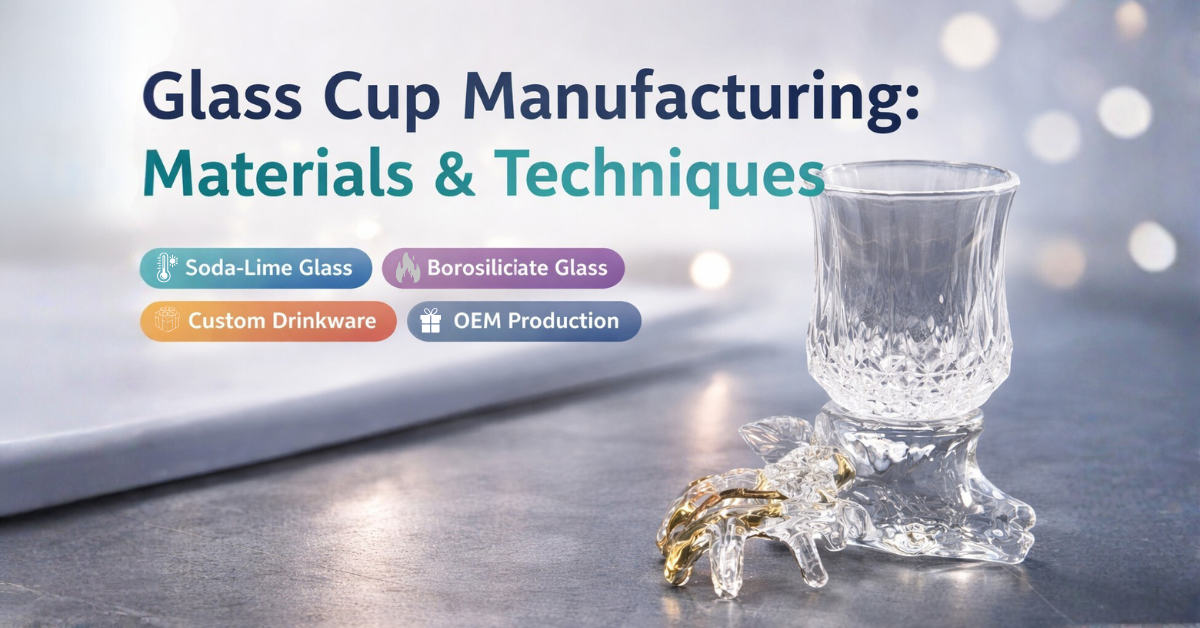

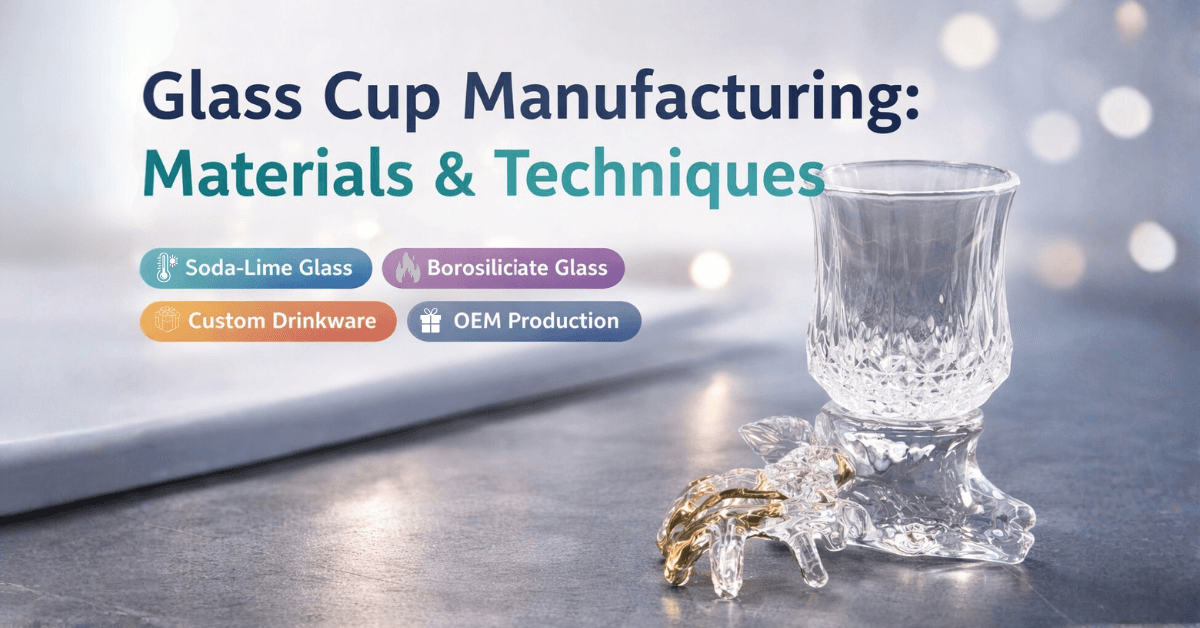
Glass cups are one of the most fundamental and versatile categories in glass product development. From everyday drinkware and lifestyle collections to premium gifting lines and hospitality projects, glass cups play a central role in how brands express design identity, functionality, and quality positioning.
For brands, designers, and OEM/ODM buyers, glass cup development is not simply about appearance. Material selection, manufacturing methods, and design-for-production decisions directly affect usability, durability, cost control, and scalability. Understanding how these factors interact is essential for building competitive and commercially successful glass cup collections.
This article provides a comprehensive overview of glass materials, core manufacturing techniques, and key product development considerations, helping buyers and designers make informed decisions throughout the OEM process.
The Role of Material Selection in Glass Cup Development
Material choice is one of the earliest and most influential decisions in glass cup product development. Different glass compositions support different performance requirements, aesthetic goals, and cost structures, making material selection a strategic design decision rather than a purely technical one.
Soda-Lime Glass: Cost-Efficient Solutions for Mass Production
Soda-lime glass is the most commonly used material in glass cup manufacturing. From a product development perspective, its cost efficiency, stable supply chain, and ease of processing make it ideal for large-scale OEM production.
Designers working with soda-lime glass can focus on cup shape, proportions, rim profiles, and surface decoration while maintaining competitive unit costs. This material is widely used for:
-
Everyday drinkware collections
-
Retail-ready glass cups
-
Restaurant and commercial beverage service
However, soda-lime glass offers moderate thermal resistance. When developing products intended for hot beverages, designers must carefully manage wall thickness and usage scenarios to avoid thermal shock risks.
Borosilicate Glass: Enabling Functional and Modern Design
Borosilicate glass is often selected for glass cup designs that emphasize performance, innovation, and user experience. Its low thermal expansion and excellent heat resistance make it ideal for:
-
Hot beverage cups
-
Double-wall glass designs
-
Contemporary minimalist drinkware
From a design standpoint, borosilicate glass allows for thinner walls, lighter weight, and cleaner visual lines, aligning well with modern lifestyle and premium kitchenware trends. These properties support elevated product positioning while improving daily usability.
Lead-Free Crystal Glass: Material Choice for Premium Collections
Lead-free crystal glass is commonly used in high-end glass cup development where visual brilliance, weight, and tactile quality are key selling points. Its superior clarity and light refraction enhance perceived value, making it well suited for:
-
Wine and cocktail glasses
-
Whiskey tumblers
-
Gift-oriented drinkware collections
Product developers often choose crystal glass when brand storytelling, luxury presentation, and emotional appeal are as important as functional performance.
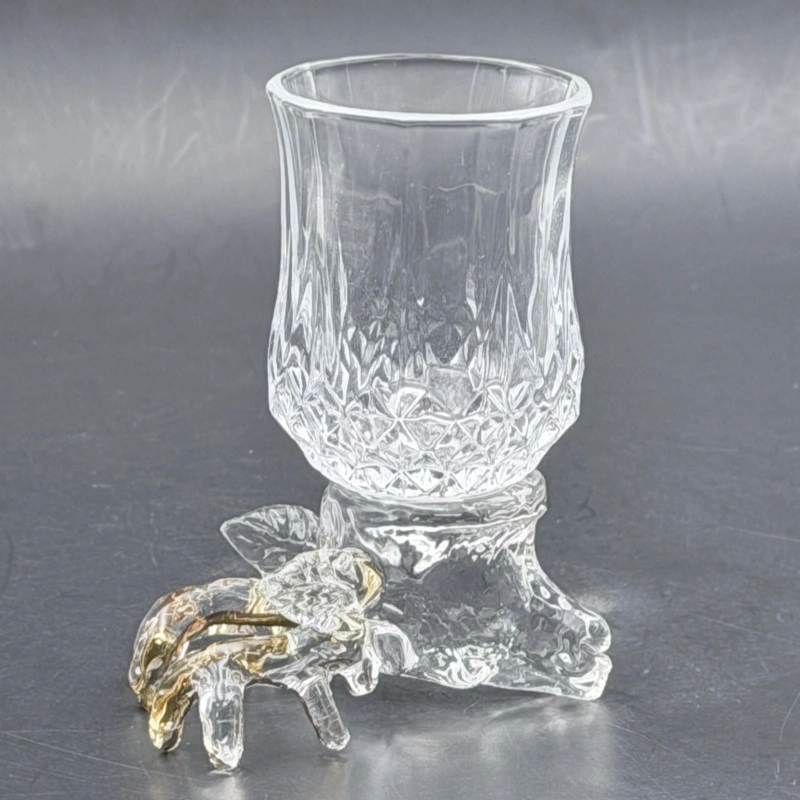
Manufacturing Techniques and Their Influence on Design
Manufacturing methods play a critical role in determining design freedom, consistency, and scalability. Selecting the right technique ensures that design concepts can be translated into stable mass production without compromising quality.
Machine-Blown Glass: Consistency and Scalability for OEM Programs
Machine-blown glass is widely used in OEM manufacturing due to its ability to deliver uniform dimensions, consistent wall thickness, and repeatable quality.
This technique is ideal for standardized glass cup designs intended for:
-
High-volume retail distribution
-
Hospitality and food service programs
-
Long-term product lines with stable demand
Designers working within machine-blown constraints must balance creativity with mold limitations, ensuring shapes remain production-efficient while maintaining strong visual appeal.
Hand-Blown Glass: Design Flexibility and Craft Value
Hand-blown glass provides unmatched freedom in shape, proportion, and artistic expression. It is often used in:
-
Design-driven collections
-
Limited editions
-
Premium decorative drinkware
Although hand-blown techniques are not suitable for large-scale production, they play an important role in concept development, brand storytelling, and high-value product lines, where individuality and craftsmanship are core to the product’s appeal.
Pressed Glass: Structure, Texture, and Durability
Pressed glass techniques are commonly applied when product development prioritizes structural strength, surface texture, and durability.
This method enables the creation of:
-
Embossed patterns
-
Geometric or vintage-inspired textures
-
Thick-walled, robust glass cups
Pressed glass is particularly well suited for hospitality-grade drinkware and functional lifestyle products that require consistent replication and enhanced impact resistance.
Surface Treatments as a Tool for Product Differentiation
Surface finishing and decorative techniques are essential in modern glass cup development. These processes allow brands to differentiate products without altering core structures, supporting efficient SKU expansion.
Common surface treatments include:
-
Frosted or acid-etched finishes for improved grip and visual softness
-
Screen printing and decals for logos and decorative patterns
-
Electroplated rims or painted accents for premium positioning
-
Heat tempering to enhance impact resistance and safety
By combining surface treatments with a standardized glass cup structure, product developers can create diverse collections while minimizing tooling costs.

Functional Design Considerations in OEM Development
Successful glass cup development requires close alignment between design intent and functional performance. Key factors include:
-
Wall thickness and weight balance
-
Thermal performance for hot and cold beverages
-
Dishwasher and food safety compliance
-
Stacking efficiency and storage stability
OEM buyers must also consider packaging efficiency, breakage risk during transport, and compatibility with automated packing systems. Early collaboration between designers and manufacturers ensures that aesthetic goals remain achievable at scale.
Sustainability in Glass Cup Product Design
Sustainability is becoming a central consideration in glass product development. Glass is fully recyclable, and many manufacturers now incorporate recycled glass to reduce energy consumption and environmental impact.
Modern design trends also emphasize:
-
Long product life cycles
-
Timeless aesthetics
-
Reusability across multiple usage scenarios
Innovations such as double-wall glass cups and hybrid designs combining glass with silicone or metal components further enhance durability and user experience while supporting sustainable consumption.
Conclusion
Glass cup product development is a strategic balance of material selection, manufacturing technique, functional performance, and market positioning.
By understanding the characteristics of soda-lime glass, borosilicate glass, and lead-free crystal glass—and how different manufacturing techniques influence design and scalability—brands and OEM buyers can make informed development decisions.
When materials, production methods, and design objectives are aligned, glass cups become more than simple drinkware. They evolve into well-engineered products that deliver aesthetic appeal, functional value, and long-term commercial success in competitive global markets.